
/images/ppid_59c68470-image-176994502354269672.webp)
/images/ppid_a911dc6a-image-176994483076242116.webp)
/images/ppid_a911dc6a-image-176994487119336478.webp)
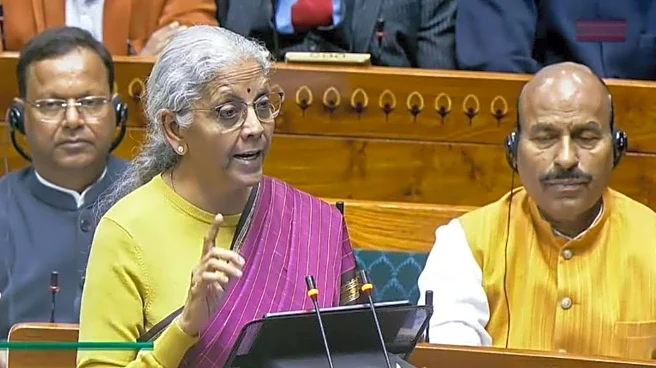
Finance Minister Nirmala Sitharaman promised to boost ‘orange economy’ as she presented the Budget 2026on Sunday.
What is it? How is it linked to content creators, animation and gaming sector? Why did it find a mention in the economic survey and how does the government plan to boost it?
What has Budget 2026 promised?
“India’s Animation, Visual Effects, Gaming and Comics (AVGC) sector is a growing industry, projected to require 2 million professionals by 2030. I propose to support the Indian Institute of Creative Technologies, Mumbai in setting up AVGC Content Creator Labs in 15,000 secondary schools and 500 colleges,” said the FM.
What is orange economy?
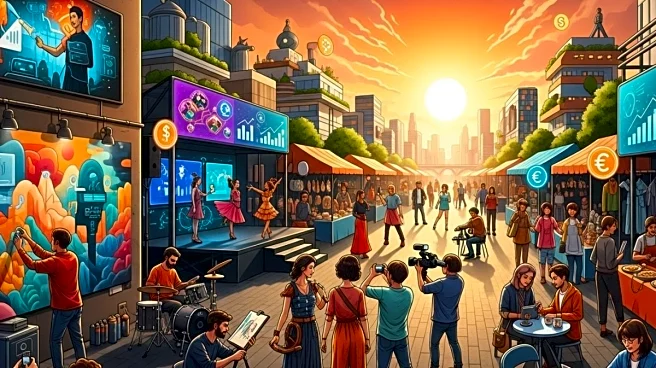
The ‘orange economy’ refers to the creative economy, a sector driven by ideas, technology, culture, and intellectual property rather than traditional
manufacturing. It encompasses industries like animation, gaming, film, music, design, and digital content, aiming to foster job creation, urban development, and cultural value.
5 Universities township, Establish new national Institute of Design, girls hostel in every district: Key take#UnionBudget2026 #NirmalaSitharaman #Budget2026 #Budget #BudgetWithNews18 #IndianRailways pic.twitter.com/s37QCSEw00
— News18 (@CNNnews18) February 1, 2026
The concept was popularised to showcase how cultural heritage and creativity can drive sustainable economic development. It covers industries such as advertising, animation, software, video games, film, fashion, publishing and content creation.
Recent government focus includes the creation of content creator labs in educational institutions and the establishment of a National Institute of Design.
PM Modi spoke about orange economy at WAVES 2025 Summit
During his inaugural speech at the WAVES 2025 summit, Prime Minister Narendra Modi announced the rise of India’s orange economy.
What did the Economic Survey 2025-26 say about orange economy?
The Economic Survey 2025-26 identified the ‘orange economy’ as a significant emerging driver for India’s employment, urban services, and tourism.
The survey positioned the creative economy as a critical component of India’s services-led growth model, capable of absorbing a large-scale workforce that traditional manufacturing may not.
A major focus was placed on live entertainment or concert economy, which is described as a high-multiplier activity. India’s live entertainment industry crossed ₹10,000 crore in 2024. Beyond ticket sales, it creates downstream demand for hospitality, transport, logistics, and local services.
The survey noted that creative industries contribute between 0.5% and 7% of GDP globally. In the US, live music alone supported over 900,000 jobs and generated over $130 billion in 2019.
While the sector is expanding due to a young population and rising discretionary income, the survey highlights several structural hurdles such as regulatory complexity, infrastructure shortage, operational constraints.
What can be done to boost the orange economy?
Thesurvey arguedfor shifting the view of creative industries from “niche entertainment” to an integrated urban growth and tourism strategy:
1. Single-Window Mechanism: Implementing a simplified permission process for live entertainment.
2. Infrastructure Access: Opening heritage monuments for select cultural events to enhance India’s appeal as a global destination.
3. Skill Development: Addressing the shortage of trained designers and creative professionals to support the rapidly expanding industry.
/images/ppid_a911dc6a-image-176994652799396215.webp)






/images/ppid_a911dc6a-image-176994543616533491.webp)