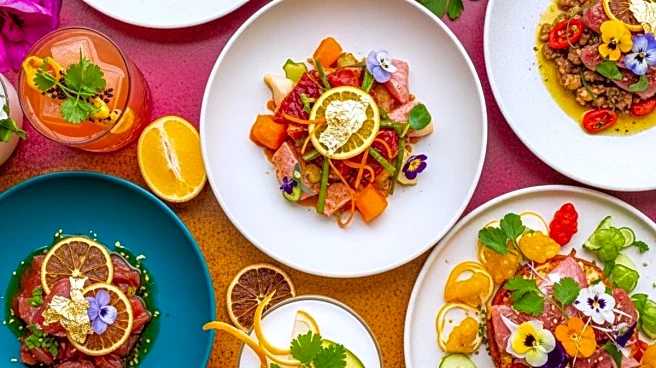

Long before food became something to hashtag or photograph, it was something to be presented. Across ancient civilisations, meals were meant to nourish and signal abundance, ritual, care and status. While
food is wrapped with leaves today for aesthetics, in the bygone era, the practice was performed for preservation. Flowers used to be scattered on ceremonial dishes not to please the eyes but to please the gods.
From citrus peels to herbs and spices, these garnishes were used for decoration, as well as to protect against spoilage and bitterness. Over centuries, these choices have transformed into visual cues, early forms of what modern kitchens now call garnishes or toppings.
How Garnishes Evolved Over The Years
The evolution of food toppings mirrors the society itself. As trade routes expanded, ingredients travelled, and so did the will to try out unique garnishes for aesthetic presentation. In ancient Rome, lavish and grand feasts featured herbs and edible flowers as symbols of wealth and refinement.
When it comes to medieval European kitchens, they relied on citrus peels, spices and seeds to maintain the flavour before refrigeration. This process also laid an unexpected foundation of garnishes as a sensory experience.
What began as a necessity slowly became an intention. After fine dining emerged as a formal practice, food garnishes took on a more thoughtful and deliberate role. Social media platforms started featuring cocktail garnishes in the spotlight. What once took centuries to evolve began changing in months.
In modern times, food occupies a central position in social life. The rise of social media accelerated this transformation. Platforms rewarded visual drama, pushing edible flowers, gold foil, microgreens, and elaborate cocktail garnishes into the spotlight. What once took centuries to evolve began changing in months.
What Garnishes Really Are And What They Are Not?
At their core, garnishes are edible elements added to foods or beverages to enhance appearance, flavour, aroma and texture. They are not meant to distract from the dish but to prepare the senses for what is coming. A well-chosen garnish signals freshness, hints at ingredients and subtly guides the eater’s expectations.
One important principle is that the ingredients used in garnishing should appear in the dish itself. When a garnish is familiar, diners are more likely to consume it rather than push it aside. This is why the classic curly parsley, long used merely as greenery, is increasingly replaced by flat-leaf parsley that is also chopped into the dish.
From Leaves To Zest: Garnishes That Reinforce Flavour
Herbs and greens remain some of the most effective garnishes because they serve multiple purposes at once. Cilantro signals freshness, basil brings sweetness, and chives offer mild sharpness to the meal. When the herb matches the cultural expectations, it is no longer used merely as decoration, but as an element that catches the attention as well.
Citrus has always played a parallel role. Lemon wedges, when squeezed on top of the dishes, uniquely lift the flavours. In Hispanic cuisines, lime works the same role; in Asian and Caribbean dishes, orange slices may take its place. The garnish adapts to geography, but the function remains consistent.
Garnishes As Recognition Tools
One of the most effective uses of garnishing is reinforcement, helping diners to recognise what they are about to eat immediately. A carrot curl on carrot soup, pumpkin seeds on squash soup or bell pepper strips on a roasted pepper dish offer a visual treat. Similarly, thick cucumber slices, hollowed tomatoes, or citrus halves act as edible vessels for sauces. These garnishes sit well with meals and also elevate the overall presentation.
Filling Space, Creating Balance
Beyond flavour and recognition, garnishes also shape recognition. Plates with small portions can appear sparse or underwhelming without striking garnishes. A swirl of sauces on the side of the plate, a scattering of seeds or a mindfully placed herb cluster can make the fish feel intentional and complete. Chefs have also noted that placing the herbs or sprigs in odd numbers catches the attention.
Why Garnishing Often Goes Wrong
Despite its simplicity, garnishing is frequently overcomplicated. Common mistakes include overloading plates, ignoring temperature contrasts, or adding ingredients that look appealing but taste unpleasant. Garnishes should never overpower the main dish. Three sprigs of herbs often work better than a handful. Cold garnishes on hot food must be timed carefully to avoid wilting or melting.
The Rise Of Cocktail Garnishes
According to industry 2025 trend reports, Indian customers are rapidly embracing a new wave of cocktail culture. Around 70% of bartenders and mixologists now draw inspiration from culinary practices, blurring the line between food and drink.
Traditional cocktail garnishes, including limes, lemons, olives, cherries, and onions, were once purely functional, adding contrast and balance. Garnishes are becoming conversation starters, such as pepperoni slices, rice papadams, ice lollies, oils, and gels that are appearing on glasses, transforming drinks into a multisensory experience.
Sustainability At The Bar
Sustainability has also played a major role in this shift. As kitchens started embracing upcycling, bars followed. Citrus peels are dehydrated into garnishes. Leftover herbs become infused oils. ‘
Nearly a quarter of consumers now actively seek sustainability at the bar, pushing bartenders to justify every element placed in a glass. Modern garnishes demand explanation. If a garnish is added, bartenders are expected to explain its purpose, what it adds, why it matters and how it enhances the drink.
Power Of The Final Touch
Across centuries, food toppings have evolved alongside human culture. What sits on top of a dish or drink is not accidental. In an era driven by visuals, the most successful garnishes are those that remain edible, intentional and rooted in flavour. The future of garnishing is not about more, but about better.
In the present day, almost every contemporary cocktail bar features at least one signature drink with a standout garnish. These are not just random toppings but carefully designed elements that reflect the bar’s image. From edible gold foil that signals luxury to banana leaves that evoke nostalgia and place, garnishes have come full circle.
/images/ppid_a911dc6a-image-177083556748629873.webp)

/images/ppid_a911dc6a-image-177083563836656334.webp)
/images/ppid_a911dc6a-image-177083553466311808.webp)







/images/ppid_59c68470-image-17708350320838052.webp)