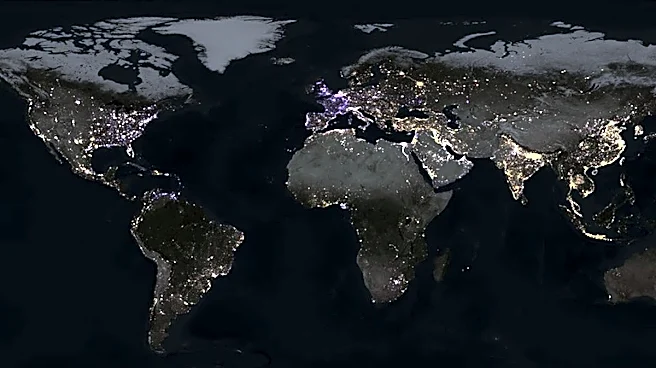




NASA’s recently released nighttime satellite map has drawn major attention online after Bihar and parts of Uttar Pradesh appeared among the brightest regions visible on Earth, leaving many social media users surprised
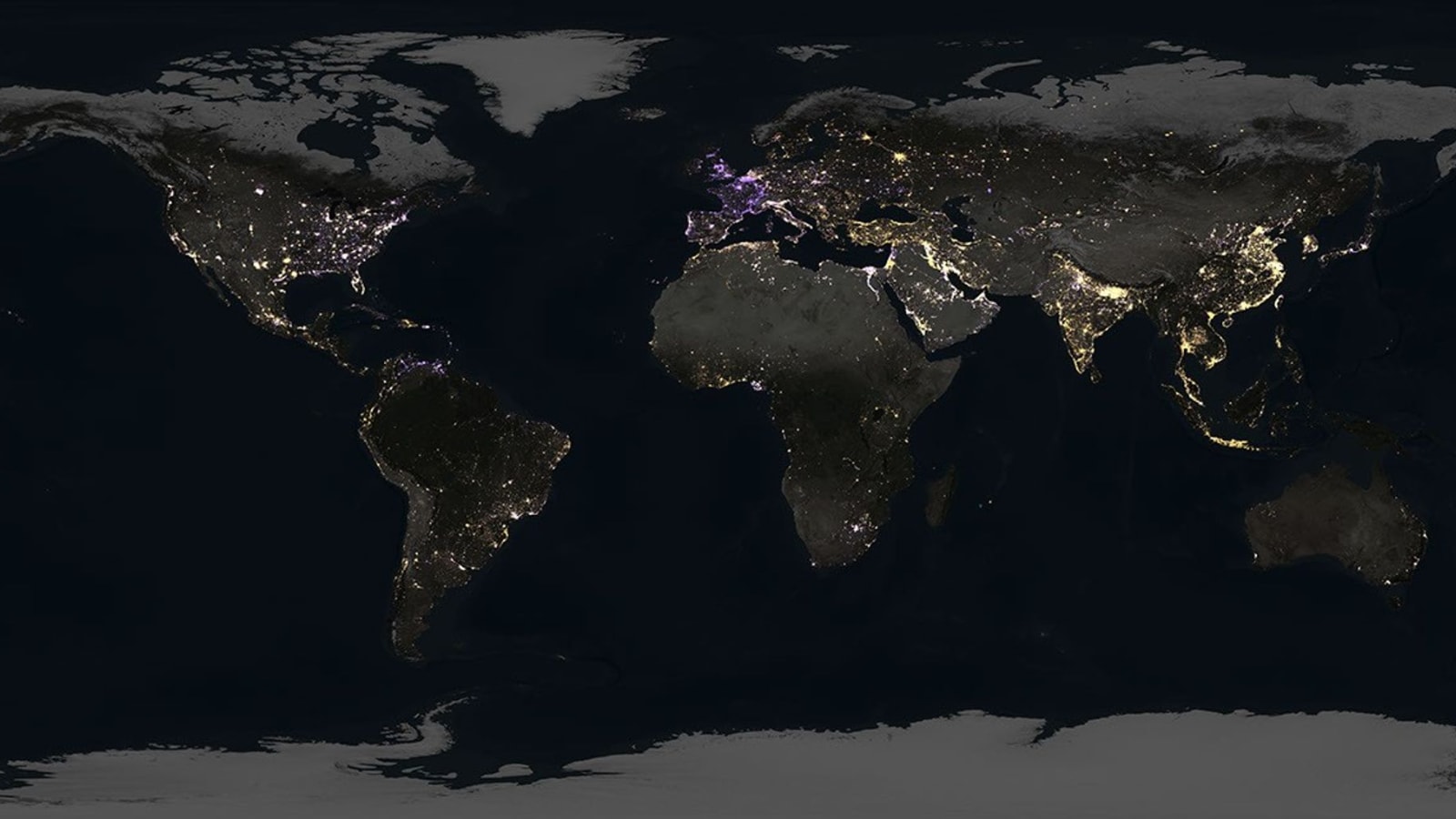
The map, released by NASA on April 16, shows how artificial night-time lighting changed across the world between 2014 and 2022. Scientists analysed around 1.6 million satellite images collected nightly over a period of nine years to create the visual representation of changing light patterns across the planet.
According to the findings, northern India, especially the Uttar Pradesh-Bihar belt, recorded a major rise in artificial lighting during the period. Bihar, in particular, stood out as one of the brightest regions visible in the data,
prompting many social media users to express surprise.
The research was led by Tian Li and Zhe Zhu from the University of Connecticut. The team used a new algorithm to study data collected through the Visible Infrared Imaging Radiometer Suite, commonly known as VIIRS.
In the imagery, golden shades indicate areas where nighttime brightness increased, while purple tones represent regions where lighting remained dimmer or decreased over time. Large parts of India, China, the Middle East, and Central America appeared in gold, while much of Europe showed purple shades, indicating a decline in night-time brightness during the same period.
However, it was Bihar’s visibility on the map that attracted the most attention online.
One user wrote, “Bihar is shining like a diamond.”
Another said, “Bihar’s per capita power consumption needs to be studied. Shining like a star.”
A user reacting to the map wrote, “Wait…Bihar is one of the most or maybe the brightest spot in the world??”
Another commented, “Bihar, the land of enlightenment is the brightest.”
One user questioned, “How come bihar is so bright than even delhi,” while another remarked, “my house is glowing.”
A widely shared reaction read: “That brightening of the UP-Bihar belt is the most astounding thing India has achieved in the last 10-15 years. Getting electricity to every nook & cranny, increasing the industry, fastest rising per capita in India, and the population density that’s benefiting all, shine through directly into space.”
Another user wrote: “I criticise Bihar a lot, and I am not happy with the new CM, but on this front, the work has been amazing. With such population density, to provide 21-23 hours of uninterrupted electricity in normal days, which used to be 6-8 hours, is phenomenal.”
A further comment read: “Truly Unbelievable it should have been Delhi , Mumbai , Bengaluru but instead Bihar lmao well it’s Achivement no doubt about it well honestly if I think about it it’s kinda reasonable as well cause It’s Enlightenment place of Goutam Buddha and more than few places related to it.”
Earth isn’t just getting brighter—some areas are brightening and others are dimming because of changes in nighttime lights.
The finding comes from analyzing 1.16 million NASA satellite images taken every night for nine years. pic.twitter.com/1kFso4QE1k
— NASA Earth (@NASAEarth) April 16, 2026
The study covered most inhabited parts of the world, from 60 degrees south latitude to 70 degrees north latitude. Scientists said the imagery was detailed enough to identify even small light sources, such as a toll booth on a dark highway.
Miguel Roman, deputy director for atmospheres and data systems at NASA Goddard Space Flight Center, said the data could play an important role in understanding energy use and national security.
“Unlocking energy sector insights is just one way NASA data is advancing national security interests at a critical time,” he said. “Earth at night has so much to teach us.”




/images/ppid_a911dc6a-image-177642856529377769.webp)



/images/ppid_a911dc6a-image-177650902738845947.webp)