
/images/ppid_a911dc6a-image-177583647256661822.webp)
/images/ppid_a911dc6a-image-177580003824922925.webp)
/images/ppid_a911dc6a-image-177579743691949677.webp)
In a first-of-its-kind move for the Mumbai’s property market
, a large real estate development is set to integrate AI-driven air purification technology across more than 10 lakh square feet, according to a report by The Times of India. The initiative comes through a collaboration between Superb Realty and deep-tech firm Praan, signalling a shift in how developers are rethinking indoor environments.The rollout will reportedly begin with a commercial project and is expected to extend to upcoming residential and mixed-use developments in Mumbai. Industry observers said that this marks a transition from traditional selling points, such as location or lifestyle amenities, to a sharper focus on environmental quality as a core feature of real estate.
Experts cited by TOI suggest that indoor air quality is increasingly being treated as a measurable factor influencing property value, workplace productivity and even long-term health. “Air quality is fast becoming a quantifiable premium in real estate,” said Shilpin Tater, pointing to emerging data that links cleaner indoor environments with sharper cognitive function and improved well-being.
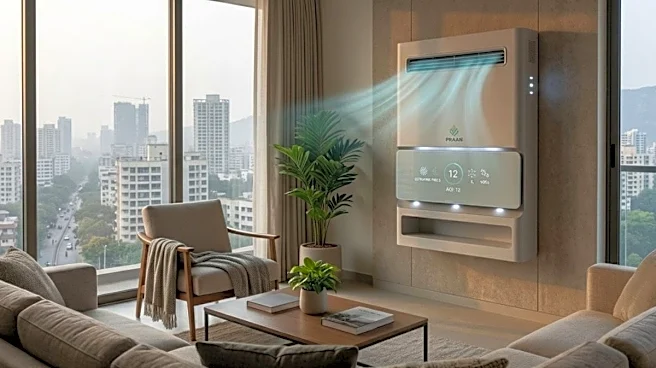
At the heart of the system is Praan’s proprietary technology, which combines real-time environmental monitoring with AI-led optimisation. The infrastructure is designed to continuously analyse indoor conditions and adjust purification levels accordingly. The company claims the system can filter ultrafine particulate matter—smaller than what conventional filters typically capture, and neutralise harmful gases at a faster pace. “Air remains one of the least optimised systems in building design despite being the most frequently used interface,” TOI quoted Angad Daryani as saying.
The first phase of deployment at Superb Altura is expected to function as a pilot project, establishing a benchmark for future integrations across the developer’s portfolio. The model has been built with scalability in mind, allowing similar systems to be embedded across a broader pipeline of projects.
How this technology works
Unlike standalone air purifiers used in homes, this is a building-wide system integrated into the core infrastructure. It uses sensors placed across indoor spaces to track pollutants such as PM2.5, volatile organic compounds (VOCs) and gases. These inputs are processed through AI systems that dynamically regulate purification intensity—essentially allowing buildings to “respond” to pollution in real time, both indoors and from external sources.
This is significant because global studies indicate people spend nearly 90% of their time indoors. Research cited by TOI noted that indoor air can often be two to five times more polluted than outdoor air due to trapped particulates, chemical emissions from materials, and microbial contaminants. The World Health Organisation has consistently flagged air pollution as one of the most serious environmental health risks worldwide, with India hosting several of the most polluted urban centres.
Is this becoming a trend?
The concept of “wellness real estate” is gaining traction, particularly in metro cities. Developers in regions like Delhi-NCR, which routinely records hazardous air quality levels, have already begun experimenting with air purification towers, treated fresh-air systems and sealed building envelopes in premium housing projects.
However, large-scale, AI-integrated purification infrastructure across entire developments remains relatively rare. Most existing solutions in polluted regions are either partial (clubhouse-level or lobby-focused) or rely on high-end, individual in-unit systems.
Other polluted urban clusters, such as parts of Haryana, Punjab and Uttar Pradesh, have seen early adoption of similar concepts, but largely within luxury or niche projects rather than mainstream housing.
What it means for homebuyers
The addition of advanced air purification infrastructure is expected to come at a premium. While developers have not publicly disclosed exact pricing for such integrations, industry estimates suggest that buyers could pay anywhere between 5%-15% more for homes equipped with centralised clean-air systems, depending on the scale and sophistication of the technology.
In high-end segments, this cost may be bundled into overall pricing, much like other premium amenities. However, the long-term pitch to buyers hinges on health benefits, reduced medical risks, and improved quality of life—factors that are increasingly influencing purchasing decisions in polluted urban environments.