


/images/ppid_a911dc6a-image-177886282797047720.webp)
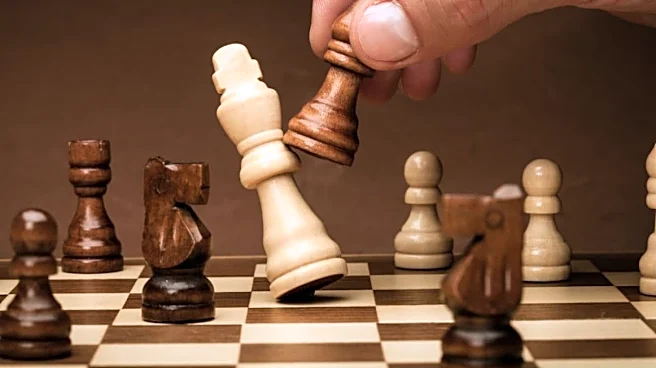
Chess seems simple. A board with 64 squares, a fixed set of pieces, and rules that haven’t really changed for centuries. At first glance, it feels small. But it isn’t.
The number of possible chess games is estimated to be around 10¹²⁰. This is called the Shannon Number, named after Claude Shannon, who came up with the idea in 1950 to show just how complex the game really is.
To make sense of that number, it helps to compare it with something bigger.
Scientists estimate there are between 10⁷⁸ and 10⁸² atoms in the observable universe.
Which means there are still far more possible chess games than atoms.
That sounds almost impossible, but it comes down to choices.
In most positions, a player has around 20 to 30 possible moves. Each move leads to more
options, and those lead to even more. Within just a few turns, the number of possible games grows so large that it’s impossible to calculate fully.
Even computers don’t try.
For years, the problem with machines playing chess was its overwhelming complexity. The early computer programs were unable to defeat strong players and did not use the exhaustive search method for all potential moves but instead used an intelligent approach to assess the position. And yet chess is far from being the most complicated game on Earth.
In fact, the old board game Go presents more possibilities than chess does.
However, AI programs such as AlphaGo have found a way around this problem by finding patterns instead of computing possibilities.
For players, though, this is what makes chess so fascinating.
Even after centuries, it hasn’t been exhausted. New positions keep appearing. Games that start the same way can end completely differently.
Two people can sit down with the same board and still play something entirely new.
That’s the strange thing about chess. It looks small. It feels simple. But once you start thinking about the numbers, it opens up into something almost limitless.






/images/ppid_a911dc6a-image-177886542726184122.webp)


/images/ppid_59c68470-image-177886507037891146.webp)

/images/ppid_59c68470-image-177886504809939351.webp)