

/images/ppid_a911dc6a-image-178451003874014815.webp)


The Uttar Pradesh government outlined its textile sector strategy and ongoing initiatives at Bharat Tex-2026, highlighting efforts to expand both traditional and modern segments of the industry.
Speaking at the event held at Bharat Mandapam in New Delhi, state minister Rakesh Sachan said Uttar Pradesh is positioning itself as a major textile hub by building on its existing handloom base while encouraging investment in garment manufacturing and technical textiles. The presentation focused on policy measures, production clusters and employment generation linked to the sector.
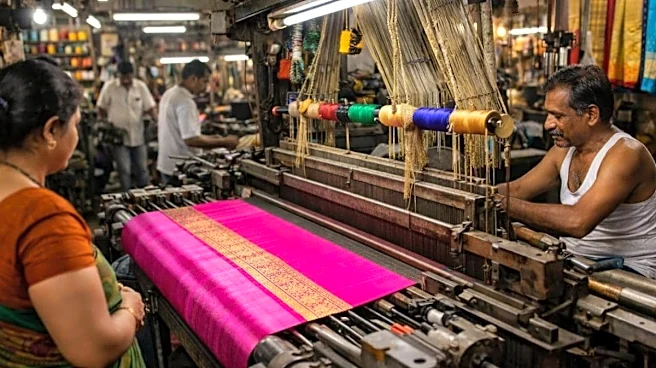
According to data shared at the event, the state has around 1.91 lakh handloom weavers. Traditional products such as Banarasi sarees, Chikankari from Lucknow, carpets from Bhadohi,
rugs from Sitapur, and home textiles from districts such as Meerut and Baghpat continue to contribute significantly to output. Officials said these segments are being supported alongside newer areas like technical textiles and organised garmenting.
Policy Push And Investment Measures
The Uttar Pradesh Textile and Garmenting Policy-2022 was highlighted as a key framework for attracting investment. Officials said the policy offers incentives including capital subsidies, interest subsidies, and concessions on land cost and stamp duty.
The government said these measures are aimed at creating a favourable investment environment and supporting the expansion of textile units across the state. According to officials, the policy is intended to increase both production capacity and employment opportunities in the sector.
Weaver Support And Welfare Schemes
Officials said multiple schemes are being implemented to support handloom weavers. These include electricity bill subsidies and targeted financial assistance for different categories of workers.
Scholarships are being provided to students of the Indian Institute of Handloom Technology (IIHT) in Varanasi, while recognition is extended through state-level awards such as the Sant Kabir Handloom Award. Specific provisions have also been introduced for Scheduled Caste weavers under state-run programmes.
The Mukhyamantri Handloom and Powerloom Udyog Vikas Yojana was cited as a mechanism for providing access to modern technology and financial support.
Infrastructure And Market Linkages
The proposed PM MITRA textile park in the state was highlighted as a major infrastructure project intended to integrate different stages of textile production. Officials said the park is expected to support large-scale manufacturing and streamline supply chains.
Participation of weavers, self-help groups and textile enterprises in national and international trade fairs is also being facilitated. The government said assistance is being provided for stalls, transportation and related costs to improve market access for products from the state.
The presentation at Bharat Tex-2026 focused on outlining these initiatives and the broader approach being adopted to expand Uttar Pradesh’s textile sector across traditional and emerging segments.







/images/ppid_a911dc6a-image-178457246088659911.webp)
