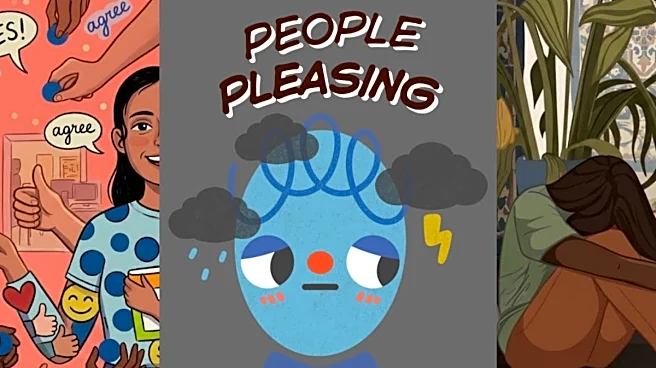




We all have moments when we do not really want to do something but say yes anyway. You may be exhausted after work but still agree to meet a friend because you do not want them to feel bad. A colleague may ask for help while your own workload is unfinished, and you agree before checking your schedule. Sometimes, you avoid expressing your opinion simply because an uncomfortable conversation feels too difficult.
Saying yes can feel easier in the moment. But when it becomes a repeated pattern, the emotional cost can be much greater than we realise.
“People pleasing is not the same as being kind. There is a difference between helping someone because you genuinely want to and helping because you are worried about what might happen if you refuse,” explains
Devina Kaur, Mental Health Educator, Certified NLP Coach.

Is People Pleasing The Same As Kindness?
Being considerate, supportive and generous is a healthy part of relationships. People pleasing, however, often involves ignoring your own needs to avoid guilt, rejection, criticism or conflict.
That constant worry can take more out of you than you realise. You may find yourself thinking:
- Will they be angry with me if I say no?
- Will they think I am rude or selfish?
- What if they stop needing me?
- Will this relationship change if I express what I really want?
From a psychological perspective, people-pleasing often grows from a deep fear of rejection or conflict. Many of us learned early that keeping others happy was the safest way to feel accepted. Over time, that protective habit can turn into a pattern of self-abandonment — where your own needs quietly get pushed aside.
Over time, saying yes can become an automatic response rather than a conscious choice.
The Emotional Cost Of Always Being Available
One of the earliest signs of people pleasing is feeling that you must always be available. You agree to plans despite being tired, take on responsibilities you cannot manage, apologise for having needs and feel guilty when you rest.
As Devina explains, “You may even feel guilty while taking some time for yourself.” The problem is not one favour or one difficult week. It is the repeated habit of placing everyone else’s needs ahead of your own until your emotional reserves begin to run low.
Research and clinical discussions around people pleasing link the pattern with emotional exhaustion, anxiety, resentment and difficulty identifying personal preferences. When you constantly monitor other people’s moods, you may spend more energy managing their reactions than understanding your own feelings.
People Pleasing & Burnout
One of the first signs is feeling that you are always available for everyone- You agree to things even when you don’t have the time, you apologise for saying no, you may even feel guilty while taking some time for yourself.

And after a while, frustration can creep in. You might think, “I am always there when they need me. Why does nobody notice when I need help?”
This is also where burnout can become a concern. Being busy for a few days is one thing, feeling mentally exhausted for weeks is another. When you keep giving your time and energy without allowing yourself enough rest, even easy things can begin to feel difficult.
- You may have less patience
- Things that normally make you happy may not interest you as much
- Even sitting down to relax can make you feel guilty
Devina says, “When you keep giving your time and energy without allowing yourself enough rest, even easy things can begin to feel difficult.”
Over time, people pleasing can also create distance. When you repeatedly hide your preferences to keep others happy, people may not get to know the real you. A relationship can look harmonious on the outside while feeling emotionally disconnected underneath.

Where Should You Draw The Line?
The first step is to pause before agreeing. Instead of responding immediately, ask yourself:
- Do I genuinely want to do this?
- Do I have the time and emotional capacity?
- Am I saying yes out of willingness or fear?
- What will I have to give up if I agree?
- Am I expecting the other person to recognise or repay this effort?
A boundary does not have to be harsh. You can be warm and direct without offering a long explanation.
Try saying:
- “I will not be able to take this on right now.”
- “I need some time before I can commit.”
- “I understand this is important, but I do not have the capacity today.”
- “I would prefer to do something else.”
The discomfort that follows a boundary does not necessarily mean you have done something wrong. It may simply mean you are doing something unfamiliar.
Saying No Does Not Make You Selfish
Learning to say no is not about becoming indifferent to other people. It is about recognising that your needs are part of the relationship too.
Healthy relationships make room for mutual care, honest communication and changing capacities. You can support someone without becoming responsible for their every emotion. You can disappoint someone without harming them. And you can care deeply while still choosing rest, privacy and personal space.
As Devina puts it, “Looking after other people matters, but looking after yourself matters even more.”
The line is worth drawing wherever your yes repeatedly requires you to abandon your own wellbeing.