


This was the fourth time in the day Ramachandra Gowda from Shirvase village in Karnataka’s Chikkamagaluru checked the newly installed rain gauge in his backyard.
“This one has AI technology and collects more information than your earlier, simpler one,” said his regular electronics seller from Bengaluru.
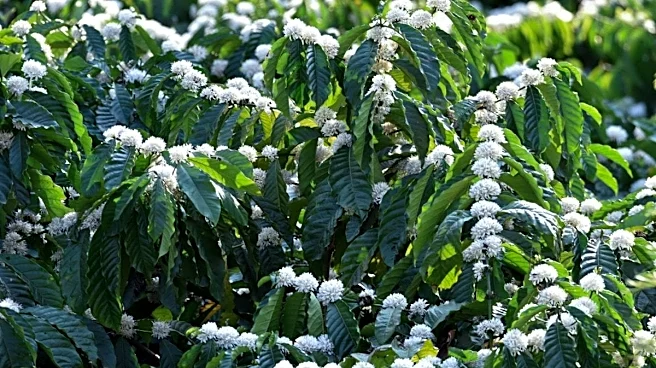
Gowda is curious if having more information will actually help him predict crop prices more accurately this season. He owns 56 acres of coffee plantation, where he also grows black pepper, cardamom and vanilla.
This pattern is common among coffee growers in the Chikkamagaluru and Kodagu districts of Karnataka: they cultivate a couple of other crops alongside coffee, ensuring more than one source of income.
WHAT ARE THESE DEVICES?
Every grower with 50 acres or more in these
districts has some form of rain-gauging device on their farm. Twenty years ago, it was often a simple, self-made contraption with a funnel and a bucket to show the amount of rainfall on a particular day or over a few days.
Today, modern equipment provides far more detailed data helping farmers and planters make better decisions about their crops and the economics that come with them. These devices do not even require permissions to be installed.
As a result, people with large landholdings who grow commercial crops use them to assess expected output for the season.
“You can easily get these devices in the market, ranging from Rs 1,000 to Rs 5 lakh,” said Dr Srinivas Reddy, former director of the Karnataka State Natural Disaster Monitoring Centre (KSNDMC).
He said these devices have become a boon for farmers and planters. “These devices do not just tell you about the quantity of rain, they greatly help with precision agriculture. Based on the data, one can calculate and even predict production, market trends, diseases, yield and decline in crops,” he added.
Weather monitoring devices not only indicate if rainfall in a particular area is high or low, they also help in localised crop planning. Some farmers maintain detailed manual logs of readings.
Even the weather monitoring department or KSNDMC has, at times, collected data from such points to improve the density of its collection. However, even those with advanced weather-gauge equipment still depend on inputs from the India Meteorological Department (IMD) to predict future rainfall.
Prof Thimmegowda MN, agricultural meteorologist at Gandhi Krishi Vigyan Kendra (GKVK) in Bengaluru, said these devices can provide current and past data but forecasting still relies on experts.
“Planters now have devices that function like automated weather stations. The better ones provide fairly accurate readings on sunshine quality, wind speed, wind direction, evaporation, soil moisture, atmospheric humidity and other parameters. Most coffee growers are well educated and are aware of these tools. They know how to use this data effectively for both plantation and market decisions,” Thimmegowda told News18.
HOW DO THESE DEVICES HELP?
Achyuth Kumar, a coffee planter from Aldur in Chikkamagaluru, said: “Once we know these parameters, crop management becomes easier. At least we are not shooting in the dark.”
He explained how modern weather technology is helping growers make better decisions on when to sell their produce.
“I meticulously note down the data and sometimes discuss it with neighbouring growers. If soil moisture reaches a certain level, flowering may turn out well. If rain predictions suggest light showers, fruiting may improve. So we get a rough idea of how the crop may perform this season. If production looks good, we can also estimate market prices,” he said. “Of course, these are not always accurate. We cannot control the weather. It may suddenly pour heavily and wash everything away. But at least we have some dependable knowledge. Collective data is a goldmine.”
Many pepper and cardamom growers also choose to store well-processed, sun-dried black pepper if prices are not favourable. Since properly processed pepper has a longer shelf life, they often wait up to a year for better market rates. India has produced roughly 3.7 to 3.9 lakh metric tonnes of coffee annually in 2023-2024 and 2024-2025 estimates, placing it among the top global producers.
Karnataka continues to dominate, contributing around 2.5 to 2.8 lakh tonnes, or about 70 to 71 percent of the country’s total output during this period. This leadership comes from districts such as Chikkamagaluru, Kodagu and Hassan, where both arabica and robusta varieties are widely cultivated.
At the same time, coffee cultivation in the region remains closely tied to weather patterns. The crop depends on timely blossom showers, evenly distributed rainfall and relatively stable temperatures. Even minor deviations can affect flowering, fruiting and overall yield quality.
In recent seasons, growers have faced erratic rainfall, hailstorms and sudden heat spikes. These shifts have damaged blossoms, increased the risk of disease and, in some cases, reduced output.
For planters, this makes both production and pricing uncertain. A well-timed spell of rain can improve yields, while an untimely shower can disrupt an entire season making coffee farming as much about responding to the weather as managing the crop itself. As a result, many rely on their own weather monitoring systems to better anticipate changes and minimise potential losses.