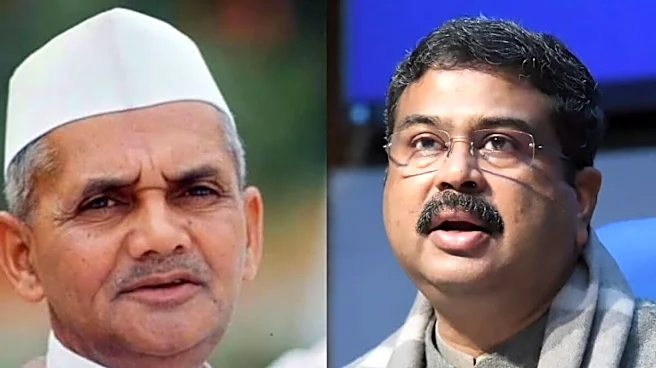


The resignation of Union Education Minister Dharmendra Pradhan on July 25, 2026, marked the culmination of weeks of nationwide student-led protests over the NEET paper leak controversy. His exit from the Union Cabinet came after sustained public demonstrations demanding accountability for the alleged irregularities in one of the country’s most important entrance examinations.
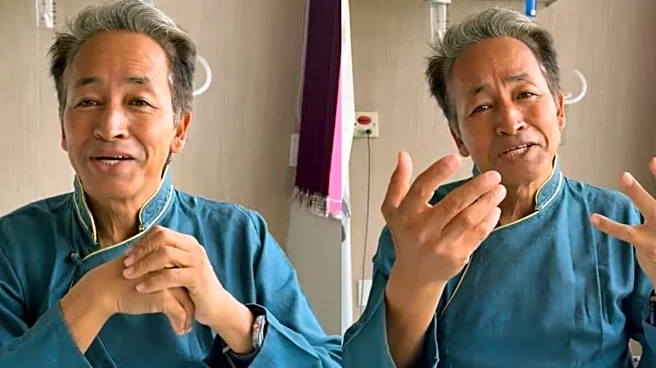
The protests gathered significant momentum when activist Sonam Wangchuk joined the agitation alongside the student-led Cockroach Janta Party (CJP). Wangchuk’s 26-day hunger strike became a rallying point for the movement, backing the demand that Pradhan resign. For the protesters, his resignation became a non-negotiable condition.
Amid mounting pressure, Pradhan eventually
stepped down on Saturday, triggering renewed discussions on political accountability and ministerial responsibility in India.
While such resignations remain uncommon, there have been several instances since Independence where Union ministers have vacated office following controversies, public outrage, accidents or corruption allegations.
Here’s a look at some of the most notable cases.
Lal Bahadur Shastri
One of the earliest examples of political accountability came in 1956 when Lal Bahadur Shastri resigned as Union Railway Minister after the Ariyalur train derailment in Tamil Nadu claimed more than 150 lives. Accepting moral responsibility for the tragedy, he submitted his resignation on November 25, 1956.
Although former Prime Minister Jawaharlal Nehru initially declined to accept it in an effort to preserve his Cabinet, Shastri stood by his decision and ultimately stepped down.
T.T. Krishnamachari
T.T. Krishnamachari resigned as Union Finance Minister in February 1958 following the Mundhra scandal. He returned to the same portfolio in September 1963. Still, he resigned again in 1965 after the Prime Minister requested the Chief Justice of India to conduct an informal inquiry into allegations of favouritism against him.
V.K. Krishna Menon
V.K. Krishna Menon relinquished his position as Defence Minister on November 9, 1962, after widespread criticism following India’s defeat in the Sino-Indian War. Public opinion had mounted against him, prompting Jawaharlal Nehru to remove him from the defence portfolio while retaining only the defence production responsibilities.
His resignation was widely seen as an acknowledgement of India’s inadequate military preparedness during the conflict.
V.P. Singh
Serving as Defence Minister in 1987, V.P. Singh resigned after investigations began into allegations that commissions had been paid in a submarine procurement deal. Years later, on November 7, 1990, he also resigned as Prime Minister after the collapse of his minority coalition government.
Madhavrao Scindia
Madhavrao Scindia resigned from the Union Cabinet on two separate occasions. His first resignation came in January 1993, while serving as Civil Aviation Minister, when he accepted moral responsibility for the crash of a leased Russian Tu-154. He stepped down again in January 1996 as Human Resource Development Minister after his name surfaced in connection with the Hawala corruption case.
Nitish Kumar
In August 1999, Nitish Kumar resigned as Railway Minister following the Gaisal train collision in West Bengal, which killed nearly 290 people. Taking moral responsibility for the accident, he submitted his resignation to then Prime Minister Atal Bihari Vajpayee.
His resignation was accepted, making him one of the few Union ministers in independent India to leave office over a major railway tragedy.
Shivraj Patil
Shivraj Patil resigned as Union Home Minister after accepting moral responsibility for the security lapses surrounding the 26/11 Mumbai terror attacks. Earlier, in September 2008, he had drawn criticism after changing outfits three times before addressing the media following the Delhi serial blasts.
The images were widely circulated, shaping public perception of his leadership. Two months later, he resigned, citing moral accountability.
A. Raja
A. Raja stepped down as Minister of Communications and Information Technology in 2010 after facing corruption allegations in the 2G spectrum allocation case during the Manmohan Singh government. Despite his resignation, Raja maintained that he had merely followed the policy introduced by the previous National Democratic Alliance government and had committed no wrongdoing.
Dayanidhi Maran
Dayanidhi Maran resigned as Union Textiles Minister in 2011 after the CBI submitted a status report to the Supreme Court alleging that, during his tenure as Information Technology and Communications Minister, he had forced telecom entrepreneur C. Sivasankaran to sell his Aircel stake to Malaysia-based Maxis.
Pawan Kumar Bansal
Pawan Kumar Bansal resigned as Union Railway Minister in 2013 after reports alleged that his nephew, Vijay Singla, had accepted a bribe from a Railway Board member to facilitate a lateral promotion. The controversy quickly became one of the most high-profile bribery scandals involving the ministry.
Ashwani Kumar
Ashwani Kumar resigned as Union Law Minister in May 2013 after the Supreme Court criticised the government’s handling of the coal block allocation, or Coalgate, investigation. Although the controversy centred on legal and political issues rather than an accident, his resignation was projected as an act of accountability.
M.J. Akbar
Former Union Minister M.J. Akbar resigned in October 2018 after several former colleagues accused him of sexual harassment, allegations first made public by journalist Priya Ramani. He stepped down to pursue a personal defamation case against Ramani over the accusations.
Despite nearly eight decades of parliamentary democracy, resignations on grounds of moral responsibility have remained relatively rare in India. While cabinet reshuffles routinely involve ministers stepping down, resignations triggered by accidents, policy failures, corruption allegations, judicial intervention or sustained public pressure continue to attract national attention because they are the exception rather than the rule.
/images/ppid_a911dc6a-image-178504310791685788.webp)


/images/ppid_a911dc6a-image-17849676769087991.webp)
/images/ppid_a911dc6a-image-178498192056661457.webp)