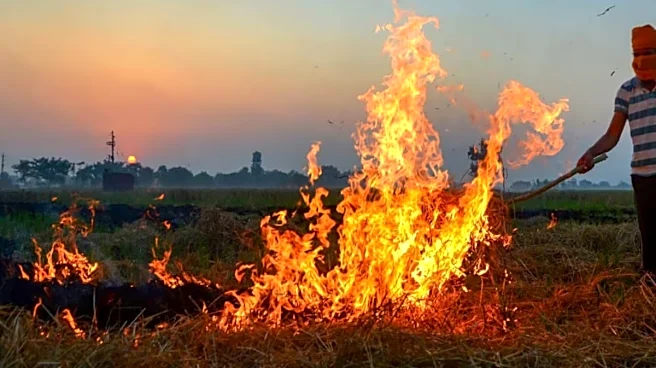


Punjab and Haryana have doubled the amount of paddy straw being put to alternate use in industries and power plants since 2023, instead of being burnt in fields, said Union Environment Minister Bhupender Yadav, highlighting the decline in stubble burning amid the government’s ongoing clean air efforts.
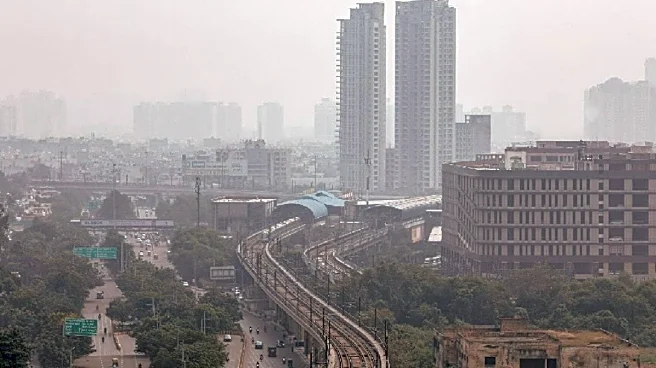
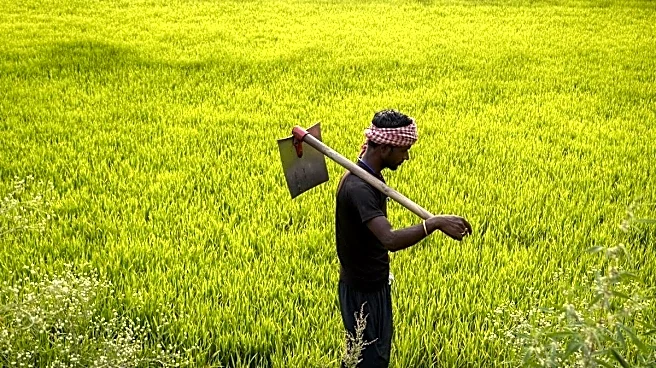
Stubble burning is a key contributor to Delhi’s spike in winter pollution in early November, with crop residue fires in neighbouring states of Punjab and Haryana worsening the toxic smog, as winter sets in. This year, the paddy harvesting season from 15 September to 30 November was estimated to generate 18.80 million tonnes of paddy straw in Punjab, 7.97 million tonnes in Haryana and 0.85 million tonnes of paddy straw in Uttar Pradesh-NCR.
According
to the data shared by the ministry, Punjab has so far used nearly 7.89 MT of paddy straw this season in industrial boilers, biomass power plants, co-firing in thermal power plants, compressed biogas plants and brick kilns, compared to just 3.66 MT in 2023. In Haryana, the share of ex-situ management increased from 1.32 MT to 2.71 MT, indicating the two states are turning the tide on stubble burning.
Speaking to the media on Tuesday, Yadav said the two states have so far achieved the target of managing at least 40% of their paddy straw through ex-situ methods instead of burning it. “In fact, it has doubled since 2023. The paddy harvesting is still underway, and it should get completed this week. But by next year, we plan to take the share of ex-situ management of paddy straw to at least 60%. This time, we ensured that all the states submit advance action plans to combat air pollution and have time-bound targets.”
The minister said the focus has been on timely delivery of Crop Residue Machines (CRM) in hotspot districts. “The hotspot districts were identified, and flying squads and drones were also deployed this time for enforcement,” he said. The ex-situ management of paddy stubble refers to managing the paddy stubble outside fields, with the help of baler machines which can convert paddy straw into bales to be transported to industries for generating energy.
90% DECLINE IN STUBBLE BURNING SINCE 2021
Yadav also highlighted that the total fire counts reported during paddy harvesting have declined by 93% in Punjab and 91% in Haryana compared to 2021 amid the government’s clean air efforts. According to the satellite data monitored by the Indian Agricultural Research Institute (IARI), fire counts in Punjab declined from 18,066 incidents reported between 15 September and 2 November in 2021 to 2,262 last year and only 1,612 to date this year.
Though there was a delay in harvesting this season due to unseasonal rains, a year-on-year comparison shows that from 15th September to 1st November, Punjab reported 1,514 fire counts against 2,084 incidences in 2025, a decline of 38%, and Haryana 42 against 118, a decline of 64%, the ministry said. This year, the CAQM had also started mapping the burnt area to monitor stubble burning, and it showed that from 15th September to 28th October 2026, the burnt area has also reduced to 7.92% of rice area in Punjab and 6.99% in Haryana, from 14.6% and 16.8%, respectively, in 2025.
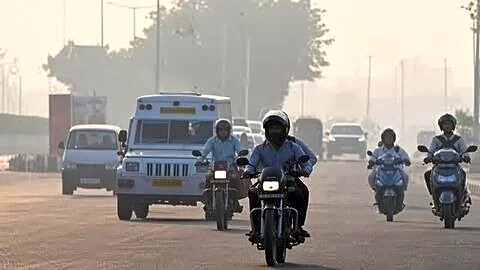
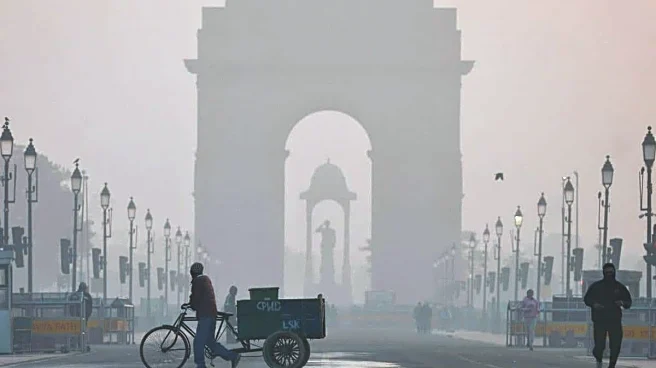
Meanwhile, the air quality slipped into the ‘very poor’ category in Delhi on Monday, with the Air Quality Index surging past 300. The latest analysis done by the Pune-based Indian Institute of Tropical Meteorology (IITM) showed that the contribution of stubble burning to Delhi’s toxic air has remained under 12% so far. It surged to 11.5% – the season’s highest – on 31st October when 292 incidents were recorded in Punjab, but it fell to 8% the next day.