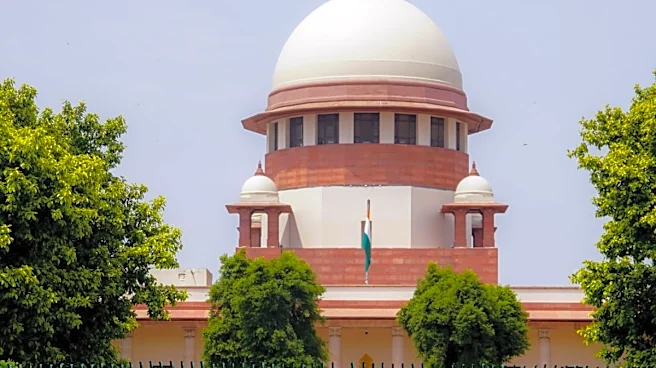




In a major move aimed at reducing judicial delays and protecting personal liberty, the Supreme Court on Friday issued a comprehensive set of binding directions to all high courts across the country, mandating strict timelines for the pronouncement of judgments and the disposal of bail pleas.
A bench led by Chief Justice of India Surya Kant and Justice Joymalya Bagchi directed that bail applications should ordinarily be heard and decided on the same day, or at the latest within 24 hours of the hearing.
The apex court also fixed a maximum period of three months for high courts to pronounce judgments after reserving orders.
“The high courts shall pronounce the judgment within a maximum period of three months from the date of reserving,” the court said
while introducing a structured accountability mechanism for delays.
The ruling came during proceedings concerning prolonged delays in the delivery of judgments by several high courts, especially in criminal appeals involving life convicts who remained in jail for years despite hearings being completed.
Pronouncing the verdict, CJI Kant said the guidelines would come into force immediately and instructed registrar generals of all high courts to place the framework before their respective chief justices for implementation.
Under the directions, if a judgment remains pending beyond three months, the matter must automatically be brought before the chief justice of the concerned high court within two weeks. If the judgment is still not delivered after an additional two weeks, the chief justice may transfer the case to another bench for a fresh hearing.
The Supreme Court further ordered that orders granting bail or suspending sentences must be communicated to jail authorities immediately after pronouncement so that undertrials or convicts can preferably be released on the same day or by the next day.
Addressing delays in uploading detailed judgments, the bench said courts may pronounce only the operative portion in urgent matters, but the reasoned judgment must be uploaded within seven days and, in exceptional cases, within a maximum of 15 days.
The court identified demolition, eviction, educational admissions and bail matters as categories where urgent interim directions may be necessary.
All detailed judgments pronounced in open court must now be uploaded on high court websites within 24 hours, the bench said.
In another transparency measure, high court websites will now be required to display the date on which judgments are reserved immediately after hearings conclude. If only the operative part is pronounced, the case status must clearly mention that detailed reasons are awaited.
The court also directed automated emails and notifications to be sent to advocates once judgments are uploaded online.
To track pending reserved judgments, the bench ordered that automated monthly emails containing details of delayed matters must be sent to the concerned judges as well as the chief justice of the respective high court.
The judgment additionally created remedies for litigants affected by delays. Parties will now be allowed to seek an early pronouncement if a judgment is not delivered within three months. Such applications must be listed before the concerned bench within two working days, excluding holidays.
If a judgment remains pending beyond three months plus one additional month, litigants may request transfer of the matter to another bench for rehearing.
Similarly, where the operative portion is delivered, but the detailed judgment is not uploaded within 15 days, parties may move an application seeking early release of the reasoned order. If the detailed judgment remains unavailable for more than one month, reassignment of the case may be sought.
The Supreme Court also directed that certified copies of judgments must now include three separate dates: the date when the judgment was reserved, the date of pronouncement of the operative order, and the date when the detailed judgment was uploaded.