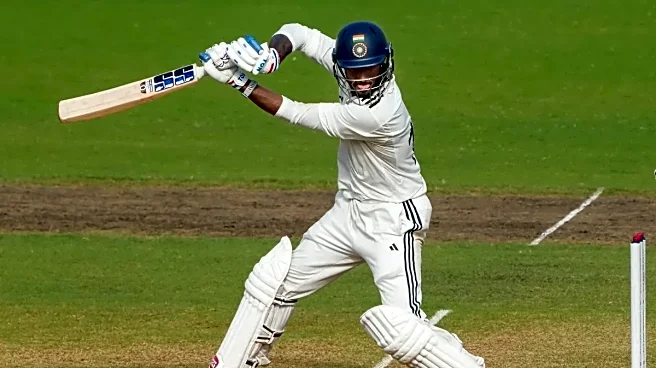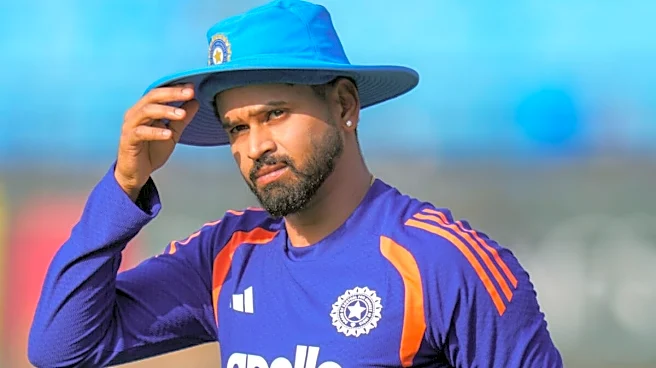

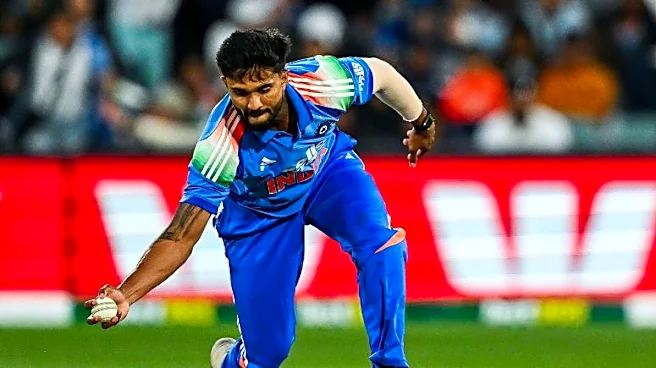
After a disappointing campaign at the FIH Hockey World Cup, the Indian men’s and women’s hockey teams have left for Aichi-Nagoya, Japan, to participate in the 2026 Asian Games. While the men’s team, the highest-ranked side in Asia, will enter the continental showpiece as one of the favourites for the gold medal, the women’s team will be aiming to end a 44-year wait for its second Asian Games gold after finishing fifth at the World Cup.
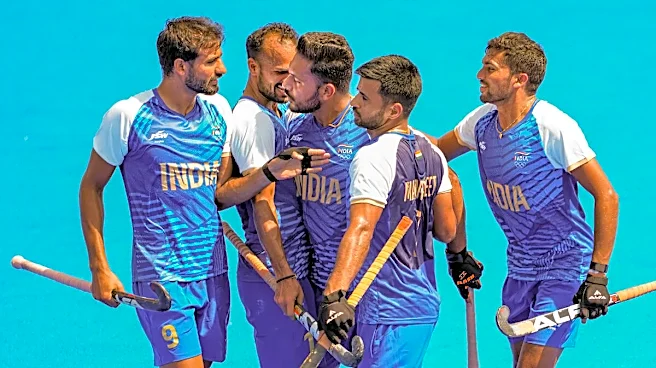
However, there will be a notable change when both Indian teams take the field in Japan. Unlike at the World Cup, where they wore saffron as their primary colour, the Indian men’s and women’s teams will once again be seen in their iconic blue jerseys at the Asian Games.
Why are India wearing blue again?
The decision
comes after the controversial change in India’s traditional jersey colour at the World Cup last month. For the first time, the Indian teams completely moved away from blue and wore saffron as their first-choice kit, with white serving as the second option.
The change attracted considerable criticism from fans and former hockey players, with many questioning the decision to move away from the colour traditionally associated with Indian hockey.
For the Asian Games, Hockey India has now opted to bring blue back as the first-choice colour. Saffron, meanwhile, will remain the second-choice kit.
“The IOA (Indian Olympic Association) had given us options regarding the team kit colours and HI selected blue as the first choice for the Indian team’s kit. Orange will be the second choice,” Hockey India president Dilip Tirkey said on Tuesday.
Was the World Cup criticism the reason?
Hockey India has not officially cited any particular reason for reverting to blue. However, the decision is widely believed to have come after the criticism surrounding the team’s saffron jerseys at the World Cup.
Blue has long been closely associated with Indian hockey and has been a prominent colour in the national team’s kits over the years. While the second-choice colour has changed from white to yellow and, more recently, saffron, blue has remained a familiar part of India’s hockey identity.
Is there another reason for the change?
The nature of the Asian Games could also have played a role in the decision.
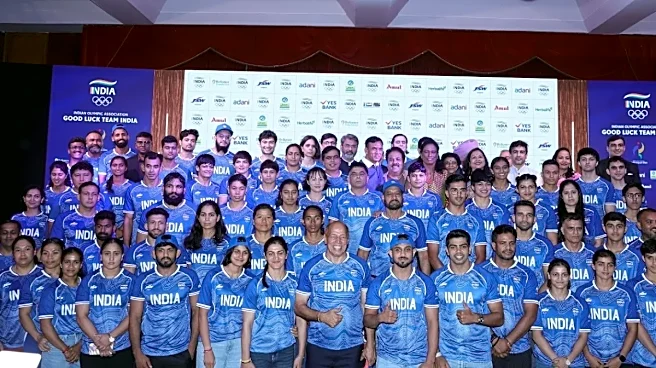
Unlike the Hockey World Cup, which is a standalone hockey tournament, the Asian Games are a multi-sport event featuring athletes from India across several disciplines. Athletes competing in different sports are part of the same Indian contingent and traditionally wear colours associated with the country’s overall sporting identity.
In this case, blue is the dominant colour associated with the Indian contingent.
Therefore, India’s return to blue at the Asian Games could be seen not only as a response to the controversy surrounding the World Cup kits but also as a way of aligning the hockey teams with the broader Indian contingent at a multi-sport event.
What happened to the saffron jersey?
The saffron jersey has not been completely discarded. It will serve as India’s second-choice kit at the Asian Games, meaning the teams could still wear it if there is a colour clash with their opponents.
At the World Cup, however, India had completely moved away from blue, choosing saffron as the first-choice colour and white as the alternative.
The decision to bring blue back at the Asian Games therefore marks a return to a colour that has been closely associated with Indian hockey for years with saffron still retained as the backup option.