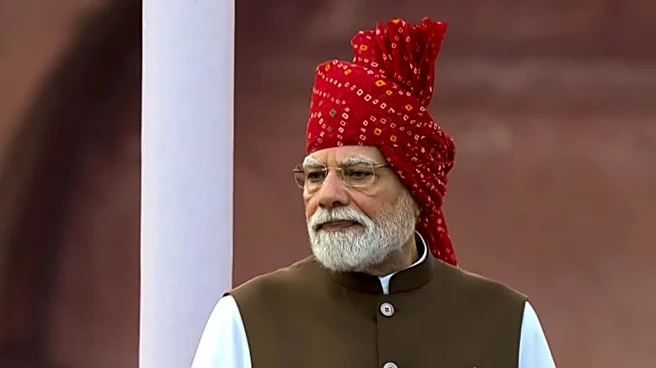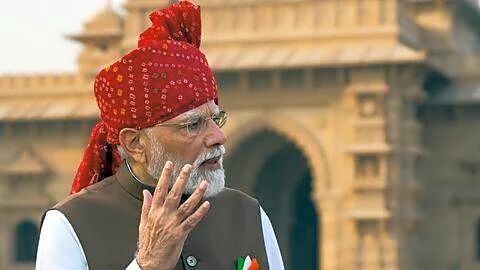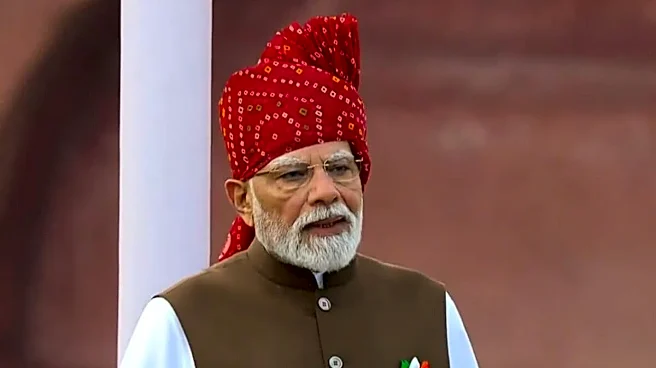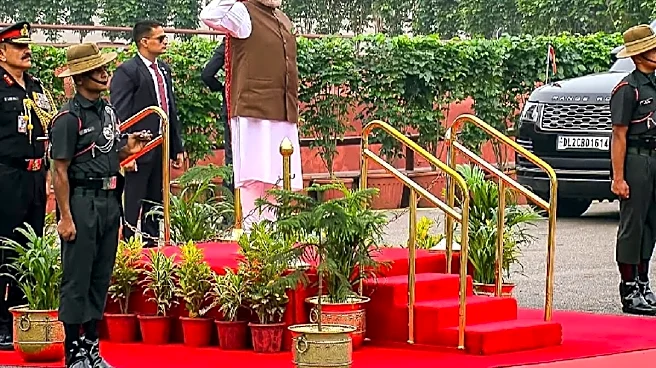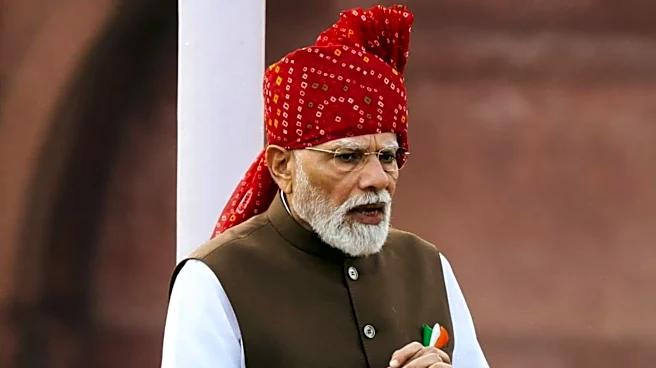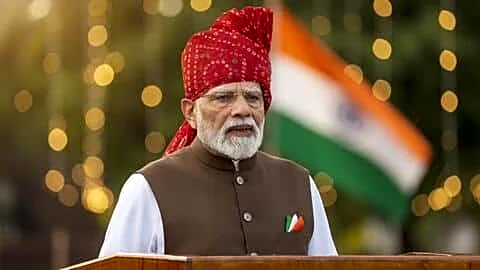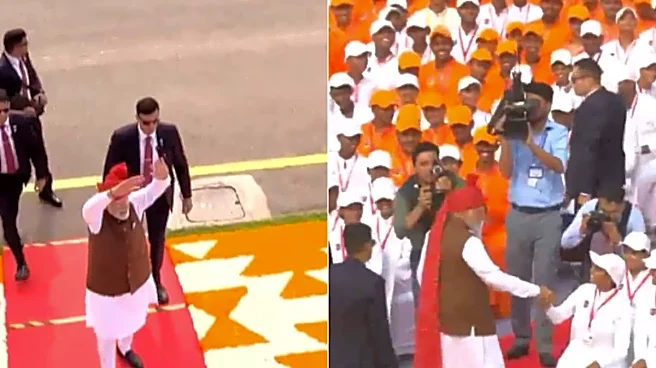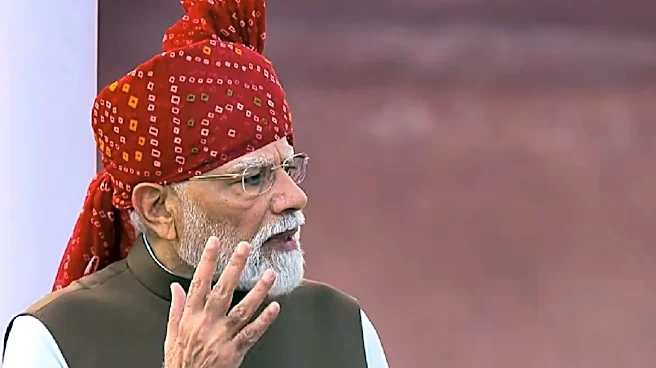

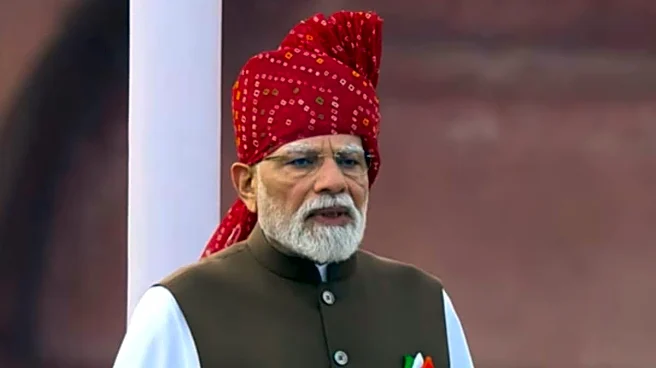
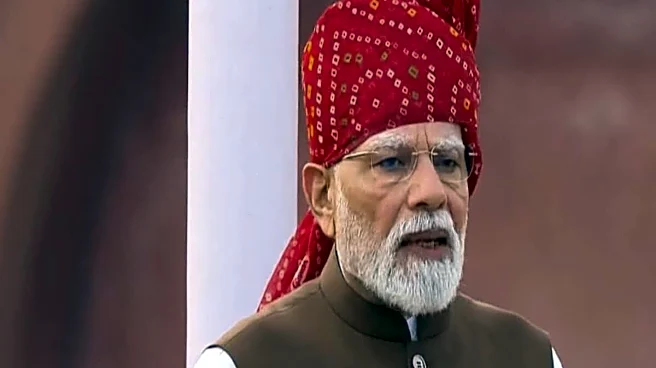
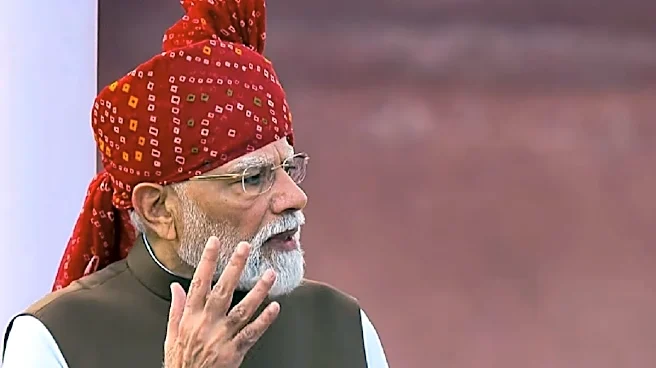
On India’s 80th Independence Day, Prime Minister Narendra Modi on Saturday put self-reliance at the centre of his address from the Red Fort, highlighting semiconductors, critical minerals and energy security as key areas in India’s push towards becoming a developed nation by 2047.
PM Modi said India “cannot remain dependent on other nations” and stressed the need to strengthen domestic capabilities in strategic sectors. He also reiterated the government’s Atmanirbhar Bharat, Make in India and Vocal for Local push, saying Indians were increasingly supporting Swadeshi products.
Here are three key takeaways from PM Modi’s Independence Day speech:
Semiconductor Push
PM Modi said India was moving towards self-reliance in semiconductor manufacturing as chips
become increasingly important for electronic goods, medical equipment and transportation systems.
He said three major semiconductor plants have already started operations and their production is expected to be exported. The Prime Minister also said another five to eight semiconductor plants are likely to become operational over the next seven to eight years.
PM Modi linked the expansion of semiconductor manufacturing to India’s Atmanirbhar Bharat push and the goal of becoming a Viksit Bharat by 2047.
Critical Minerals
Critical minerals also featured prominently in PM Modi’s self-reliance pitch, with the Prime Minister highlighting the need for India to secure access to resources that are crucial for its future energy, industrial and technological requirements.
India has been stepping up efforts to reduce its dependence on imported critical minerals through the National Critical Minerals Mission. The minerals are important for sectors including clean energy, high-tech manufacturing and defence.
The push has assumed greater importance as India seeks to expand domestic manufacturing in areas such as semiconductors, renewable energy and electric mobility, all of which depend on secure supplies of strategic raw materials.
The government has also been strengthening international partnerships to secure critical mineral supply chains. Recent agreements with countries including Australia have focused on critical minerals alongside uranium, green hydrogen and renewable energy cooperation.
Energy Security
Energy security was another major focus of PM Modi’s address. The Prime Minister cited the expansion of data centres and the semiconductor industry while stressing the need to meet India’s growing energy requirements.
He said India is working towards producing 100 GW of nuclear energy by 2047.
PM Modi also highlighted the expansion of solar energy, saying India’s solar capacity has increased from just 2 GW to 160 GW over the past 12 years. He said 50 lakh households are now using solar energy under the PM Surya Ghar Muft Bijli Yojana.
The Prime Minister also pointed to the expansion of piped gas infrastructure. He said piped gas distribution, which covered around 70 cities before 2014, has now expanded to 700 cities. Household coverage has increased from around 20–22 lakh 12 years ago to nearly 1.75 crore, he said.
PM Modi also highlighted India’s first hydrogen-powered train, describing it as the world’s longest and most powerful hydrogen train and citing it as an example of the country’s move into new fuel technologies.
On railway electrification, PM Modi said only 30 per cent of the railway network had been electrified between 1925 and 2014. “90 years for 30%,” he said, adding that India had achieved 100 per cent railway electrification over the past decade.
PM Modi also referred to domestic exploration, saying 99 per cent of India’s coastline had earlier been classified as a “no-go area” for exploration. He said the government has now opened up the area, describing the earlier approach as a “poverty of thought”.