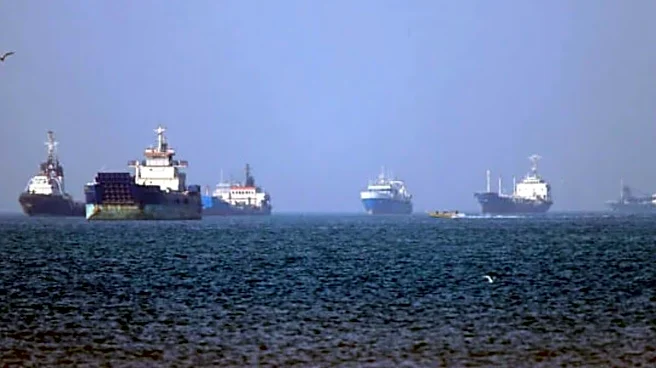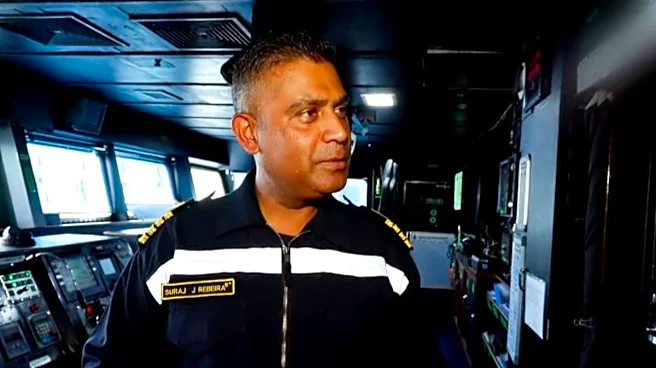



Even though no kinetic action was eventually initiated from the sea during Operation Sindoor, the Indian Navy’s deployment in the Northern Arabian Sea had established such dominance that Pakistani naval assets were compelled to remain inside their harbours. One year after the operation, launched by India in response to the Pahalgam terror attack, the Commanding Officer of INS Chennai has revealed the kind of operational instructions they had received from the top leadership and how their deployment changed the course of Op Sindoor. INS Chennai was among the frontline platforms deployed during the operation and was moments away from launching offensive action. The Commanding Officer of the platform was later awarded gallantry recognition for his
role during the operation.
In an interview with CNN-News18 onboard INS Chennai, Captain Suraj J Rebeira said the Navy had “dominated the seas” across all three domains of surface, air, and subsurface during the operation. “We were able to push the enemy back and compel them to stay back in their harbours,” he said.
While the Air Force and Army remained visibly engaged during the operation, the Indian Navy had simultaneously deployed a powerful Carrier Battle Group led by INS Vikrant in the Northern Arabian Sea. Captain Rebeira indicated that frontline warships had already been given precise operational mandates as part of the deployment.
“The instructions given to us were precise, very unambiguous and provided us absolute freedom of action operationally at sea,” he said. “Whether we were operating with the Carrier Battle Group or as a detached surface action group, there was no doubt what we were supposed to do.”
INS Chennai, a Kolkata-class indigenous guided missile destroyer equipped with BrahMos supersonic cruise missiles and advanced surveillance systems, remained deployed as part of the forward naval posture during the operation.
In one of the strongest operational remarks made publicly after the operation, the officer suggested that naval formations had remained fully prepared for escalation.
“We compelled the adversary to go back. If compelling doesn’t work, then coercion or kinetic action is next to follow,” Captain Rebeira said.
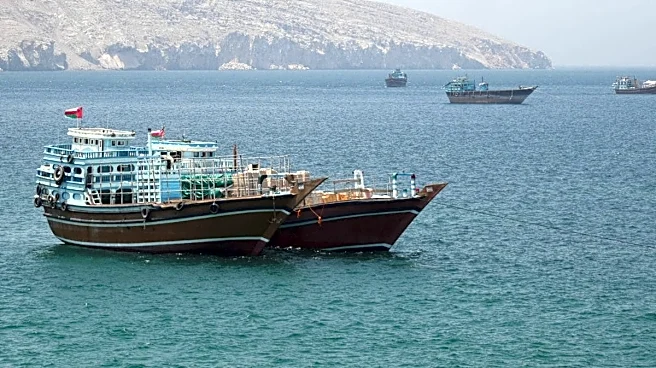
The officer also described the Northern Arabian Sea as one of the most strategically sensitive maritime spaces in the world because of critical energy and trade routes passing through the region.
“The choke points that run the economy of the world lie within the Northern Arabian Sea, whether it’s Hormuz or the Gulf of Aden,” he said. “The navy that dominates this area is the one that calls the shots.”
Recalling the atmosphere onboard during the deployment, Captain Rebeira spoke about one particular early morning when the crew remained prepared for possible action.
“It was a humid morning. The deck of the ship had light moisture on it. The stars were very bright,” he recalled. “There was this professionalism of everybody going about their task, a very clear resolve in the eyes of the junior-most crew member. That gave me the greatest confidence that whatever we were tasked with would 100 per cent happen.”
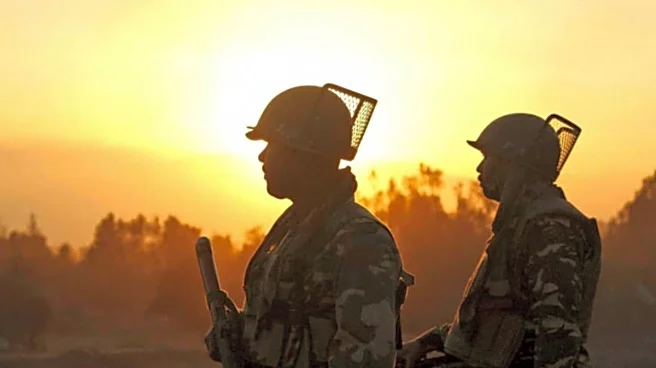
The officer also highlighted the level of jointness between the Army, Navy, and Air Force during the operation. He said, “There is no warfare that has ever succeeded without jointness. In Sindoor, it was careful handling and synergistic utilisation of all three forces together.”
/images/ppid_a911dc6a-image-177876931176233875.webp)

/images/ppid_59c68470-image-177875009331261851.webp)

/images/ppid_a911dc6a-image-177875103372811410.webp)

/images/ppid_59c68470-image-177882259177356448.webp)
/images/ppid_a911dc6a-image-177872502931610304.webp)