

/images/ppid_a911dc6a-image-178446322522512034.webp)


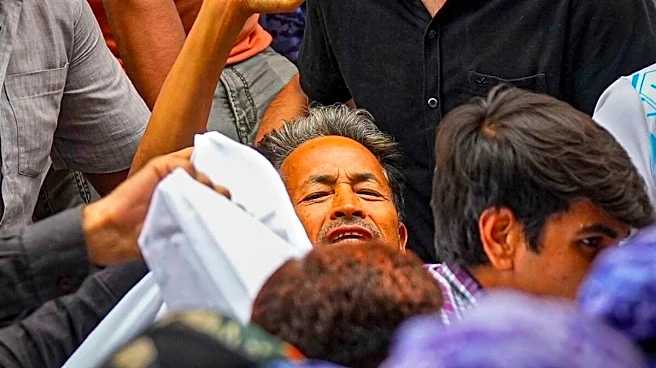
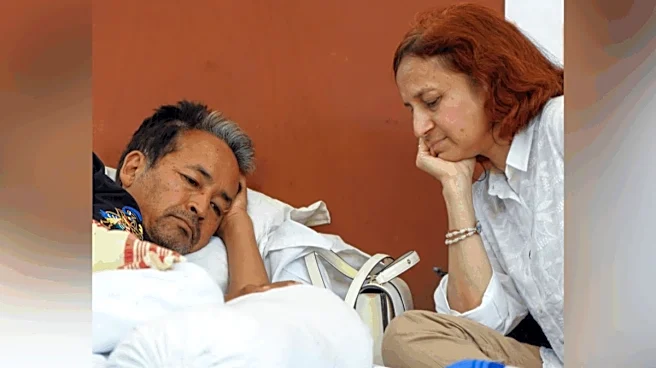
Sonam Wangchuk has been on a hunger strike since June 28 in New Delhi’s Jantar Mantar. While his demand for the resignation of the Indian education minister continues, he has been taken to the hospital for emergency medical care. The Indian activist was fasting for 21 days, and a public interest litigation (PIL) was filed in the Delhi High Court on July 15 to seek judicial intervention to monitor his health and force-feed Sonam Wangchuk.
Sonam Wangchuk went on an indefinite hunger strike to support the Cockroach Janta Party (CJP), which is a youth-led satirical movement lead by Abhijeet Dipke. The 59 year old activist went on a hunger strike was to demand educational reforms and the resignation of Union Education Minister Dharmendra Pradhan over
corruption and the leaks of the question paper in medical entrance exams like NEET-UG.
While the government has not had any dialogue with the protesters, the Delhi High Court ordered the government to do whatever it takes to save his life, and the innovator and environmentalist was taken to Safdarjung Hospital on July 18. Now, the CJP’s founder Abhijeet Dipke annouced that he will continue the hunger strike in place of Sonam Wangchuk.
There can be many benefits for fasting, however, when done for a prolonged time, without any food consumed, the body starts to shut down. Do not be confused, this is not a fast for health, in fact, it is a fast that if continued will lead to the death of the activitst.
Sonam Wangchuk during his hunger strike of over 20 days consumed only salt and water. This provided the activist minimal electrolytes to prevent immediate cardiac arrest from pure water fasting, though it still leads to severe weight loss, weakness, and dehydration over weeks. During his fast in Delhi, he had lost more than 9kg and was in a lot of pain.
According to Dr Satish Lamba, who examined him, shared that Sonam Wangchuk’s blood sugar was recorded at 78 mg/dl, while a repeat tests confirmed persistently low serum potassium.
The hospital said in a statement that Sonam Wangchuk was weak owing to prolonged fasting and dehydration. “Although he is currently stable, he requires continuous observation, monitoring and treatment to restore his body parameters,” it read, adding, “Althought intravenous fluids were advised but the patient has all intravenous fluids, oral rehydration fluid or any other medication.”
There are various ways of going on hunger strike. It is dry fasting and total fasting. While former means that one is not consuming any food or water, the latter usually means that the striker is only consuming water, but this may include the intake of minerals, sugar or
vitamin. If the hunger strike goes on to a prolonged period and food is refused, it can affect most organs and systems. According to an article by Radio Free Europe, such behaviour can cause muscle weakness, vulnerability to infections, psychological problems, and, eventually, organ failure.
It is estimated that if a protester is healthy before going on a hunger strike, and continues to receive fluids, he or she is at risk of dying from malnutrition after six to eight weeks. The Baharain Independant Commission reported that if the person the hunger strike has any underlying health problems, it can be made worse with the fasting. Those with conditions such as diabetes, kidney disease, cardiovascular disease, or peptic ulcer disease and fasting can become very dangerous, even life-threatening, very quickly.
/images/ppid_a911dc6a-image-17845594657307286.webp)

/images/ppid_a911dc6a-image-178452822255398975.webp)

/images/ppid_a911dc6a-image-178455563565988367.webp)
/images/ppid_a911dc6a-image-1784642628386215.webp)