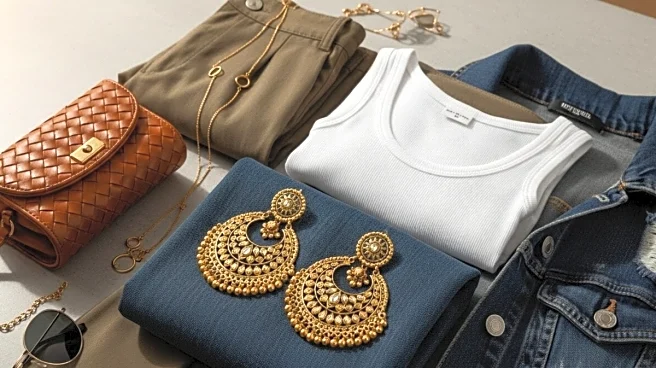

Fashion’s most compelling moments often emerge from contrast – and today, few combinations feel as striking as traditional Indian earrings paired with modern silhouettes. Chandbalis and jhumkas, once firmly
reserved for weddings, festivals, and ethnic wear, are now stepping confidently into western wardrobes. From evening gowns and corsets to blazers, denim, and minimalist dresses, these heritage pieces are being styled as bold, standalone statements.
This shift reflects a broader movement within fashion – one where cultural identity is no longer compartmentalised. Instead, it is celebrated, layered, and worn with intention, allowing tradition to coexist effortlessly with contemporary style.
A Trend Driven By Storytelling And Self-Expression
According to jewellery and fashion voices in the digital creator space, the revival of chandbalis and jhumkas isn’t accidental, but it’s deeply emotional. Jaipur-based designer Aanchal Jain observes, “There’s a growing appetite for jewellery that tells a story. Millennials and Gen Z customers want pieces that reflect their heritage but still feel contemporary.” She adds that pairing a jhumka with a crisp white shirt or denim is now seen as “effortlessly chic.”
Fashion creator Jhanvi Bhatia echoes this sentiment, noting how traditional jewellery offers an easy entry into Indo-western dressing. “The simplest way to elevate a western outfit is by adding Indian jewellery,” she explains, pointing to oversized chandbalis as instant show-stoppers that require little additional styling.
Why Contrast Is Doing The Heavy Lifting
What makes chandbalis and jhumkas work so well with western wear is contrast. Ornate kundan, meenakari, pearls, and mirror work stand out sharply against clean silhouettes and muted colour palettes. “A giant chandbali can completely transform a gown or corset,” says Bhatia, highlighting how one statement piece can carry an entire look.
Fashion creator Chandni Solanki, known for pairing oversized earrings with minimal outfits, believes this styling choice goes beyond trends. “Wearing traditional jewellery with western wear isn’t just about fashion, it’s about making heritage part of your everyday identity,” she says. The look, she notes, feels both rooted and rebellious.
Jewellery brands have quickly adapted to this evolving aesthetic. Solanki points out that contemporary chandbalis are now lighter, sharper, and more adaptable – designed to transition seamlessly from festive events to red carpets and even casual outings.
Sonia Garg, digital fashion creator, notes, “The global rise in sustainable fashion is helping traditional Indian jewellery gain attention. Unlike fast fashion accessories, jhumkas and chandbalis are crafted to last — often handmade with silver, gold, or oxidised metal. Many consumers see them as investment pieces with cultural and emotional value.”
Social Media And The Global Spotlight
Social media has played a pivotal role in accelerating the trend. Styling reels and festive transitions have normalised pairing ethnic jewellery with western outfits, making the look aspirational yet accessible. Bhatia believes visibility fuels confidence, noting that the more people see celebrities and creators wearing it, the more comfortable they feel trying it themselves.
The movement has also found resonance beyond India, especially among the South Asian diaspora, where traditional earrings are worn proudly as cultural identifiers in global fashion spaces.
The re-emergence of chandbalis and jhumkas with western wear isn’t a fleeting trend. It’s a reflection of fashion’s evolving mindset. By embracing contrast, craftsmanship, and cultural pride, these timeless earrings have found renewed relevance. No longer confined to special occasions, they now serve as everyday statements – proof that tradition, when styled with confidence, can feel strikingly modern.