
/images/ppid_59c68470-image-178660252353926346.webp)
/images/ppid_59c68470-image-178658502685899562.webp)

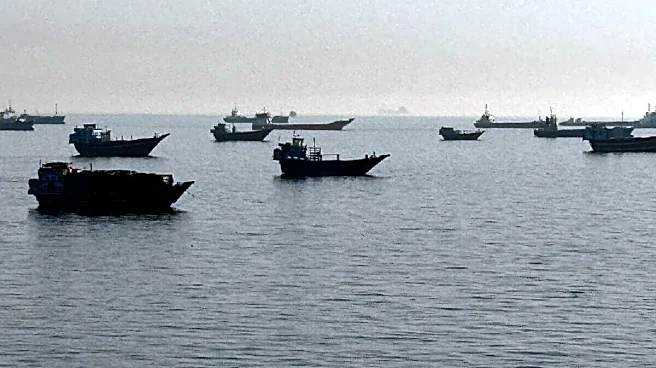
Iran and Oman have reached a crucial agreement establishing designated shipping routes through the Strait of Hormuz, marking the first major breakthrough in restoring order to the world’s most vital maritime oil passage.
While technical talks remain ongoing and a joint formal statement is pending, the two coastal states have mapped out defined entry and exit corridors aimed at protecting national sovereignty while allowing safe commercial transit.
The Breakthrough Map
Under the negotiated framework, Iran will oversee inbound commercial traffic while Oman manages outbound vessels, establishing dedicated shipping lanes designed to prevent collisions and security incidents. Negotiated independently by Tehran and Muscat, the arrangement seeks to resolve months of maritime
disruption without compromising the territorial rights of either nation.
The technical teams are currently fine-tuning operational protocols, communication channels, and environmental safeguards before issuing an official joint declaration.
Reopening Depends on US Actions
Despite the structural progress, Iranian officials emphasise that mapping shipping routes does not mean the narrow waterway will immediately reopen to unrestricted global traffic. Tehran maintains that restoring full commercial navigation remains contingent on broader geopolitical conditions, specifically demanding an end to US naval blockades, military threats, and economic sanctions.
Until these external conditions are met, the newly designated corridors will operate under strict monitoring.
Why the Strait Matters
The Strait of Hormuz is the world’s most critical energy chokepoint, handling roughly 20 per cent of global petroleum supply and vast quantities of liquefied natural gas. Months of heightened tension and transit disruptions have severely impacted international energy markets, sending global crude prices flaring and triggering steep war-risk insurance premiums for commercial fleet operators.
The framework established by Oman and Iran offers global markets their clearest sign yet of a diplomatic path forward, though full maritime stability remains tethered to wider international negotiations.

/images/ppid_59c68470-image-178676002952410181.webp)

/images/ppid_59c68470-image-178676253462528726.webp)
/images/ppid_59c68470-image-178671009354363717.webp)
/images/ppid_59c68470-image-178670002596897550.webp)