

/images/ppid_a911dc6a-image-177806722552453997.webp)
/images/ppid_a911dc6a-image-177787486321885120.webp)
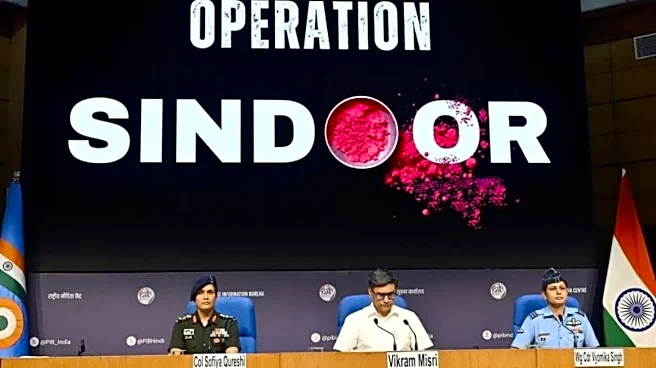
Operation Sindoor marked a decisive turning point in the security dynamics of the Indian subcontinent, exposing both the vulnerabilities and miscalculations embedded in Pakistan’s strategic posture. Triggered by the 22 April 2025 terrorist attack in Pahalgam that killed 26 civilians—21 tourists and 5 local residents—the operation unfolded as a calibrated, data-driven response that combined intelligence precision with military restraint. What followed was not merely a retaliatory campaign, but a systematic dismantling of cross-border terror infrastructure, juxtaposed against a faltering and reactive Pakistani response that revealed more weaknesses than strength. Within 48 to 72 hours of the Pahalgam attack, Indian intelligence agencies had compiled
a multi-layered evidentiary framework linking the perpetrators to Pakistan-based networks. Signals intelligence intercepts, financial transaction trails, and satellite imagery collectively identified 17 high-value targets across Pakistan-administered territories. These included 9 training facilities, 4 logistical hubs, and 4 communication centres that formed the backbone of infiltration and coordination efforts. The speed of this identification process—compressed into under three days—highlighted a significant leap in real-time intelligence fusion and operational readiness. Operation Sindoor commenced with a sequence of precision strikes executed over an 11-day period. The Indian Air Force conducted more than 120 sorties, supported by unmanned aerial systems that accumulated over 1,500 hours of surveillance and reconnaissance. Strike accuracy rates were estimated at above 85%, with minimal collateral damage reported due to the integration of AI-assisted targeting systems. These systems reportedly reduced targeting errors by approximately 30%, allowing for surgical engagement of militant infrastructure while avoiding civilian zones. Ground-based and cyber units operated in parallel, disrupting at least 23 digital communication channels used by militant groups, effectively severing command-and-control networks during the critical phases of the operation.
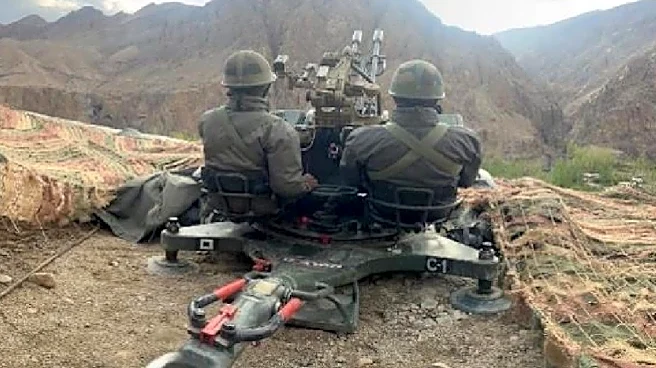
Pakistan’s response, in contrast, appeared fragmented and reactive. Over a span of five days, Pakistani forces initiated approximately 38 ceasefire violations across 14 sectors along the Line of Control. Artillery shelling intensified in regions such as Poonch and Rajouri, yet damage assessments indicated limited tactical impact, with less than 2% disruption to Indian forward logistics and supply chains. Attempts at airspace incursions—recorded at 11 separate instances—were largely intercepted or deterred, with only three escalating into brief aerial engagements. None of these encounters resulted in confirmed Indian losses, while Pakistan’s ability to sustain coordinated aerial pressure remained constrained. Casualty figures further underscored the imbalance in outcomes. Estimates indicated that over 70 militants were neutralised during Operation Sindoor, significantly degrading operational capabilities across multiple launch pads. On the Indian side, casualties remained under 15, including both military personnel and civilians affected by retaliatory shelling. Infrastructure damage in Pakistan-administered zones included the destruction of at least 12 permanent structures and severe impairment of 6 additional facilities linked to militant activity. Conversely, Indian infrastructure sustained only minor and largely reversible damage, primarily confined to temporary forward posts. The economic ramifications of the episode revealed a similarly asymmetric pattern. Pakistan’s financial markets reacted sharply, with its benchmark stock index declining by an estimated 6–8% within two weeks of the operation’s commencement. Currency volatility increased, and foreign investment inflows showed a measurable slowdown. In contrast, Indian markets exhibited only marginal fluctuations before stabilising, reflecting investor confidence in the controlled nature of the escalation. Cross-border trade volumes, already limited, fell by nearly 40% during the peak of tensions, disproportionately affecting local economies in Pakistan-administered regions that rely on informal trade networks.
Tourism in Jammu and Kashmir experienced an immediate but short-lived impact. Booking cancellations surged by approximately 18% in the week following the Pahalgam attack, yet recovery began within a month as security measures were intensified and domestic travel campaigns were launched. The resilience of the tourism sector contrasted sharply with the longer-term reputational damage faced by Pakistan, where the association with cross-border militancy further eroded its standing in international forums. Diplomatically, the sequence of events placed Pakistan on the defensive. At least 11 countries issued statements condemning the Pahalgam attack, while calls for restraint during the escalation phase stopped short of criticising India’s targeted strikes. This nuanced international response indicated a broader shift in global tolerance toward counterterrorism measures backed by verifiable intelligence. Multilateral discussions increasingly focused on state responsibility in preventing the use of territory for terrorist activities, amplifying pressure on Pakistan to address longstanding concerns.
A critical dimension of Operation Sindoor was its reliance on data-centric warfare. Real-time integration of satellite feeds, drone reconnaissance, and electronic intelligence enabled decision-making cycles to shrink dramatically, from several hours to mere minutes. This acceleration not only enhanced operational efficiency but also reduced the window for adversarial countermeasures. The use of predictive analytics allowed Indian planners to anticipate movement patterns within militant networks, further increasing the effectiveness of strikes. In contrast, Pakistan’s response mechanisms appeared slower and less coordinated, reflecting a gap in both technological integration and command synchronisation. Pakistan’s misadventure during this period can be understood as a convergence of strategic miscalculations. The initial failure to prevent or distance itself from the Pahalgam attack created a credibility deficit that shaped subsequent narratives.
More critically, the assumption that conventional deterrence—through artillery escalation and limited aerial manoeuvres—would offset India’s response proved flawed. The data indicates that these measures neither altered the operational trajectory of Operation Sindoor nor imposed significant costs on Indian forces. Instead, they exposed limitations in Pakistan’s ability to translate tactical actions into strategic leverage. By the end of May 2025, ceasefire conditions were largely restored, yet the implications of Operation Sindoor continued to reverberate. The operation demonstrated a shift towards precision-driven engagements, where the combination of intelligence depth, technological integration, and calibrated force application defines success.
It also underscored the diminishing returns of conventional escalation in the face of data-enabled warfare, where speed, accuracy, and information dominance outweigh sheer volume of firepower. In purely quantitative terms, the operation achieved a high degree of its stated objectives: over 85% target neutralisation, disruption of more than 20 communication channels, and minimal collateral damage. Qualitatively, it reinforced a strategic doctrine centred on accountability and deterrence without uncontrolled escalation. Pakistan’s inability to effectively counter or absorb these measures highlighted structural gaps that extend beyond the immediate conflict, encompassing intelligence coordination, technological adoption, and strategic planning.
As the region moves forward, Operation Sindoor stands as a case study in the evolving nature of conflict in the subcontinent. It illustrates how data, technology, and precision can reshape traditional paradigms of engagement, and how miscalculations—when compounded by inadequate response frameworks—can lead to outcomes that are both operationally and strategically unfavourable. Pakistan’s misadventure, viewed through this lens, was not merely a failed reaction but a revealing moment that exposed the shifting balance of capability and preparedness in one of the world’s most sensitive geopolitical theatres.
The writer is an author and columnist. His X handle is @ArunAnandLive. Views expressed are personal and solely those of the author, and do not necessarily reflect News18’s views.

/images/ppid_a911dc6a-image-1778127088977833.webp)

/images/ppid_a911dc6a-image-177812186285817306.webp)


/images/ppid_a911dc6a-image-177811483296713180.webp)