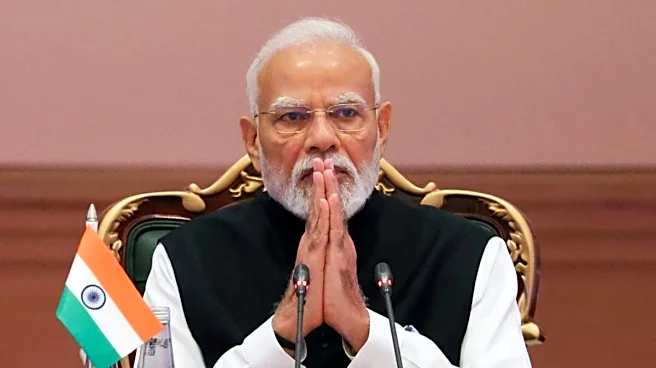




In a major diplomatic victory, Prime Minister Narendra Modi announced that the BRICS Joint Declaration 2026 has been adopted at the ongoing two-day summit at Bharat Mandapam with full consensus.
Prime Minister Modi said the New Delhi Declaration 2026 had been adopted unanimously, with no member raising any objections. He also launched two postage stamps, commemorating the 20th anniversary of BRICS.
In his concluding remarks, PM Modi said that the shared commitment of partnering countries to BRICS cooperation has emerged. “Today’s discussion makes it evident that the changing world cannot be steered by outdated institutions; reforms are essential in representation, responsiveness, and rule-making,” he said.
Sharing my concluding remarks during the
BRICS Summit. https://t.co/9QfEumb6jq
— Narendra Modi (@narendramodi) September 12, 2026
PM Modi On Role Of Global South
All sides also emphasised the equal participation of the Global South in the development of future technologies and the rules governing them, PM Modi said.
“The gap that currently exists between decisions and their outcomes must be addressed through partnership and collective action. The New Delhi Declaration adopted today provides clear direction to our shared resolve. It is now our responsibility to turn these commitments into concrete outcomes,” he added.
The Prime Minister also announced the conclusion of the BRICS Summit session on “Inclusive Global Governance and Strengthening Multilateralism.”
Why Is This Significant?
The declaration condemned the imposition of unilateral coercive measures, including economic sanctions and tariffs, while expressing concern about ongoing conflicts. The declaration call for exercising maximum restraint in the escalation of tensions in West Asia.
The achievement is particularly significant as India faced an uphill task for bloc unity at a summit overshadowed by tensions related to the war in West Asia, which has led to attacks on Gulf countries and resulted in the closure of the strategically vital Strait of Hormuz.
The consensus was reached after intensive negotiations that continued until 4 am, with member countries divided over several contentious issues, according to a report by Reuters. India led sustained consultations with the participating countries to bridge their differences and work towards a common position.
Iran, Saudi Arabia and the UAE are all part of the expanded grouping despite big differences over several regional and geopolitical issues. The UAE, which has faced Iranian missile attacks since the conflict began, suspended all trade and financial transactions with Iran in August.
Iran had wanted BRICS to explicitly condemn the US-Israeli attacks and Western sanctions, while the UAE wanted the declaration to recognise Iranian missile and drone attacks on Gulf territory and facilities.
/images/ppid_59c68470-image-178940002314032276.webp)

/images/ppid_59c68470-image-178940002762241516.webp)


/images/ppid_59c68470-image-178939757189852584.webp)


/images/ppid_59c68470-image-178939752684894651.webp)