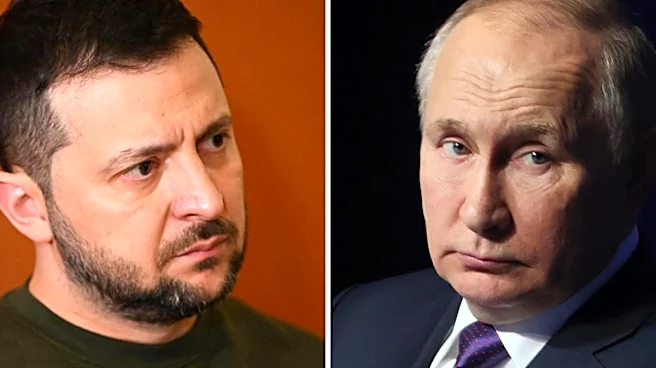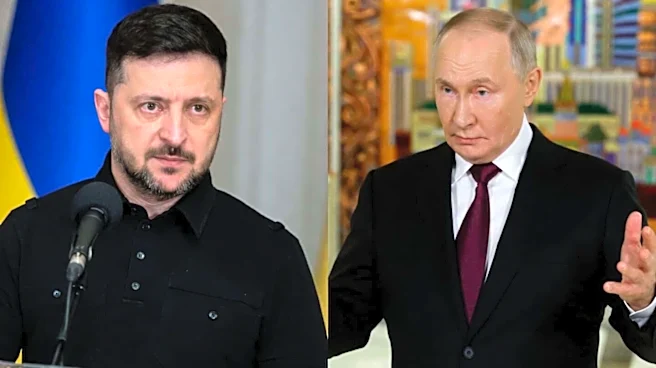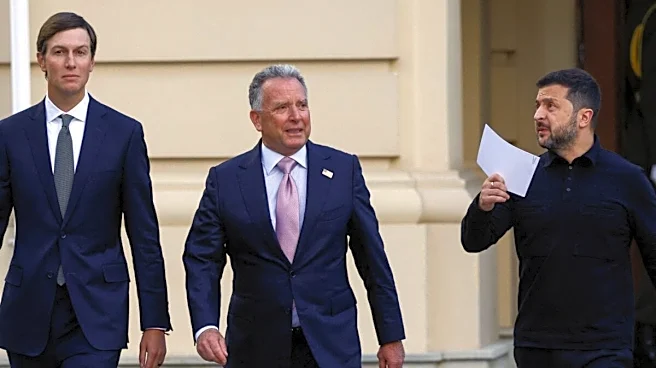

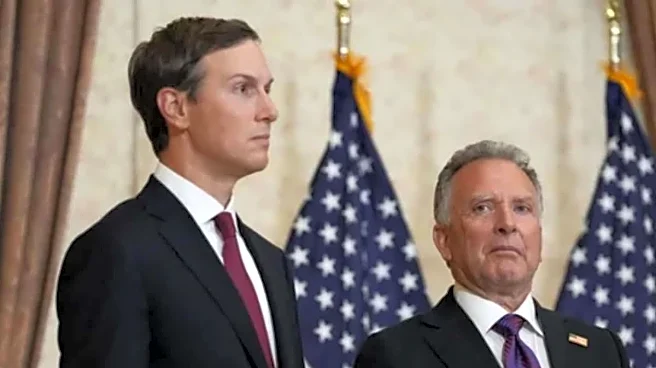
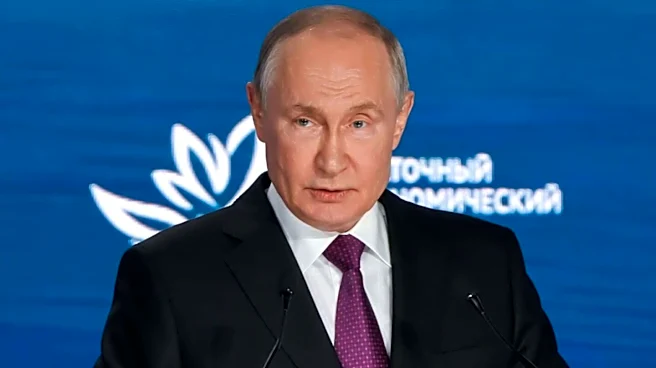
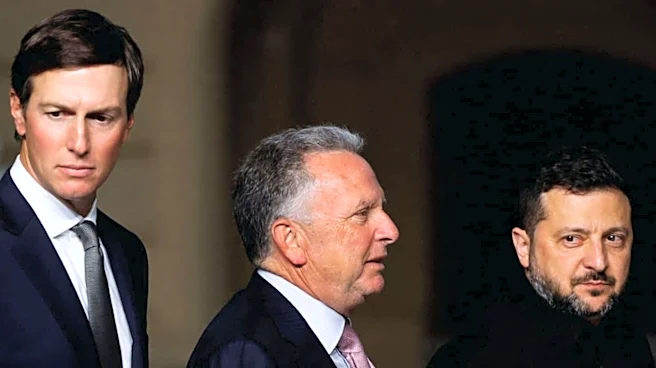
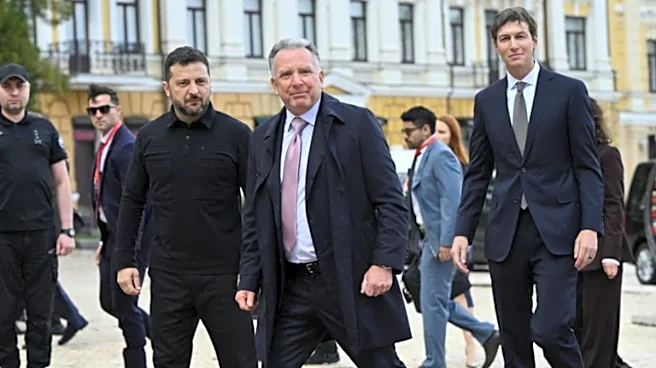
The United States has stepped up efforts to end the war in Ukraine, with US envoy Steve Witkoff and President Donald Trump’s son-in-law, Jared Kushner, holding back-to-back talks with Russian President Vladimir Putin in Moscow and Ukrainian President Volodymyr Zelenskyy in Kyiv.
No breakthrough was announced after the meetings, but Washington is now pushing for a return to trilateral talks between the US, Russia and Ukraine. Witkoff said he was “confident that there’ll be a good resolution here”, while Zelenskyy said “several new ideas” had been discussed during “good discussions” with the Americans.
The renewed diplomatic activity comes as fighting continues across Ukraine and major disagreements over territory and security guarantees remain
unresolved.
US Wants Russia, Ukraine Back In Trilateral Talks
After meeting Ukrainian officials on Sunday, Kushner said the US wanted to revive the trilateral format used around six months ago.
“One thing Steve (Witkoff) and I really thought would be productive is to go back to the trilateral format, which we were able to do about six months ago,” he said.
Kushner said the format allowed Russia and Ukraine to communicate directly rather than having Washington speak on behalf of either side.
“Everyone was speaking, you know, in Russian to each other and really discussing these issues in a very actually friendly manner, all in Russian,” he said of previous negotiations.
The US has raised the proposal with both sides, according to Kushner, who said “hopefully we’ll have progress on that very soon”.
Zelenskyy backed the proposal but left open the possibility of European participation.
“We must do everything possible to ensure that trilateral meetings take place – or trilateral meetings plus our European partners. We’ll see what Russia agrees to,” he said.
What Happened In Moscow And Kyiv?
Witkoff and Kushner’s Kyiv visit came immediately after a three-hour meeting with Putin at the Kremlin on Saturday.
Witkoff described the talks with the Russian president as a “good, concrete conversation”.
“If you don’t have relationships with both sides, and you have poor communication, then you probably have very, very little chance of getting to a peaceful resolution,” he said.
Kremlin aide Yuri Ushakov called the talks “useful” and said the American representatives had “prepared seriously for this trip”. According to Ushakov, the US team expressed interest in ending hostilities as quickly as possible and offered “a whole series of considerations regarding possible paths to a settlement”.
A White House official told CNN the two sides “discussed substantive plans for next steps, which will be announced in the coming weeks.”
The US envoys then travelled to Kyiv, where talks on Sunday took place over three rounds. The first two involved American and Ukrainian officials, while representatives from the United Kingdom, France and Germany joined the third, according to Kyrylo Budanov, head of the Office of the Ukrainian Presidency.
Zelensky said Ukraine, Europe and the US would meet again “in the near future”.
“We want to prevent loss of life, we want this war to end fairly for all of us, and we want it to end in such a way that Russia’s aggression against Ukraine is never repeated,” he said.
What Is Still Blocking A Peace Deal?
The renewed talks have not resolved the issues that derailed earlier negotiations.
Previous US-mediated trilateral talks failed to bridge differences over territory and security guarantees for Ukraine.
Ukraine’s security concerns remain particularly acute. Zelenskyy said the country’s shortage of air-defence interceptors had left it vulnerable to ballistic missile attacks, describing it as Ukraine’s “weak spot”.
“The US side will increase production volumes of Patriot anti-ballistic missiles next year,” he said. “We’re counting on such systems to defend our country, so we’ll increase the volume next year – I’m confident of that.”
The question now is whether another round of trilateral negotiations can make progress on the disputes that previous talks could not resolve.
What Does The 72-Hour Truce Tell Us?
Alongside the diplomatic push, Russia and Ukraine agreed to temporarily halt airstrikes on each other’s capitals during the US envoys’ visits.
The 72-hour arrangement began at midnight on Friday into Saturday and covered Kyiv and Moscow, but not the rest of Ukraine.
Russia continued its bombardment elsewhere overnight into Sunday. According to Ukraine’s Air Force, Russian forces launched 108 Shahed-type drones, with strikes recorded at 11 locations.
At least three people were killed in the latest attacks. Ukrainian authorities said a total of 10 civilians had been killed and 65 injured over the previous 24 hours.
So, Is Peace Finally Within Reach?
There are signs that the diplomatic process is moving, but there is still no broader ceasefire or agreement on the issues at the heart of the conflict.
For now, the meetings have reopened a path for negotiations. Whether that leads to peace will depend on the two sides.
/images/ppid_59c68470-image-178868756260692156.webp)





/images/ppid_59c68470-image-178866752667142775.webp)