

/images/ppid_a911dc6a-image-177762529162286054.webp)

As Tamil Nadu gears up for counting of votes on Monday following a high-voltage Assembly election, an unusual but important question often arises: what happens if there is a tie? While rare, ties in elections are clearly addressed under Indian law and constitutional practice, with defined procedures for both constituency-level results and government formation.
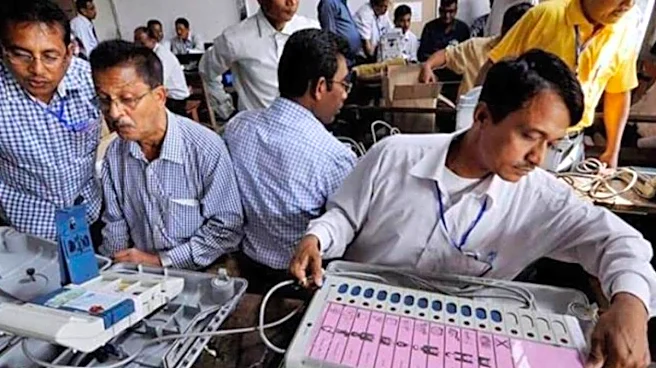
Counting will begin at 8 am across 62 centres, with over 10,000 personnel deployed and a three-tier security system in place to ensure a smooth and transparent process.
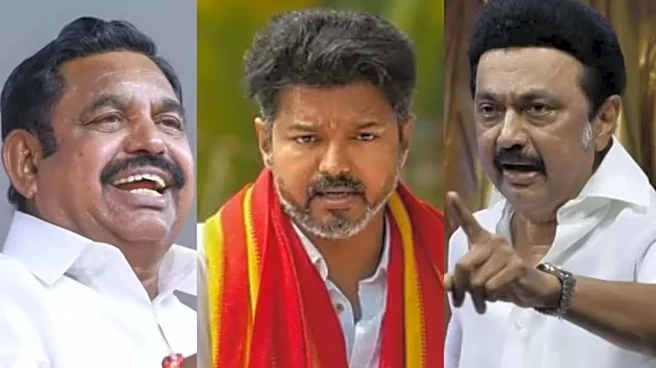
With a close contest expected between the DMK-led alliance and the AIADMK-led NDA, even unlikely scenarios like a tie are part of the broader discussion.
ALSO READ: Beyond The Dravidian Duopoly: Could Smaller Parties Come
Out As ‘Kingmakers’ On Tamil Nadu Counting Day?
Tie Between Candidates
If two candidates in a constituency secure exactly the same number of votes, the result is not decided through a recount or re-election. Instead, it is settled immediately through a draw of lots.
This process is conducted by the Returning Officer under the provisions of the Representation of the People Act, 1951. It is essentially a random selection—similar to picking a name out of a box—to determine the winner.
The rule ensures that election results are finalised without delay, even in the rare event of an exact tie. The Election Commission oversees the process to maintain fairness and transparency.
ALSO READ: From Postal Ballots To EVMs: Step-By-Step Process Of How Votes Will Be Counted In Tamil Nadu On May 4
Tie In Majority
A more complex situation arises if no party or alliance secures a clear majority in the Assembly and competing sides are tied in numbers. In such a case, the decision moves beyond election law into the constitutional domain.
The Election Commission of India completes the counting process, after which the state’s Governor steps in. The Governor may invite the largest party or alliance to form the government or ask leaders to demonstrate majority support.
This is done through a floor test in the Assembly, where elected MLAs vote to prove who commands the majority. If a tie occurs during this vote, the Speaker of the Assembly can exercise a casting vote to break the deadlock, following established parliamentary conventions.
In simple terms, India follows a two-track system for handling ties. A tie between candidates is resolved by law through a lottery system, while a tie in forming the government is addressed through constitutional procedures involving the Governor, Assembly voting, and the Speaker’s casting vote if required.





/images/ppid_a911dc6a-image-177779164633598462.webp)