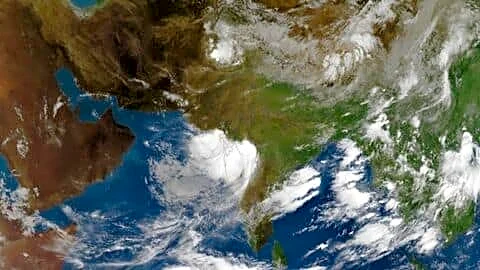


Better rains in July significantly brought down India’s rainfall deficit from 35.4% in June to nearly 13%. Yet, despite the improvement, India recorded its 12th-driest July since 2001, according to the India Meteorological Department (IMD).
In its latest monthly forecast, the IMD has predicted below-normal rainfall for August as well — less than 94% of the long-period average (LPA) — except in some parts of Peninsular India, Central India, northern parts of northwest India, and East and Northeast India, where normal to above-normal rainfall is likely.
This follows India’s fifth-driest June since 1901, which left large parts of the country rain-deficient due to a sluggish monsoon advance and the gradual development of El Niño over the equatorial
Pacific Ocean. While rainfall activity steadily increased in July, narrowing the country’s rainfall deficit to 13%, large parts of India still remain dry.
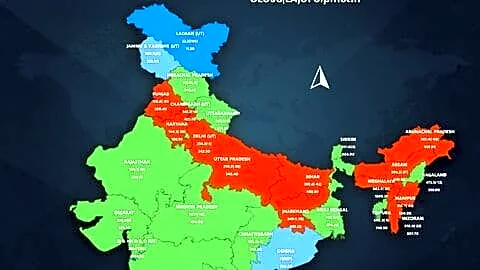
Of the 36 meteorological subdivisions, as many as 17 remained deficient as of July 31. These include East Uttar Pradesh, Haryana-Chandigarh-Delhi, Punjab, East Rajasthan, Saurashtra-Kutch, Coastal Andhra Pradesh, Tamil Nadu, Puducherry, Coastal and South Interior Karnataka, Kerala, as well as the north-eastern states.
The rainfall deficit was higher in southern Peninsular India, which recorded its 10th-lowest rainfall in July since 1901, while it was the sixth-lowest for East and Northeast India, which has been experiencing less rainfall every monsoon season. “The rainfall in July has been decreasing over the years, especially in the last five years,” highlighted IMD chief Dr Mrityunjay Mohapatra.
Overall, southern Peninsular India still reels under a deficit of nearly 23%, along with a 29% deficit in East and Northeast India. Nearly 42% (311) of the 741 districts assessed by the IMD recorded below-normal rainfall this season so far, affecting agricultural output, while rainfall was normal in 37% (273) of districts. As many as 7% (49) of districts remained largely deficient, leading to serious concerns for farmers.
The July rains offset some losses, with the share of deficient and largely deficient districts decreasing from 69% (508) to nearly 46% (344). While the share of districts receiving normal rainfall increased from 30% (224) to 53% (388) by the end of July, concerns over poor rainfall in the second half of the monsoon season prevail.
The four-month season from June to September is extremely crucial for rain-fed kharif crops sown in different states. This year, the weather department warned that the monsoon was most likely to end with below-normal rainfall — less than 90% of the long-period average, with a margin of error of plus or minus 4%.
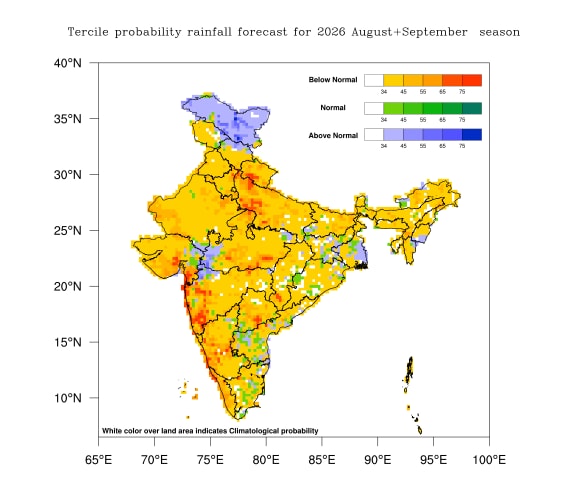
“We are not changing our monsoon forecast, according to which India is likely to see below-normal rainfall. Moderate El Niño persists over the equatorial Pacific Ocean. Though it did not gain as much strength in July, it is likely to become stronger by September,” said IMD chief Dr Mrityunjay Mohapatra.