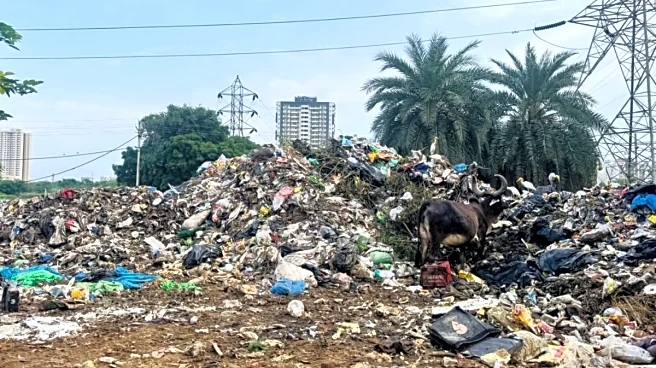



Starting April 1, mixing or dumping garbage carelessly outside your homes or while travelling to the hills or islands will invite penalties. Garbage segregation is no longer optional, as the Centre has notified the new Solid Waste Management Rules, 2026, to hold polluters accountable and improve solid waste management in the country.
The new rules supersede the Solid Waste Management Rules, 2016, and will come into full effect from April 1. This allows authorities to impose fines on those who violate waste management norms following the principle of “polluters pay”. Penalties will be imposed on those operating without registration, giving false reporting, submitting forged documents, and handling waste improperly.
The Central Pollution Control
Board (CPCB) will prepare relevant guidelines, while the State Pollution Control Boards, and Pollution Control Committees will levy the environmental compensation. At the state or UT level, a committee headed by the Chief Secretary will recommend measures to the CPCB to implement the new rules, as per the rules notified by the Union Ministry for Environment, Forests and Climate Change (MoEFCC).
What do the new rules say?
It will be mandatory to segregate waste into wet waste, dry waste, sanitary waste and special care waste. While wet waste mostly includes kitchen waste, which will be composted or processed through bio-methanation at the nearest facility. Dry waste includes plastic, paper, metal, glass, wood, and rubber, which will be transported to Material Recovery Facilities (MRFs) for sorting and recycling. Sanitary waste will be securely wrapped and stored separately, while special care waste, including paint cans, bulbs, mercury thermometers, and medicines, will be collected by authorised agencies or deposited at designated collection centres.
So even while travelling, the new rules also allow imposing user fees on tourists at entry points to regulate the number of visitors in accordance with the waste handling capacity of the local authority. While construction of landfill sites in such hilly areas and islands will be avoided, but designated collection points can be established for non-biodegradable waste in such areas. Locals will be urged to hand over waste to local bodies, and hotels and restaurants will need to undertake decentralised processing of wet waste in accordance with norms prescribed by SPCBs or PCCs.
What about bulk generators?
Bulk waste generators account for nearly 30 per cent of total solid waste generation. These include departments, local bodies or commercial and residential institutions which have a floor area of 20,000 square metres or more, or water consumption of 40,000 litres per day or more, or solid waste generation of 100 kg per day or more.
Under the new rules, they will have to ensure that the waste generated by them is collected, transported and processed in an environmentally sound manner, thus reducing the burden on urban local bodies. The rules also allow for the levy of user fees on waste generators as per the bylaws of local bodies. They are required to process wet waste on-site as far as possible or obtain a certificate where on-site processing is not feasible.
The local bodies will handle the collection, separation, and transport of solid waste in coordination with Material Recovery Facilities, which are now formally recognized at sorting centres, and may also collect e-waste, sanitary, and special care waste for further processing. The rules also encourage them to generate carbon credits.
What about those towering landfills?
The new rules sharply limit the use of landfills to non-recyclable and inert waste, while imposing fees on local bodies for dumping unsegregated garbage. Higher landfill fees have been prescribed for sending mixed waste to landfills, which will be more than the entire cost incurred in segregating, transporting and processing waste. The rules also mandate annual landfill audits by State Pollution Control Boards, with oversight by District Collectors. All legacy waste dumpsites must be mapped and cleaned up through time-bound biomining and bioremediation, with quarterly progress reports submitted online, it stated.
In order to expedite land allocation for waste processing facilities by state governments, the rules introduce clear guidelines for development around waste treatment and disposal sites. A buffer zone is to be maintained within the total area allotted for facilities having an installed capacity exceeding 5 tonnes per day. The CPCB will develop guidelines specifying the size of the buffer zone and permissible activities within it, based on the facility’s capacity and pollution load.
The rules also provide for setting up a centralised online portal by CPCB to track all stages of solid waste management, with details of registration and authorisation of waste processing facilities with local bodies and State Pollution Control Boards or Pollution Control Committees. These units will need to submit reports online, in order to help a timely audit of all waste processing facilities. Additionally, the new rules define Refuse Derived Fuel (RDF) as fuel produced by shredding and dehydrating municipal solid waste with high calorific value, such as non-recyclable plastic, paper and textiles. Industrial units, including cement plants and waste-to-energy plants that currently use solid fuel, must gradually replace it with RDF, increasing usage from the current 5 per cent to 15 per cent over six years.