


From the academic session of 2026, the Uttar Pradesh Madhyamik Shiksha Parishad (UP Board) has announced that vocational education will be mandatory for students in classes 9 and 11. The decision aims to strengthen the link between school education and employability.
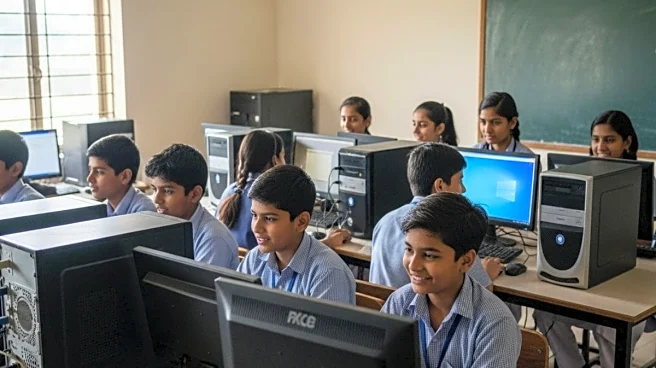
UP Board Secretary Bhagwati Singh revealed that subject committees have approved and submitted curricula for vocational trades such as information technology, electronics, apparel, beauty, and wellness. These employment-oriented curricul emphasise current technological needs and industry expectations, aiming to enhance students’ job prospects.
This initiative aligns with the National Education Policy’s goals of promoting skill development, self-reliance, and vocational proficiency
among students, the UP board stated.
Less Than Half Schools Offer Skill-Based Education
According to the PARAKH Rashtriya Sarvekshan Report 2024, less than half of the schools offer skill-based courses for students in Grade 9 and above, indicating limited availability of such education at this level. Participation among Grade 9 students is low, highlighting the need for increased awareness, encouragement, and accessibility to skill education to improve career readiness and skill development. Resources listed by PSSCIVE on sector skills can be used to enhance skill training and boost employability. PARAKH Udyam Sansaar, which focuses on AI competencies, needs to be popularized in schools.
The Directorate of Education Delhi in 2025 approved the introduction of Skill/NSQF subjects in 257 more government schools. The National Skills Qualifications Framework (NSQF) subjects include practical courses such as Information Technology, Retail, Healthcare, and Beauty and Wellness, aimed at enhancing students’ employability and career readiness.
According to CBSE guidelines, schools do not require separate approval to introduce additional skill subjects; they only need to update the relevant details on the CBSE portal.
The Union Ministry of Skill Development has launched the Skill for AI Readiness Course for students from Classes 6 to 12, providing fundamental AI knowledge and new skills to school children to prepare them for future technological advancements.
Uttarakhand govt had earlier announced the introduction of vocational education in 544 additional schools across the state. The central government has approved 138 job roles and skill subjects for students in classes 9 and 11 so far.
What The NEP 2020 Recommends?
The National Education Policy 2020 recommends introducing vocational training at early ages in middle and secondary schools, ensuring a smooth integration of quality vocational education into school and higher education. Every child is required to learn at least one vocation and be exposed to several others, emphasising the dignity of labour and the importance of various vocations, including Indian arts and craftsmanship.
As per the NEP released in 2020, vocational education will be phased into all secondary schools over the next decade. Schools are urged to partner with Industrial Training Institutes (ITIs), Polytechnics, local industries, etc., and skill labs will be established in a Hub and Spoke model to allow other schools to use the facilities.