

/images/ppid_a911dc6a-image-177096156991971130.webp)
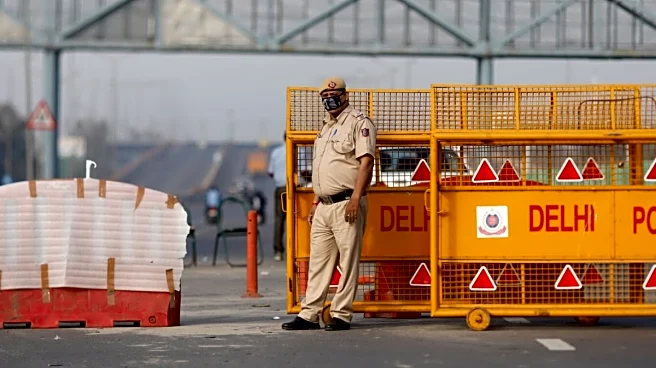
From December 18, the Delhi government has barred all non-BS VI private vehicles registered outside the city from entering the Capital. The move is part of a broader crackdown linked to the Graded Response Action Plan (GRAP) Stage III and IV measures, triggered by persistent smog and rising pollution levels across Delhi-NCR. Fuel pumps in the city have also been directed to sell petrol and diesel only to vehicles carrying a valid Pollution Under Control Certificate (PUCC), giving both vehicle compliance and certification new urgency for commuters.
The entry ban affects thousands of vehicles arriving daily from NCR cities. Over 4 lakh vehicles from Noida, 2 lakh from Gurugram, and 5.5 lakh from Ghaziabad have now been prohibited from entering
Delhi.
Older petrol and diesel vehicles, especially those registered before the nationwide rollout of BS-VI norms in April 2020, are the most impacted.
Cars that fail to meet BS-VI standards can be stopped at the city’s borders and fined Rs 20,000, while even BS-VI compliant cars may face penalties of Rs 10,000 if they lack a valid PUCC.
Against this backdrop, knowing how to quickly verify your vehicle’s emission category has become essential.
What Changed On December 18?
Delhi’s Environment Minister Manjinder Sirsa announced that only BS-VI vehicles would be allowed to enter the Capital from December 18, effectively banning non-BS-VI private vehicles registered outside Delhi.
Diesel vehicles older than 10 years and petrol vehicles older than 15 years are already restricted under existing norms.
The government has also warned that trucks transporting construction materials will face strict penalties or seizure for violations. Over recent weeks, authorities have already fined more than eight lakh vehicles for various pollution-related violations, underlining the scale of the enforcement drive.
What Are BS Emission Norms?
Bharat Stage (BS) norms are India’s emission standards that regulate pollutants such as carbon monoxide, hydrocarbons, nitrogen oxides and particulate matter from vehicle exhaust. The norms are based on European emission standards and each new stage tightens permissible limits, pushing manufacturers to adopt cleaner technologies and forcing older, more polluting vehicles off the road.
Delhi has historically implemented advanced emission norms earlier than other parts of the country due to persistent air quality concerns. BS II was enforced in 2001, BS III in 2005 and BS IV in 2010, all years before nationwide adoption. BS VI norms were introduced in Delhi-NCR ahead of the rest of India in April 2018, and became mandatory across the country on April 1, 2020. Because vehicles from multiple states enter Delhi every day, the city’s roads still carry a mix of BS II, III, IV and VI vehicles.
Older vehicles pollute more because they were certified under less stringent standards. They emit higher levels of nitrogen oxides, particulate matter and hydrocarbons, with diesel engines being particularly problematic. Ageing engines also release volatile organic compounds and black carbon, worsening smog and contributing to health risks.
How To Check If Your Vehicle Is BS-VI Compliant
The most important question for commuters now is how to distinguish BS-VI vehicles from older ones. The process is straightforward, and several verification options exist.
Registration Certificate (RC): RC is the primary and most reliable source of information. The emission norm is printed clearly under fields such as “Emission Norms” or “Bharat Stage”. If your RC explicitly says “BS-VI” or “BS6”, your vehicle is compliant.
Manufacturing or Registration Date: BS-VI became mandatory for all new vehicles sold and registered across India from April 1, 2020. Therefore, if your car was manufactured or registered on or after that date, it is almost certainly BS-VI compliant.
Cars purchased before April 2020 fall under earlier categories:
- Before 2005: BS-I
- 2005–2010: typically BS-II
- 2010–2017: typically BS-III
- 2017–2020: BS-IV
Owner’s Manual and Physical Labels: Manufacturers usually mention the emission standard in the owner’s manual. Some vehicles also carry BS-VI labels or stickers near the engine bay or fuel tank. While not universal, these markings can help owners quickly confirm compliance.
Authorised Service Centres and Dealerships: Dealers and authorised service centres can verify the emission norm using the vehicle’s registration number. This is particularly helpful for older vehicles where owners may no longer have physical documentation readily accessible.
VAHAN Portal: Vehicle owners can enter their registration number on the Ministry of Road Transport and Highways’ VAHAN website to access official details, including the emission norm. This is one of the quickest digital methods to determine BS category without referring to physical documents.
How Is BS-VI Different From BS-IV
The difference between BS-IV and BS-VI is substantial. BS-VI norms drastically tighten emission limits — petrol vehicles must reduce nitrogen oxide emissions by around 25 per cent compared to BS-IV, while diesel vehicles must cut nitrogen oxides by nearly 68 per cent and particulate matter by roughly 82 per cent. BS-VI engines require cleaner, low-sulphur fuel, which became available alongside the rollout of the new norms. The testing regime under BS-VI also mirrors real-world driving conditions more closely.
Who Is Exempt, And What Happens If You Violate The Rules?
BS-VI compliant vehicles, along with clean-energy options such as CNG, LNG, electric and hybrid electric vehicles, can still enter Delhi. Furthermore, BS-IV compliant diesel vehicles will also be permitted to enter the national capital.
Violations carry penalties up to Rs 20,000 under the Motor Vehicles Act, and vehicles may be impounded for repeat offences. Fuel stations have been instructed to deny service to any vehicle without a valid PUCC. The fine for lacking a PUCC may go up to Rs 10,000, even for BS-VI cars.
Why This Matters Now
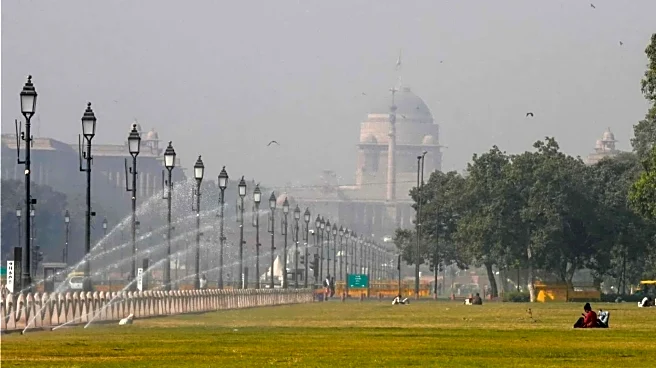
Delhi’s air quality has stayed in the ‘very poor’ or ‘severe’ category, with the CAQM repeatedly flagging vehicular emissions as a major contributor. Nearly 37 per cent of vehicles in Delhi-NCR fall under older BS categories. This figure was flagged in an October meeting chaired by the Prime Minister’s Office.
With winter inversion trapping pollutants near the ground, authorities argue that stronger restrictions are essential to prevent further deterioration.


/images/ppid_59c68470-image-17709626287392285.webp)

/images/ppid_59c68470-image-177096260145649473.webp)


/images/ppid_59c68470-image-177096253007190648.webp)
/images/ppid_59c68470-image-177096256141144792.webp)

/images/ppid_59c68470-image-177096253783524559.webp)