
/images/ppid_a911dc6a-image-177053764417956845.webp)
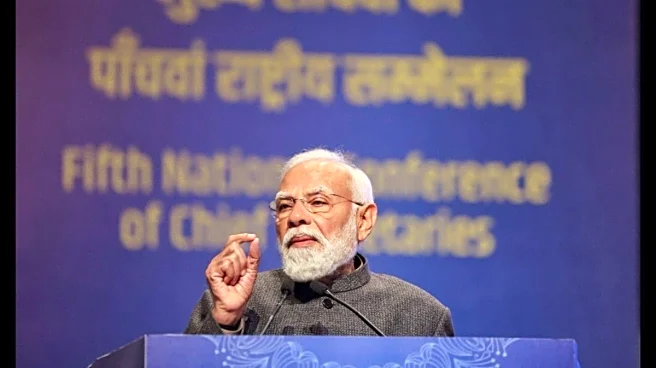
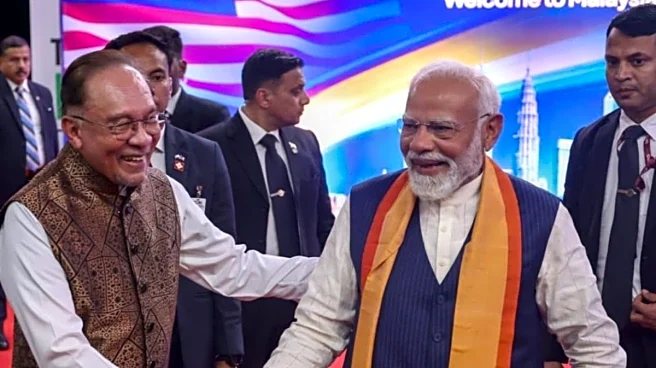
Prime Minister Narendra Modi, during the three-day Pragati meeting in the national capital, held extensive deliberations with senior officials, including chief secretaries from across the country, to chart a clear roadmap for achieving the vision of Viksit Bharat.
The discussions were held against the backdrop of the overarching theme of “Human Capital for Viksit Bharat.” Highlighting India’s demographic strength, the prime minister noted that nearly 70 per cent of the country’s population falls within the working-age group, presenting a historic opportunity. When combined with sustained economic growth, he said, this demographic advantage could significantly accelerate India’s journey towards becoming a developed nation.
PM Modi remarked that
India has already boarded the “Reform Express”, driven largely by the energy and potential of its young population. He emphasised that empowering this demographic remains the top priority for the government, particularly as the country moves through a phase of next-generation reforms aimed at positioning India as a major global economic power.
During the informal discussions, the prime minister underlined the need for states to adopt and institutionalise the Centre’s Pragati model to ensure effective monitoring, timely execution, and outcome-based governance. Sources say he stressed that such a framework should become an integral part of state administration.
While acknowledging efforts made by states to streamline regulations, it is learnt that he advised that each chief secretary’s office establish a dedicated deregulation cell to further simplify processes and remove systemic bottlenecks.
The prime minister also flagged concerns over the excessive time senior officials, particularly district collectors, spend in prolonged video conferences, say sources. He noted that such meetings often stretch for hours, leaving limited time for officials to focus on fieldwork and on-ground governance. It is learnt he suggested that video conferences should be limited to one day a week and restricted to a few hours to ensure that administrative efficiency and field engagement are not compromised.
On key deliverables, the prime minister expressed concern over the lack of adequate toilet facilities for girls in schools and directed that all gaps in PM Shri and Eklavya schools be addressed by March 8.
He also called upon states to prepare clear 10-year action plans with measurable and time-bound outcomes.
PM Modi further emphasised the need for a well-defined state sports policy, highlighting the importance of raising awareness about doping, strengthening sports medicine infrastructure, and ensuring adequate availability of physiotherapists for athletes. He also pointed to the shortage of specialised sports journalism and stressed the need to encourage focused coverage of sports, sources say.
Invoking the principle of Atmanirbharta, the prime minister observed that while discussions around self-reliance are widespread, much stronger efforts are required at the grassroots level. Citing an example from a recent wedding he attended where imported flowers were used extensively, he stressed the need to promote domestic products and strengthen local supply chains, the sources added.
PM Modi also acknowledged the significant progress made in curbing Left Wing Extremism but noted that continued efforts are required to empower communities in affected regions that have long borne the brunt of insurgency.
On education, he called for strengthening universities through technology-driven reforms and directed that long-pending vacancies in higher education institutions be filled on a priority basis.
He also expressed concern over the limited impact of the Kaushal Vikas initiative, noting that substantial scope remains for improvement to ensure meaningful and outcome-oriented skill development.
PM Modi also reiterated the importance of the Jal Jeevan Mission, underscoring its long-term significance and potential impact. He pointed out that while substantial progress has been made, several gaps and discrepancies remain in implementation. Citing delays in execution and other operational shortcomings, the prime minister stressed the need for closer monitoring, timely follow-up, and corrective measures to address loopholes in the project, sources said.
Grievance redressal emerged as another major focus area. The prime minister shared that he personally reviews at least ten public grievances daily and urged chief secretaries to encourage their respective chief ministers to do the same, underscoring the importance of responsive, accountable, and citizen-centric governance.
/images/ppid_a911dc6a-image-177069633713368765.webp)


/images/ppid_59c68470-image-177062253691584457.webp)

/images/ppid_a911dc6a-image-177054023172596726.webp)
/images/ppid_a911dc6a-image-17706547039401557.webp)