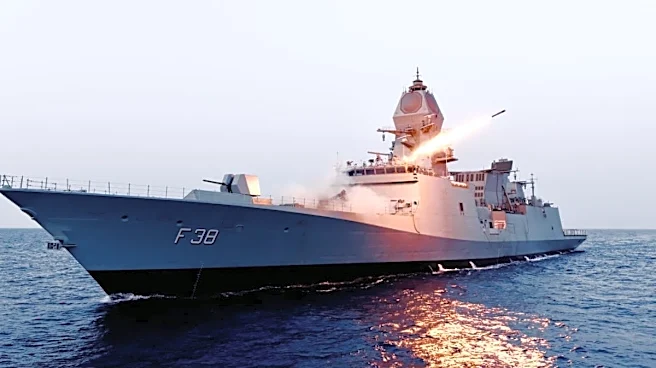




INS Mahendragiri has been inducted into the Indian Navy. The new addition to India’s warships reflects a deeper shift in how the country is approaching maritime power. At a time when the Indian Ocean is becoming increasingly contested, with expanding naval footprints and critical trade routes under watch, the ability to induct advanced, home-built warships has taken on strategic urgency. Mahendragiri arrives as a signal that India’s naval modernisation is now firmly tied to domestic capability.
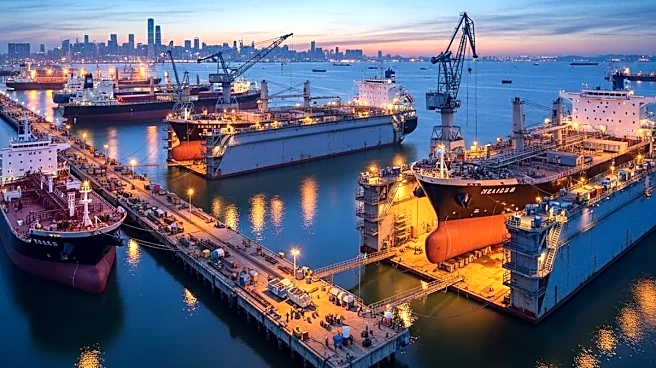
Built at Mazagon Dock Shipbuilders Limited, INS Mahendragiri is part of a larger, carefully structured programme – Project 17A – that is redefining how India designs, constructs, and deploys complex naval assets. From modular construction techniques to
high indigenous content and integration of advanced weapons systems, the project represents a maturing of India’s defence industrial base.
What is Project 17A?
Project 17A is the Indian Navy’s programme to build a new class of stealth guided-missile frigates, known as the Nilgiri-class. It follows the earlier Shivalik-class (Project 17), but goes significantly further in terms of design sophistication, stealth features, and automation.
A key distinction is that these warships are designed in India, by the Navy’s Warship Design Bureau, rather than being based on foreign blueprints. The project also aligns with India’s push for self-reliance in defence manufacturing, with a substantial portion of components sourced domestically. Over time, this has helped create a network of Indian suppliers, ranging from large defence firms to MSMEs contributing specialised equipment.
The Warships Under Project 17A
Project 17A involves the construction of seven stealth frigates, being built across two major shipyards — Mazagon Dock in Mumbai and Garden Reach Shipbuilders & Engineers in Kolkata. The seven warships are – INS Nilgiri, INS Himgiri, INS Udaygiri, INS Dunagiri, INS Taragiri, INS Vindhyagiri, and INS Mahendragiri. INS Mahendragiri is among the latest of these to be delivered.
????????????????????????????????????????????????, the sixth ship of P17A – Nilgiri class stealth frigates and fourth of the class built by @MazagonDockLtd, and overseen by the Warship Overseeing Team (Mbi) was delivered to the #IndianNavy on #30Apr 26 at Mumbai.
Designed by the Warship Design Bureau,… pic.twitter.com/CoqYVQ92gi
— SpokespersonNavy (@indiannavy) May 1, 2026
These warships displace roughly 6,600–6,700 tonnes, stretch close to 150 metres, and are built for sustained blue-water operations. That means they are capable of operating far from Indian shores, undertaking missions that range from escort duties to independent deployments in sensitive maritime zones.
One of the biggest shifts under Project 17A is the move to modular construction. Instead of building a ship sequentially from keel to deck, different sections are constructed simultaneously and then assembled. This not only reduces construction timelines but also improves precision and quality, bringing Indian shipbuilding practices closer to global standards.
What These Warships Are Capable Of
Frigates under Project 17A, including INS Mahendragiri, are designed as multi-role combat platforms. They are equipped to handle threats across air, surface, and sub-surface domains, making them highly versatile assets in modern naval warfare.
For offensive operations, they carry the BrahMos missile, one of the fastest cruise missiles in the world, capable of striking enemy ships and land targets with high precision. On the defensive side, the Barak-8 missile provides a robust air defence shield against aircraft, drones, and incoming missiles.
In addition, these ships are equipped with advanced sonar systems, torpedoes, and anti-submarine rocket launchers, enabling them to detect and neutralise underwater threats. Modern radar and electronic warfare suites further enhance their ability to track and respond to multiple threats simultaneously.
A defining feature of Project 17A ships is their stealth design. Through specialised hull shaping and materials, these frigates reduce their radar signature, making them harder to detect and target in hostile environments.
They are powered by a combined diesel and gas turbine propulsion system, allowing them to switch between efficient cruising and high-speed operations when required. This flexibility is crucial for missions that demand both endurance and rapid response.
Automation is another major advancement. Integrated platform management systems oversee everything from machinery to damage control, reducing crew workload and improving operational efficiency. This not only enhances survivability but also allows the crew to focus more on combat operations.
The induction of INS Mahendragiri underscores a broader transformation in India’s naval strategy. It reflects a move away from dependence on foreign suppliers towards building sophisticated military platforms at home.
As more ships under Project 17A enter service, the Indian Navy is steadily building a fleet that is not just modern, but also domestically sustained.


/images/ppid_59c68470-image-177798253276968475.webp)


/images/ppid_59c68470-image-177797762341271293.webp)