
/images/ppid_59c68470-image-178956772183319326.webp)
/images/ppid_59c68470-image-178956252827770189.webp)
/images/ppid_59c68470-image-178958252814566397.webp)
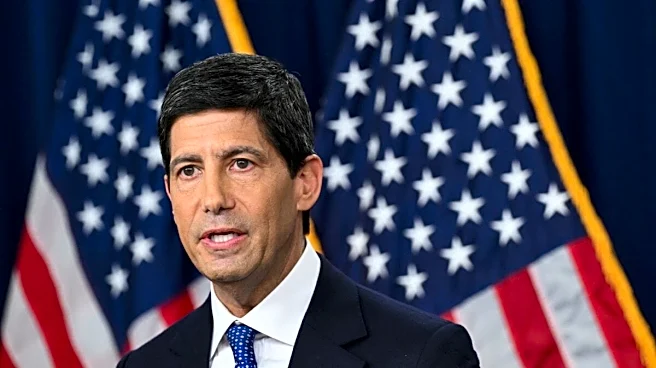
US Federal Reserve Chair Kevin Warsh on Wednesday said that bringing inflation under control is now the central bank’s main focus, hours after the central bank raised interest rates for the first time since 2023.
“Our predominant focus is on the price stability side of our mandate,” Warsh told a press conference after the rate decision. “The plain fact is that inflation is too high, and has been for too long.”
His remarks came after the Fed raised its benchmark interest rate by 25 basis points to a range of 3.75% to 4%, citing elevated inflation and saying the move would support a “timelier return” to its 2% inflation target.
‘Our Decision’, Not Markets’
Warsh also stressed that Wednesday’s rate decision was driven by the Fed’s own assessment rather than financial market expectations.
“We made this decision today based on our assessment of the situation,” he said. “I’ll observe market prices and see what they have to say. But today was our decision.”
Markets had largely anticipated the quarter-point increase, with major Wall Street indexes showing limited movement following the announcement.
The Fed’s latest economic projections also pointed to further tightening. At least 12 of the 18 policymakers included in the projections expected another rate increase would be needed before the end of the year, while four projected two further hikes.
The central bank also raised its year-end forecast for its preferred inflation measure, the Personal Consumption Expenditures (PCE) price index, to 3.7%, from 3.6% previously.
Warsh Defends Fed Independence
Warsh also addressed the Federal Reserve’s independence amid political pressure for lower interest rates.
“Part of the independence of the Federal Reserve is we stay in our lane,” he said. “We let people that do trade policy and fiscal policy stay in their lane too.”
“That’s how we can stand up here and call them the way we see them,” he added.
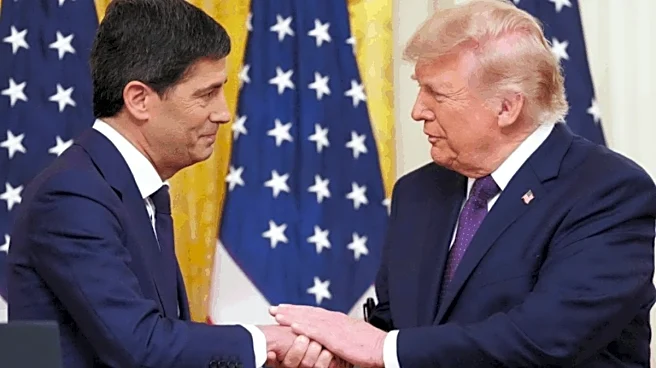
The comments come as US President Donald Trump has repeatedly pushed for lower borrowing costs, arguing that reduced rates would support economic activity.
The Fed’s latest move marks a shift after it held rates steady since January while assessing the impact of energy prices and tariffs on inflation.
The central bank now expects US GDP growth to reach 2.3% this year, slightly above its previous 2.2% forecast, even as inflation remains well above its 2% target.
(With inputs from agencies)
/images/ppid_59c68470-image-17895725646569712.webp)

/images/ppid_59c68470-image-178962008477598265.webp)

/images/ppid_59c68470-image-178958010465123003.webp)

/images/ppid_59c68470-image-178965517055851918.webp)