

“Reach high, for stars lie hidden in you. Dream deep, for every dream precedes the goal.”
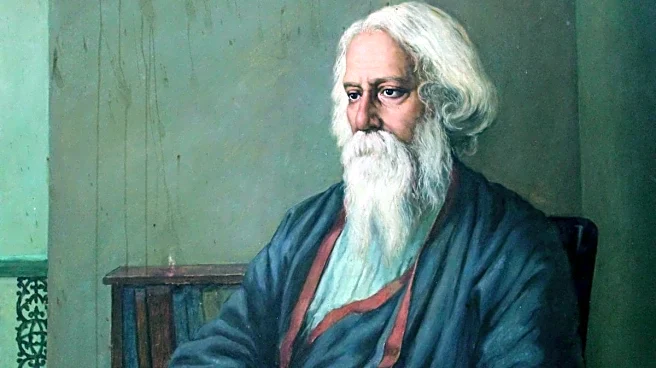
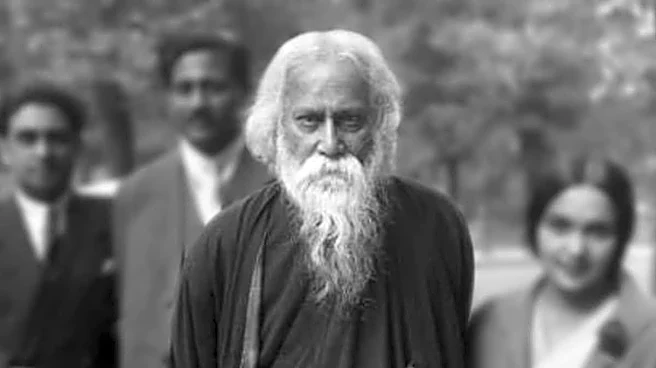
Rabindranath Tagore, the Bard of Bengal, the first Indian to receive the Nobel Prize, a composer who has inspired the national anthems of 3 countries, a painter and a philosopher. He may not have fought in the freedom struggle, but Bhanusimha’s cultural, intellectual, and moral contributions to the resistance were unparalleled.
His work continues to inspire freedom, education, art, and nationalism.
Tagore was born in Kolkata on 7 May 1861, and his childhood home – Jorasanko Thakurbari – has become a historic landmark in the state. It is a living record of the Bengal Renaissance and is the living memory of the multi-hyphenate, and shows the making of one of India’s
greatest literary minds.
The sprawling ancestral mansion in North Kolkata has been turned into the Rabindra Bharati Museum, where rooms, portraits, manuscripts, and personal belongings bring the Tagore legacy to life.
When you take a step through the hallowed gates, it feels like the hustle and bustle of the city seems to fade away. There is a rush of cool breeze through the trees as the bird chirps and people mull through the home where Tagore once walked. There is a sense of reverence that settles through the home-turned-museum and it is felt by everyone who comes there.
This red-brick mansion, which spreads across a large campus on Rabindra Bharati University grounds, is where Tagore was born, spent much of his childhood, and later breathed his last. What makes the visit moving is not just its association with Tagore, but the sense that the house still carries the rhythm of a family that shaped modern Bengali culture, art, and literature.
Inside the museum, the experience feels intimate rather than grand. The preserved rooms and galleries display Tagore’s writings, paintings, photographs, notebooks, and family artefacts. It feels like time stood still once he passed, and the things have remained just the way it was, even though it has actually been 84 years since then.
There are sections dedicated to different branches of the Tagore family to help visitors understand the wider cultural world he came from. One of the most memorable stops is the room where Tagore spent his final days, which has been kept as it was, giving the museum an unusually personal emotional weight.
For Indian history lovers or fans of the work Tagore has done or even just travellers, Jorasanko Thakur Bari offers a rare kind of Kolkata experience: part heritage walk, part literary pilgrimage, and part history lesson. It is also one of the city’s most important cultural stops because it connects Tagore’s life with the era that produced him.

/images/ppid_a911dc6a-image-177815123129787768.webp)

/images/ppid_a911dc6a-image-17781456351125786.webp)


/images/ppid_a911dc6a-image-177814263638617857.webp)

/images/ppid_a911dc6a-image-177811483296713180.webp)
/images/ppid_a911dc6a-image-177799707499141300.webp)