
/images/ppid_a911dc6a-image-178296657921779751.webp)


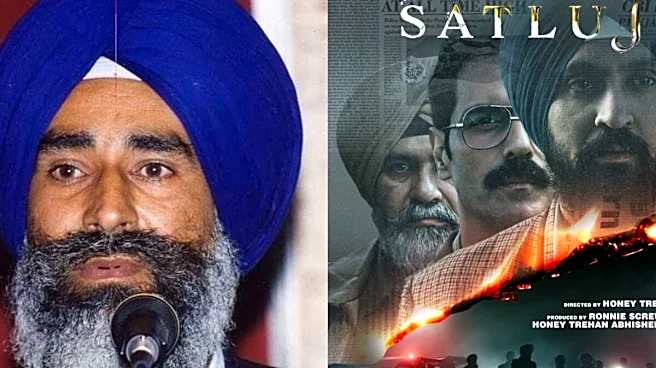
History often remembers wars, governments, speeches and turning points. What it sometimes forgets are the ordinary people who stood in the middle of fear and refused to look away. Jaswant Singh Khalra was one such man. He was not a soldier marching into battle, not a politician chasing office, and not someone who seemed interested in becoming a public figure. He was a husband, a father and a human rights activist who chose to ask questions at a time when questions themselves could be dangerous.
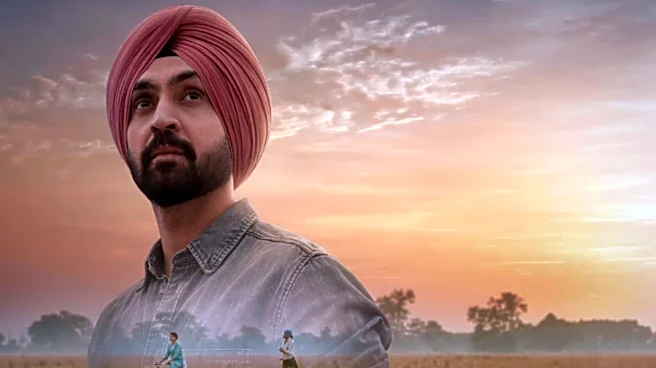
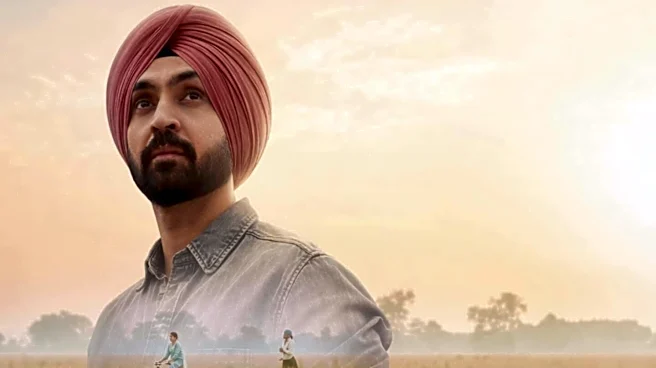
That moral courage forms the emotional spine of Satluj, the Diljit Dosanjh-starrer now streaming on Hindi Zee5. Directed by Honey Trehan, the film revisits one of the most troubled chapters in Punjab’s history and turns its gaze towards a man who tried
to document what many wanted forgotten. Who Was Jaswant Singh Khalra?
Jaswant Singh Khalra was a human rights activist from Punjab who became known for his work during and after the militancy period in the state. At a time when Punjab was marked by fear, violence, state action, insurgency and deep social unrest, Khalra began looking into reports of disappearances and custodial deaths. His work brought attention to allegations of illegal killings and secret cremations in Punjab. Amnesty International also described him as a human rights defender and noted that he had not been seen since September 6, 1995, after reportedly being arrested by police outside his home.
Khalra’s story is not merely about one man investigating records. It is about the act of insisting that the disappeared must not become statistics. His work was rooted in a simple but deeply powerful idea: every life deserved to be named, every family deserved an answer, and no system should be allowed to erase people without accountability.
What Did Jaswant Singh Khalra Expose?
During the militancy years in Punjab, thousands of families were left searching for sons, brothers, husbands and fathers who had vanished. Khalra’s work focused on these disappearances and the alleged cremation of unidentified bodies. Human rights groups have since associated his name with the documentation of mass secret cremations and the demand for justice for families who never received closure. Human Rights Watch has also referred to the wider Punjab mass cremations case and the role of activists in bringing these records to public and judicial attention.
In the context of Satluj, this is where the story becomes more than a historical account. The film places Khalra’s fight within the intimate world of families waiting for truth. It is not only interested in the machinery of power, but also in the mothers who waited, the wives who searched, and the homes where absence became a permanent member of the family.
How Satluj Brings His Story To Screen
Satluj follows Jaswant Singh as he begins with one personal search and gradually uncovers a much larger story of alleged disappearances and custodial deaths. Set during Punjab’s turbulent militancy period, the film presents his journey as a struggle against injustice, silence and institutional denial.
The film is not shaped like a conventional heroic drama. It is about a man who chooses conscience over comfort. He is shown as someone with a family, responsibilities and the option to stay silent, but who instead decides that truth is worth pursuing even when it carries danger.
For director Honey Trehan, this humanity is precisely what makes Khalra’s story timeless. Reflecting on the man who inspired the film, he said, “Jaswant Singh knew the risks. He had a wife, two young children, and even had the opportunity to seek asylum abroad, but he chose to stay because he believed someone had to fight for those families. He wasn’t fighting for any religion or any political ideology. He was fighting for human rights. He was fighting for people whose identities didn’t matter to him, whether they were Hindu, Sikh, or Muslim. What mattered was that they were human beings. That is why I believe Jaswant Singh is one of the greatest heroes of our time. His story continues to inspire me even today.”
Why Diljit Dosanjh’s Casting Matters
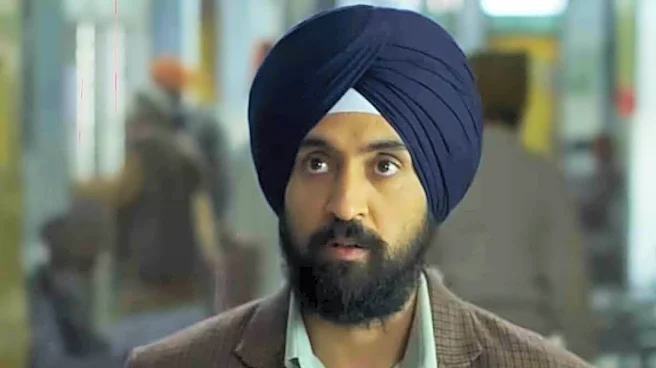
For Diljit Dosanjh, stepping into the world of Satluj was not just another performance. The actor has spoken about the emotional weight of the part and the responsibility that came with portraying a figure like Jaswant Singh Khalra. The challenge was not simply physical or performative. It was psychological, moral and historical.
Khalra’s life cannot be played as a standard protagonist arc because his story carries the weight of real grief. To portray him means entering the emotional terrain of people who lost loved ones and never stopped waiting for answers. That is what makes the role demanding. The actor is not merely playing courage; he is carrying memory.
In that sense, Satluj also becomes a test of cinematic responsibility. Films based on real people often run the risk of turning pain into spectacle. But Khalra’s story asks for restraint. It asks for dignity. It asks for a kind of storytelling that does not flatten suffering into drama, but allows viewers to feel the human cost of what happened.
Why Did Jaswant Singh Khalra’s Story Become So Important?
Khalra’s importance lies in the fact that he fought for those who could not fight for themselves. His work challenged the comfort of silence. It demanded that the state, society and history acknowledge people who had vanished from official narratives.
His story also matters because it refuses easy categories. As Honey Trehan pointed out, Khalra was not fighting for one religion or one political ideology. His fight was for human rights. That distinction is crucial. It places his legacy beyond narrow identity politics and turns it into a universal question: when power erases people, who will speak for them?
This is why his story continues to resonate more than three decades later. The questions he raised remain painfully relevant. What happens when justice is delayed until memory begins to fade? What does a family do when the system refuses to acknowledge its loss? Who protects truth when truth itself becomes inconvenient?
The Disappearance Of Jaswant Singh Khalra
Khalra’s own life ended in the same darkness he had spent years trying to expose. Amnesty International recorded concern over his disappearance in 1995, stating that he had not been seen since September 6 that year after being reportedly arrested by police outside his home.
Years later, his case remained a key reference point in conversations around human rights, impunity and accountability in Punjab. Amnesty’s later reports also raised concerns about the handling of his disappearance case and the broader question of justice.
His disappearance gave his work an even deeper tragic force. The man who searched for the disappeared himself became one of them. That is why his story is remembered not only as a biography of courage, but also as an indictment of the cost of speaking truth to power.
Why His Story Matters Today
Jaswant Singh Khalra’s story matters today because it asks whether societies are willing to remember uncomfortable truths. It matters because justice is not only about courts and verdicts. It is also about memory, acknowledgement and the refusal to erase suffering.
In an age where public attention moves quickly and histories are often reduced to political arguments, Satluj returns to something more elemental: the value of a human life. It reminds viewers that behind every disappearance is a family, behind every file is a face, and behind every statistic is someone who was loved.
Khalra’s story is also a reminder of the importance of documentation. He understood that records could become resistance. To write down names, trace evidence and ask questions was to fight erasure. That is perhaps why his legacy continues to inspire human rights conversations even today.
Satluj As A Memorial, Not Just A Film
At its heart, Satluj is not just a film about the past. It is a memorial to those who were denied visibility and a tribute to the man who tried to restore it. Through Diljit Dosanjh’s portrayal and Honey Trehan’s direction, the film attempts to bring Khalra’s story to a wider audience, especially to those who may not know the details of this chapter of Punjab’s history.
The power of Satluj lies in the fact that it does not present courage as loud or glamorous. It shows courage as persistence. As a man staying back when he could have left. As a father choosing risk because other families deserved answers. As a human being refusing to let other human beings disappear without a trace.
More than thirty years later, Jaswant Singh Khalra’s story continues to matter because the questions he raised have not lost their urgency. Who gets remembered? Who gets justice? Who speaks when silence becomes safer than truth?
Satluj, now streaming on Hindi Zee5, brings those questions back into the room.
/images/ppid_a911dc6a-image-178317652260442548.webp)

/images/ppid_a911dc6a-image-178309602688394316.webp)


/images/ppid_a911dc6a-image-178300162370639122.webp)