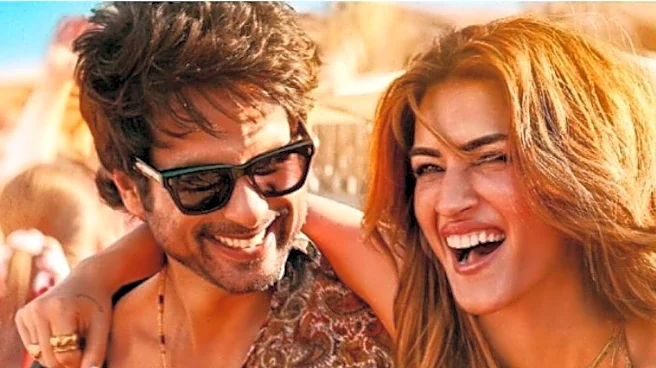

It’s been 12 years since Heropanti released in theatres, and it still feels like one of those films that perfectly captures a very specific Bollywood era. Everything about it was loud, dramatic, slightly over-the-top, and extremely confident in its “mass hero launch” energy. The film gave us slow-motion entries, intense fight sequences, and a romance that was as filmi as it gets.
And honestly, it also gave us dialogues that refused to leave pop culture. “Chhoti bacchi ho kya?” is still quoted even today, sometimes jokingly, sometimes seriously, but always with that nostalgic grin. Add to that songs like Whistle Baja, Raat Bhar, and Tabah Ho Gaye, which played everywhere back then, and you have a film that basically defined early 2010s Bollywood
mood boards.
Twelve years later, the real story of Heropanti is not just the film itself, but the two careers it quietly launched in completely different directions.
A Debut That Was Designed To Be Loud And Proud
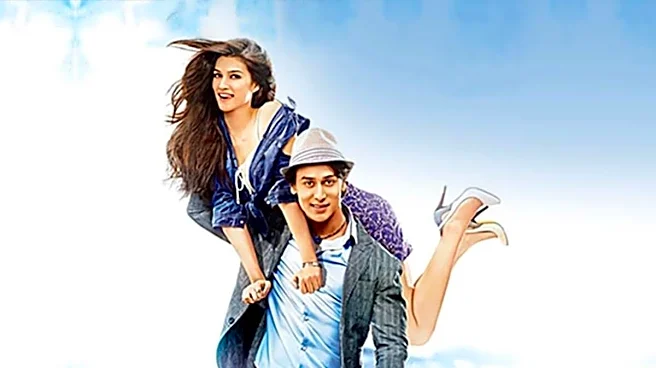
Heropanti, which released in 2014, was introduced as a big launch vehicle for Tiger Shroff, and the film made no effort to hide that intention. It was built around action, style, and hero moments that were designed to announce a new kind of Bollywood action star. Tiger arrived with his high-energy stunts, smooth dance moves, and a screen presence that felt very different from the usual debutant entry at the time.
Kriti Sanon, on the other hand, entered the industry with a softer and more grounded presence. She wasn’t positioned as an action star or an intense performer in the same way. Instead, she came across as fresh, natural, and easy to watch on screen, which helped her stand out in a film that was otherwise very loud and stylised.
Together, they formed a pairing that worked exactly for the kind of film Heropanti was meant to be: youthful, dramatic, and very much in the “commercial Bollywood romance with action” space.
Tiger Shroff: The Rise Of Bollywood’s New Action Identity
After Heropanti, Tiger Shroff quickly settled into a very clear identity in Bollywood, and that identity was action. He didn’t slowly ease into it; he fully embraced it from the beginning. His next major step came with Baaghi in 2016, which cemented him as a full-fledged action star and led to the creation of a successful franchise built around his physical abilities.
Over the years, Tiger became known for his acrobatic fight sequences, flips, kicks, and a level of physical discipline that set him apart from many of his contemporaries. In many ways, his films were built around showcasing his fitness and action skills, and audiences began to associate him strongly with that space.
At the same time, dance remained a huge part of his appeal. Songs like Beat Pe Booty, Disco Disco, and Jai Jai Shivshankar kept him relevant in the performance space even when his films received mixed responses. His strength as a performer has always been tied to movement, whether it is action or dance, and that has remained consistent since his debut.
However, like many actors who are strongly associated with a specific genre, Tiger’s career has also gone through phases of experimentation. Some films worked better than others, and there has been a visible effort to move beyond just action-heavy roles. Even so, his core identity as a high-energy performer has stayed intact, and he continues to be one of Bollywood’s most recognisable action-focused stars.
Kriti Sanon: From Fresh Face To Dependable Leading Star
Kriti Sanon’s journey after Heropanti followed a very different path. Instead of being immediately positioned as a blockbuster face, she gradually built her space in the industry through a mix of commercial entertainers and performance-driven roles. She did not rush into defining herself through one image, and that slow build eventually worked strongly in her favour.
Her breakthrough phase came when she started delivering noticeable performances in films like Bareilly Ki Barfi, where she showed a strong grasp of comic timing and character work. Luka Chuppi further established her as a reliable commercial actress who could carry mainstream romantic comedies with ease and confidence.
As her career progressed, Kriti began moving into bigger and more diverse projects, steadily expanding her range. She proved that she could handle different genres without losing her screen appeal, whether it was comedy, drama, or more emotionally layered roles. Over time, she transitioned from being seen as a debutant from Heropanti to a full-fledged mainstream Bollywood star with consistent box office presence.
Unlike many early 2010s launches, Kriti’s journey has been marked by steady growth rather than sudden peaks, which has helped her remain relevant across changing industry trends.
12 Years Later: Two Completely Different Trajectories From One Film
Looking back now, Heropanti feels less like just a film and more like a starting point that quietly set two very different careers in motion. Tiger Shroff and Kriti Sanon may have debuted together, but their journeys since then have moved in separate directions shaped by different choices, strengths, and industry positioning.
Tiger went on to build an identity strongly rooted in action and physical performance, becoming one of Bollywood’s most recognisable modern action stars. Kriti, meanwhile, carved out a steady and versatile career path, establishing herself as a mainstream leading actress with a strong commercial footprint.
What makes Heropanti interesting even today is that it wasn’t a one-career launch story. It was a rare debut film that introduced two actors who would go on to define their own very different lanes in Bollywood.

/images/ppid_a911dc6a-image-177934407342733506.webp)