
/images/ppid_59c68470-image-178098506898483303.webp)
/images/ppid_59c68470-image-178090752773247046.webp)
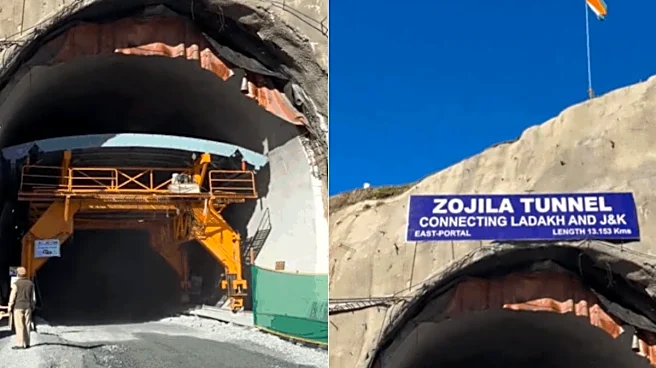
Union Road Transport and Highways Minister Nitin Gadkari on Tuesday triggered the final breakthrough of the strategically significant Zojila Tunnel, bringing India a step closer to achieving all-weather road connectivity between Jammu and Kashmir and Ladakh.
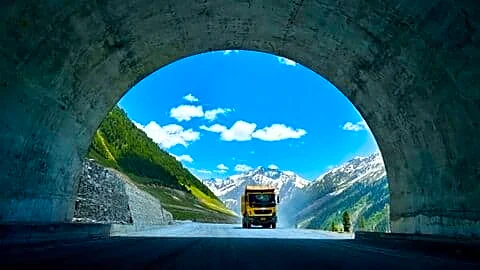
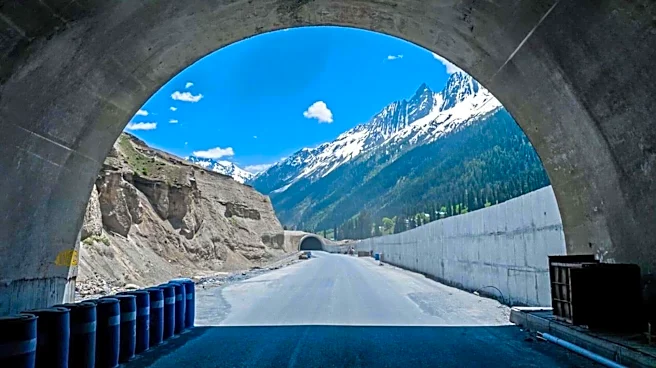
The breakthrough marks a major milestone for one of India’s most ambitious mountain infrastructure projects. Once completed, the tunnel will provide year-round connectivity on the Srinagar-Leh National Highway, significantly reducing travel time and strengthening military logistics in the border region.
Calling the breakthrough a “golden chapter” in India’s infrastructure history, Gadkari said the project would transform connectivity, boost tourism and enhance national security.
Why Zojila Tunnel Is An Engineering Marvel
The Zojila
Tunnel would be Asia’s longest bi-directional road tunnel, stretching 13.15 kilometres through some of the most challenging Himalayan terrain at an altitude of around 11,578 feet above sea level.
The horseshoe-shaped, single-tube tunnel is 9.5 metres wide and 7.57 metres high, carrying two lanes of traffic beneath the snow-bound Zojila Pass.
Designed to international safety standards, the tunnel will feature advanced ventilation systems, automatic fire detection mechanisms, CCTV surveillance, pedestrian escape passages and emergency response infrastructure.
The project also includes eight cut-and-cover sections, four bridges, 40 culverts, snow galleries, avalanche protection structures, catch dams and approach roads to ensure safe operations in the harsh Himalayan environment.
Cost & Opening Date
The approximately 14-km-long tunnel is being constructed between Baltal in Kashmir and Meenamarg in Ladakh on National Highway-1 at an estimated cost of ₹6,800 crore.
Gadkari noted that the project was executed at a significantly lower cost than initial estimates.
“We made the Zojila Tunnel in about ₹7,000 crore against an estimated budget of ₹12,000 crore,” the minister said.
The tunnel is being built at altitudes ranging from 2,900 metres to 3,310 metres above sea level, making it one of the most challenging road infrastructure projects undertaken in the country.
Travel Time To Shrink From Three Hours To 20 Minutes
Once operational, the tunnel will dramatically improve connectivity between Kashmir and Ladakh.
The journey between Ganderbal in Kashmir and Meenamarg in the Drass sector of Ladakh, which currently takes around three hours under favourable conditions, will be reduced to just over 20 minutes.
Gadkari said the project would save fuel and travel time, reduce accidents and minimise disruptions caused by snow and avalanches.
The improved connectivity is also expected to provide a major boost to tourism, trade and economic activity across the region.
When Will Zojila Tunnel Open?
Officials said civil construction work is expected to continue for another seven to eight months before electrical and mechanical installations begin. The tunnel is likely to be opened to the public by February 2028.
Also Read | Zojila Marvel: How Engineers Built A 13-KM Tunnel At 11,500 Feet And What It Means For The Army
Strategic Importance For National Security
The Zojila Tunnel is widely regarded as one of India’s most important strategic infrastructure projects. For decades, heavy snowfall at the Zojila Pass has cut off Ladakh from the Kashmir Valley for nearly 160 to 180 days every year, severely impacting civilian movement and military logistics.
Although snow-clearance operations and improved road maintenance have reduced closure periods in recent years, the route remains vulnerable to harsh weather conditions.
The Srinagar-Leh National Highway serves as a critical supply route for troops deployed along India’s borders with both Pakistan and China.
Its importance was highlighted during the 1999 Kargil War, when Pakistani forces attempted to target heights overlooking the highway to disrupt Indian military supply lines. The 2020 Galwan Valley clashes with China further underscored the need for rapid troop mobilisation and uninterrupted logistics support in Ladakh.
Gadkari described the tunnel as a “game changer” from a national security perspective.
“With year-round connectivity, the movement of the Indian Army and the supply of equipment, materials and logistics will become faster, safer and more effective, significantly strengthening the country’s strategic preparedness,” he said.
Also Read | At 100, Lt Col Sharak Dev Honoured By Indian Army: All About The Zojila Pass Recapture Hero
Part Of A Larger Border Infrastructure Push
The Zojila Tunnel is one of 31 border road tunnels currently under construction in Jammu and Kashmir and Ladakh.
Together with the recently inaugurated Z-Morh Tunnel, the project will provide seamless, all-weather connectivity along the Srinagar-Leh corridor, reducing the region’s dependence on weather conditions and improving access to remote border areas.
With the final breakthrough achieved, the decades-old dream of uninterrupted road connectivity between Kashmir and Ladakh has moved significantly closer to becoming a reality.
/images/ppid_a911dc6a-image-178099223500958198.webp)


/images/ppid_a911dc6a-image-178094543591230707.webp)
/images/ppid_a911dc6a-image-178097926088918956.webp)
/images/ppid_a911dc6a-image-178096624379946685.webp)
/images/ppid_a911dc6a-image-178100262570235683.webp)