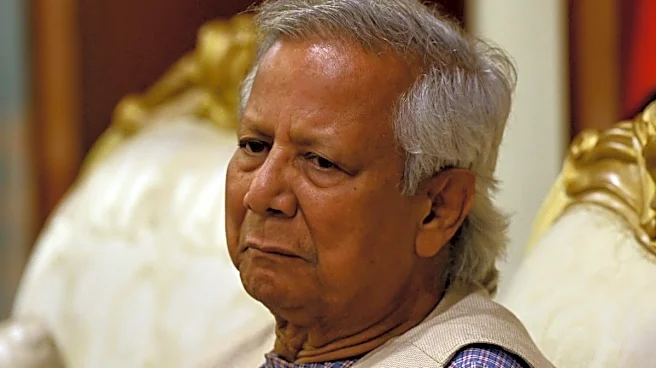




A fire was set at the ancestral home of Nobel laureate Muhammad Yunus, former Chief Adviser of Bangladesh’s interim government, in Chattogram city late on Wednesday, prompting police to launch an investigation into the incident.
The fire broke out at around 11.30 pm on Wednesday at the house located in the Panchlaish area of Chattogram, according to a report by Bangladesh-based newspaper Prothom Alo.
Officer-in-Charge (OC) of Panchlaish Police Station, Mozammel Haque, told Prothom Alo late Wednesday that unidentified persons had set fire to an abandoned room on the ground floor of the house.
According to Haque, police personnel were conducting routine patrols in the surrounding area when they suddenly noticed flames coming from the abandoned room.
They immediately rushed to the spot and managed to extinguish the fire.
Police have launched an investigation to identify those responsible for setting the room on fire.
No further details about the suspects or the motive behind the incident were immediately available.
BANGLADESH ON HIGH ALERT AMID POLITICAL UNREST
The incident comes amid heightened security in Bangladesh, where authorities have deployed hundreds of paramilitary troops nationwide as political tensions escalate ahead of the planned return of former Prime Minister Sheikh Hasina.
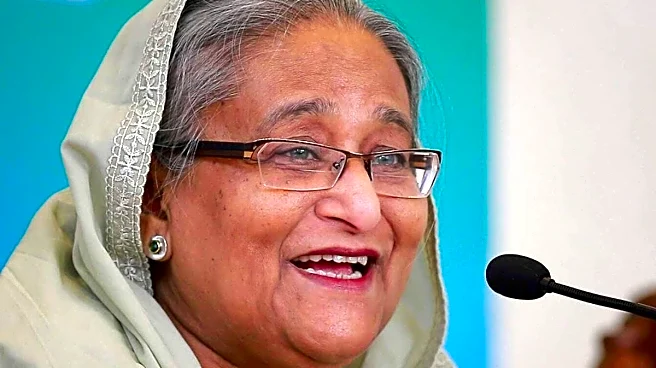
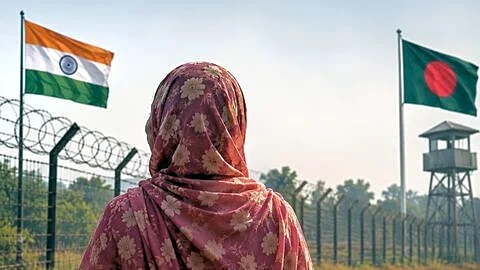
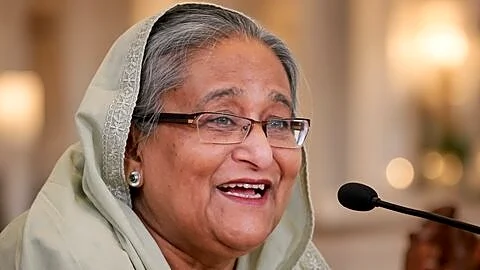
According to Reuters, Hasina, who has been living in exile in neighbouring India since fleeing Dhaka following violent protests in August 2024, has requested a new passport and identity card, saying she intends to return to Bangladesh in December.
However, the government has so far rejected her request, triggering protests by members and supporters of her Awami League party, which has been banned.
Last week, the party announced a week-long programme of protests and rallies to mobilise support for Hasina’s return, culminating in a nationwide lockdown on November 19.
Reuters reported that police had recorded dozens of crude bomb blasts and incidents of vehicles being set on fire across at least 28 districts over the preceding 10 days.
Several police personnel and civilians have been injured in the violence, according to local media reports cited by the news agency.
The unrest has also included attacks on properties associated with political figures.
On Tuesday night, a crude bomb exploded outside the Dhaka residence of Cultural Affairs Minister Nitai Roy Chowdhury.
The house of a BNP lawmaker and shops belonging to supporters of the Bangladesh Nationalist Party (BNP) in Gopalganj were also set on fire, police told Reuters.
GRAMEEN BANK OFFICES ALSO TARGETED IN ARSON ATTACKS
Reuters further reported that at least 37 Grameen Bank branches and offices had been targeted in arson attacks or attempted fires since November 10. Fourteen more such incidents were reported after midnight on Tuesday, the bank said.
Grameen Bank was founded by Yunus, who led Bangladesh’s interim government following Hasina’s ouster. The Nobel laureate has faced hostility from Hasina’s supporters.
However, there was no information establishing any connection between the fire at Yunus’s ancestral home in Chattogram and the reported attacks on Grameen Bank offices or the wider political unrest.
Dhaka Metropolitan Police spokesperson Niaz Mehedi told Reuters that police had arrested at least 71 members of banned organisations, including the Awami League and its affiliated outfits, in the preceding 24 hours.
Home Minister Salahuddin Ahmed had also accused Awami League leaders based abroad of inciting supporters to destabilise Bangladesh and set properties on fire. He said those involved in violence would be identified and prosecuted.
Awami League leaders, most of whom are in hiding, could not be reached for comment, Reuters reported.
GARMENT WORKERS’ PROTESTS ADD TO BANGLADESH’S UNREST
Separately, Bangladesh has also witnessed fresh violence over demands for higher wages in its crucial garment manufacturing sector.
According to an Associated Press report, police clashed with thousands of garment workers on Wednesday as protests over basic wages intensified in areas surrounding Dhaka.
Around 20,000 workers at a garment factory reportedly took to the streets and blocked the Dhaka-Aricha Highway in Savar. Police used tear gas and stun grenades and charged at protesters with batons to disperse the crowd. The number of people injured was not immediately clear.
The violence subsequently spread to nearby Ashulia, where around 25 factories were shut because of the unrest, police said.
Protests were also reported in Gazipur, a major industrial zone outside Dhaka, where workers blocked the Dhaka-Mymensingh Highway and set a police vehicle on fire.
The workers are demanding a minimum monthly wage of 30,000 takas ($236), up from the existing 12,500 takas ($98), arguing that rising living costs and inflation have eroded their purchasing power.
The garment industry earns Bangladesh approximately $40 billion annually through exports and directly employs around four million workers, most of them women from rural areas, according to AP.
The government has formed a board to determine a new wage package, but its efforts have so far failed to satisfy the protesting workers. Several factories have remained shut under a ‘no work, no pay’ provision in labour laws.