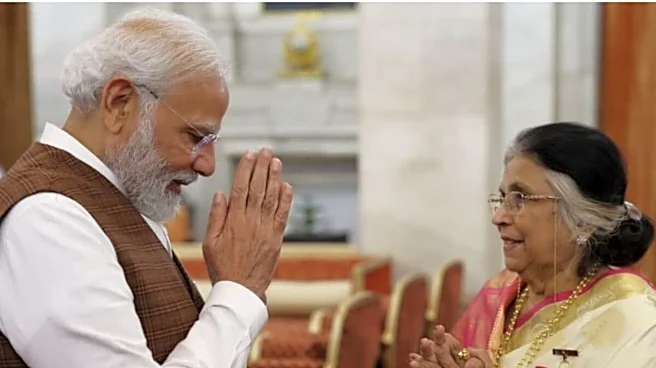




When Baat Ek Raat Ki released in 1962, “Na Tum Hamein Jaano” created one of the great ironies of Hindi film music. As the haunting duet swept across radio waves, most listeners were convinced the female voice belonged to Lata Mangeshkar. Few realised they were listening to Suman Kalyanpur.
The confusion was so complete that many music lovers, upon learning the truth years later, returned to the song for a second hearing. Only then did they begin to notice the differences- the softer phrasing, the gentler finish to a line, the subtly different handling of high notes. Until then, Suman’s voice had passed, almost unquestioned, as Lata’s.
What made this mistaken identity even more remarkable was that Suman was hardly a newcomer. She had entered films
nearly a decade earlier, recording one of her first notable songs with Talat Mahmood at a time when he was among India’s biggest playback stars. Yet despite her talent and years in the industry, widespread recognition remained elusive.
Then came “Na Tum Hamein Jaano” – the song that finally made millions notice her, while not noticing her at all.
Ironically, the clue to telling the two singers apart often lay in the very place where singers are most exposed: the higher notes. Even at her peak register, Lata’s voice retained its trademark crystalline sharpness and precision. Suman, by contrast, brought a softer, more delicate texture. Her high notes carried a touch more vulnerability, her phrasing a gentler, less sharply etched quality. The distinction can be heard in Suman’s version of “Duniya Banane Wale Kya Tere Man Mein Samayi” from Teesri Kasam. On the higher passages, where Lata might have soared with diamond-cut precision, Suman sounds more fragile, almost emotionally bare. The difference was always there – it simply took an attentive ear to hear it.
That uncanny resemblance became both a blessing and a burden. It brought opportunities, but also trapped Suman in endless comparisons. Yet a singer with nearly 900 songs, admired by generations of composers and listeners, cannot be dismissed as a mere echo of another voice. The irony of Suman Kalyanpur’s career is that the quality which made her instantly recognisable also made her difficult to recognise. And nowhere is that paradox more beautifully captured than in “Na Tum Hamein Jaano”—the song that made an entire nation guess wrong.
Lata’s Era, Suman’s Dilemma
By the 1960s, despite the presence of highly individual singers such as Geeta Dutt, Asha Bhosle, Sudha Malhotra, Mubarak Begum, Jagjit Kaur and Suman Kalyanpur, Lata Mangeshkar’s dominance had become so complete that composers increasingly conceived songs with her voice as the ideal reference point. Earlier, Hindi cinema had accommodated a spectrum of distinct female timbres—Noor Jehan’s richness, Suraiya’s conversational warmth, Shamshad Begum’s ringing robustness and Geeta Dutt’s smoky intimacy. By contrast, the 1960s saw the emergence of a near-standardised heroine’s voice, and that voice was Lata’s.
For Suman Kalyanpur, the dilemma appeared remarkably early. As far back as 1954, in “Chale Hum To Mubarak Ho Zamane Ko” from Darwaza, composed by Naushad, one can already hear traces of the vocal quality that would later invite constant comparisons with Lata. Yet the resemblance alone did not translate into stardom. If anything, it created a paradox. In an industry increasingly oriented around Lata’s voice, sounding somewhat like her could open doors, but it could also raise an uncomfortable question: if the original was available, why seek an alternative?
The irony was that Suman’s greatest asset—a tonal resemblance to Lata—may also have been her greatest handicap. She was close enough to invite comparison, yet distinct enough to remain her own artist. Her softer texture, greater fragility on high notes and understated emotionalism gave her singing a character that was unmistakably her own. But these qualities were often overshadowed by the larger narrative of resemblance.
Ironically, it is those very differences that listeners cherish today. What was once regarded as similarity now reveals itself, on closer listening, as individuality.
Early Life and Musical Beginnings
Born on January 28, 1937, in Dacca (now Dhaka, Bangladesh), where her father Shankar Rao Hemmady was posted as an officer with the Central Bank of India, Suman Hemmady grew up in a cultured Konkani-speaking family as the eldest of six siblings. The family moved to Bombay in 1943, where her artistic talents began to flourish.
As a child, Suman was drawn equally to music and painting. She studied at St. Columba High School and later enrolled at the Sir J.J. School of Arts, intending to pursue a career as a painter. In a poetic twist of fate, however, an allergy to turpentine oil forced her to abandon her first love. What seemed a disappointment at the time became the turning point of her life, directing her toward music.
Her musical training began under Pandit Keshavrao Bhole, the eminent Prabhat Film composer and a family friend, and later continued with Abdul Rehman Khan, Ustad Khan and Master Navrang. What started as a hobby soon evolved into a profession, and the young woman who had dreamed of expressing herself through colours would eventually paint her finest creations with her voice instead.
The Classical Heart of a Playback Singer
Perhaps the most celebrated among her classical recordings is “Aajhun Na Aaye Balam, Sawan Beeta Jaye” from Sanjh Aur Savera. Composed by Shankar Jaikishan, the song is steeped in the mood and discipline of Hindustani classical music. Suman conveys its profound sense of longing with remarkable restraint and emotional depth, producing a performance that musicians and connoisseurs have admired for decades.
Equally impressive is “Mere Sang Ga Gunguna” from the Shammi Kapoor hit Janwar. Another raga-based composition by Shankar Jaikishan, it demonstrated Suman’s ability to balance classical precision with popular appeal.
Among the rarities is “Manmohan Man Mein Ho Tumhi,” a classically oriented composition by Sachin Dev Burman. That S. D. Burman entrusted such a song to Suman is significant, given his long and celebrated association with Lata Mangeshkar.
A particularly fascinating example came later with “Gir Gayi Re More Mathe Ki Bindiya,” composed by Ghulam Mohammed for Pakeezah. Though not used in the final film, it survives as a beautifully rendered semi-classical piece. Interestingly, the same soundtrack also featured the veteran singer Rajkumari Dubey in “Nazariya Ki Maari Mari Mori Guiyan,” creating a rare meeting of two generations of playback artistry within Ghulam Mohammed’s musical world.
These songs remind us that behind the comparisons with Lata Mangeshkar stood a singer of formidable classical grounding, fully capable of meeting the demands of some of Hindi cinema’s most discerning composers.
The Shankar–Jaikishan Connection
Among the major composers who recognised Suman Kalyanpur’s unique appeal, the duo of Shankar–Jaikishan gave her some of the most memorable songs of her career, particularly alongside Mohammed Rafi. They seemed to understand that while her voice shared certain tonal similarities with Lata Mangeshkar, it possessed a gentleness and understated warmth that could create a distinctly different emotional texture.
The composers paired her with Rafi in a remarkable string of duets that remain cherished by connoisseurs. Songs such as “Tujhe Pyar Karte Hain, Karte Rahenge” from April Fool and “Woh Bade Khushnaseeb Hote Hain, Aap Jinke Kareeb Hote Hain” from Saazish showcased a romantic delicacy that was uniquely Suman’s.
Shankar–Jaikishan also entrusted her with one of the most enduring family songs in Hindi cinema, “Juhi Ki Kali Meri Laadli, Naazon Ki Pali,” a melody that continues to resonate across generations. Equally beloved is “Behna Ne Bhai Ki Kalai Se Pyar Bandha Hai,” which has become inseparable from Raksha Bandhan celebrations and remains among the most popular sibling songs ever recorded for Hindi films.
Her repertoire with the duo was remarkably diverse. From the buoyant optimism of “Chale Ja, Chale Ja, Chale Ja, Jahan Pyar Mile” to the hauntingly philosophical “Duniya Banane Wale” from Teesri Kasam, Suman brought grace, clarity and emotional conviction to every composition.
Taken together, these songs demonstrate how Shankar–Jaikishan consistently found fresh ways to use her voice. Their collaborations yielded not only chart successes but also melodies that have endured long after the era that produced them, standing today among the finest examples of Suman Kalyanpur’s artistry.
A Night That Refuses to End: “Mere Mehboob Na Jaa”
Some songs seem to exist outside time. “Mere Mehboob Na Jaa” from Noor Mahal (1965) is one such forgotten treasure, a ghazal of exquisite longing elevated by Suman Kalyanpur’s hauntingly tender rendition and Jani Babu Qawwal’s inspired composition.
Set in the fragile moments before dawn, Saba Afghani’s lyric revolves around a plea as old as love itself:
“Mere mehboob na jaa, aaj ki raat na jaa,
Hone waali hai sahar, thodi der aur thahar.”
The beloved must not leave; not yet. Through images of scattered stars, flickering lamps and moonlight shadowed by separation, the poet transforms a simple request into a meditation on love’s fleeting nature and the human desire to hold back time itself.
Suman sings with remarkable restraint, avoiding theatricality and allowing the pain to emerge through nuance. There is a luminous fragility in her voice, as though every word is suspended between hope and heartbreak. The emotion lies not in overt sorrow but in the quiet knowledge that dawn—and parting—are inevitable.
Drawing upon the majestic contours of Raag Darbari Kanada, Jani Babu Qawwal fashions a melody of rare grace, blending sitar and tabla with lush orchestral textures. The result is a composition that moves with unhurried elegance, allowing every shade of longing to bloom.
Decades later, “Mere Mehboob Na Jaa” remains one of Suman Kalyanpur’s most enchanting performances—a song that captures the eternal wish to make a beautiful night last just a little longer.
The Sound of Ache: Roshan, Khayyam and Suman Kalyanpur’s Most Fragile Songs
If some composers prized Suman Kalyanpur for the resemblance her voice bore to Lata Mangeshkar’s, Roshan and Khayyam discovered something more distinctive: an ability to convey vulnerability, loneliness and quiet heartbreak with extraordinary subtlety. Under their baton, Suman produced some of the most emotionally resonant songs of her career.
Roshan’s music often drew upon the sweetness and translucence of her voice. The Raj Kapoor–Nutan starrer Dil Hi To Hai (1963), one of the most musically rich films of its era, featured the delightful Mukesh-Suman duet “Chura Le Na Tumko Yeh Mausam Suhana.” Yet an even greater showcase of her artistry was the lesser-known “Yun Hi Dil Ne Chaha Tha Rona Rulana, Teri Yaad To Ban Gayi Ek Bahana.” Often overshadowed by the film’s more celebrated numbers, it remains a rare gem. Suman brings to the song an aching fragility, transforming what could have been a conventional lament into a deeply felt expression of loneliness and emotional surrender. The tenderness of her rendition places it among the finest examples of her ability to convey heartbreak through understatement rather than display.
For Khayyam, meanwhile, Suman was not merely a singer but an instrument of quiet sorrow. His finest use of her voice came in “Jo Hum Pe Guzarti Hai Tanha” from Mohabbat Isko Kehte Hain (1965), a song that remains one of the hidden masterpieces of Hindi film music. Khayyam strips away all excess, allowing Suman’s delicate voice to carry the burden of unspoken pain. She sings not of dramatic loss but of wounds borne in silence, and the result is devastating in its restraint.
Khayyam had earlier tapped this quality in Shagun (1964), particularly in the unforgettable “Parbaton Ke Pedon Par Shaam Ka Basera Hai.” Written by Sahir Ludhianvi, the song drifts with the languorous beauty of twilight, its imagery of mountains, shadows and fading light perfectly matched by Suman’s ethereal rendering. Her voice seems less to sing the melody than to float upon it. Equally memorable is the poignant “Bujha Diye Hain Khud Apne Haathon Mohabbaton Ke Diye Jala Ke,” another Sahir–Khayyam creation in which Suman conveys resignation and heartbreak with extraordinary delicacy. The song’s quiet sorrow, expressed without a trace of theatricality, remains one of the most moving examples of her ability to inhabit the emotional undercurrents of a lyric and transform them into something deeply personal and universal.
Taken together, these songs reveal the true artistry of Suman Kalyanpur. Roshan brought out the sweetness in her voice; Khayyam revealed its quiet sorrow. Between them, they created some of the most moving songs of her career, proving that the deepest emotions are often expressed not through power, but through tenderness.
Epilogue: The Shadow and the Song
The story of Suman Kalyanpur is one of the quiet ironies of Hindi film music. Here was a singer blessed with flawless sur, impeccable diction and an emotional sensitivity that could transform even the simplest melody into something unforgettable. Yet the honours that usually accompany such gifts largely eluded her. There was no Filmfare Award crowning her achievements, no National Award formally recognizing a body of work that enriched Indian cinema for decades.
When the Padma Bhushan finally arrived, it was welcomed with affection and gratitude, but it also served as a reminder of how long true recognition had taken. History can sometimes be slow to acknowledge those who work in the shadows.
And shadows were where Suman spent much of her career. In an age dominated by the towering phenomenon of Lata Mangeshkar, many gifted singers found themselves eclipsed. That Suman not only endured but created a body of work of such grace and distinction speaks volumes about the depth of her artistry. Few singers have had to contend with comparisons so persistent, and fewer still have emerged with an identity so enduring.
Today, long after the charts have fallen silent and the trophies have gathered dust, her songs continue to find new listeners. They survive because they possess something no award can bestow and no jury can certify: emotional truth. Whether in the haunting loneliness of “Jo Hum Pe Guzarti Hai Tanha” or the timeless yearning of “Mere Mehboob Na Jaa,” one encounters an artist whose voice carried both fragility and strength in equal measure.
Perhaps that is Suman Kalyanpur’s greatest triumph. History may have placed her in the shadow of a legend, but memory did not. More than half a century later, she is remembered not because she resembled someone else, but because she sang like no one else. Her voice remains suspended in the collective memory of Indian music—gentle, wistful and achingly beautiful—like a melody at dusk that lingers in the air long after the sun has set.



/images/ppid_a911dc6a-image-17802505234949601.webp)


/images/ppid_a911dc6a-image-178030316248368919.webp)
/images/ppid_59c68470-image-178029251969369840.webp)