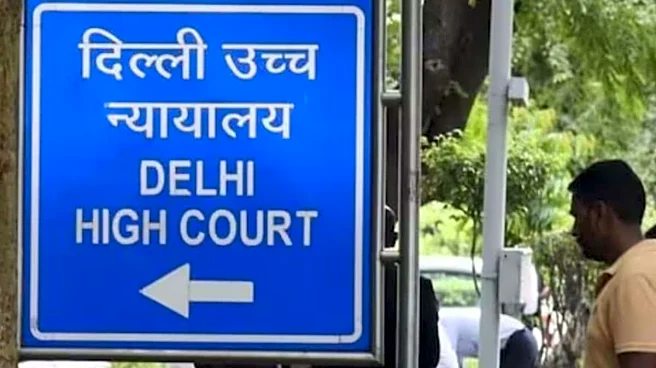

The Delhi High Court has granted the National Investigation Agency (NIA) a final extension of four weeks to file its rejoinder in the high-stakes appeal seeking the death penalty for Kashmiri separatist
leader Yasin Malik. During the hearing on Wednesday, a division bench comprising Justices Navin Chawla and Ravinder Dudeja renotified the matter for April 22, citing a lack of “immediate urgency” given Malik’s current status.
The court’s decision came after the NIA’s counsel requested additional time to vet and respond to a voluminous 85-page reply filed by Malik. Responding to Malik’s complaints of “psychological trauma” and “deliberate delays” by the agency, the bench remarked that there was no pressing hurry to expedite the proceedings. “There is no urgency. This is for enhancement of sentence. You are already on life sentence,” the court observed, effectively noting that since Malik is already serving a life term in Tihar Jail, the legal outcome of the appeal does not change his current custodial status.
The central issue of the case is the NIA’s challenge to a May 2022 trial court judgment. While that court found Malik—the chief of the now-banned Jammu and Kashmir Liberation Front (JKLF)—guilty of various offences under the Unlawful Activities (Prevention) Act (UAPA) and the Indian Penal Code, it stopped short of awarding the death penalty. The trial judge had ruled that Malik’s crimes did not fall within the “rarest of rare” category.
The NIA, however, argues that the life sentence is “grossly inadequate”. The agency contends that allowing “dreaded terrorists” to escape the gallows by merely pleading guilty undermines India’s sentencing policy and national security. Furthermore, the NIA has indicated it may seek in-camera proceedings for the appeal, given the sensitive nature of the evidence and the high-profile status of the convict.
Appearing virtually from Tihar Jail, Yasin Malik has adopted a defiant stance. In his detailed affidavit, he claimed that for nearly three decades, he acted as a “backchannel” for successive Indian Prime Ministers—from Atal Bihari Vajpayee to Manmohan Singh—to foster peace in Kashmir. He accused the state of attempting to “erase” this history of engagement and expressed his readiness to face the death penalty, comparing his fate to that of executed separatist leader Maqbool Bhat.




/images/ppid_a911dc6a-image-177073402422810189.webp)



/images/ppid_59c68470-image-177073503438256591.webp)


/images/ppid_59c68470-image-177087752988933095.webp)