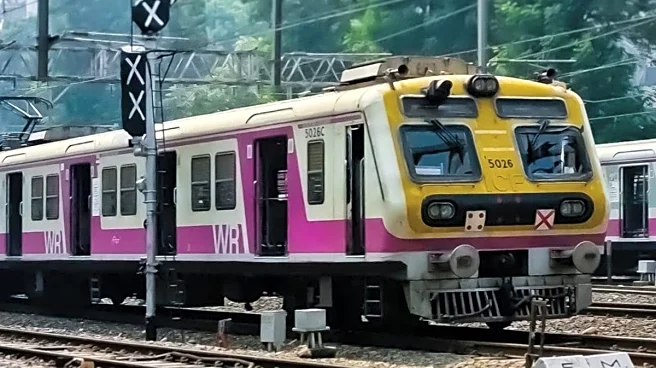

To accommodate the extra rush of passengers during Shab-e-Baraat, the Western Railway (WR) will operate two special slow local trains on the intervening night of February 3 and 4, 2026 between Churchgate
and Virar.
The Churchgate–Virar Special Local (Spl-1) will depart Churchgate at 2.35 am on February 4 and reach Virar at 4.15 am. The return Virar–Churchgate Special Local (Spl-2) will leave at 1.42 am and arrive at Churchgate at 3.22 am on February 4.
In connection with the religious function Shab-E-Barat, two Suburban EMU special services will be operated for passenger convenience.
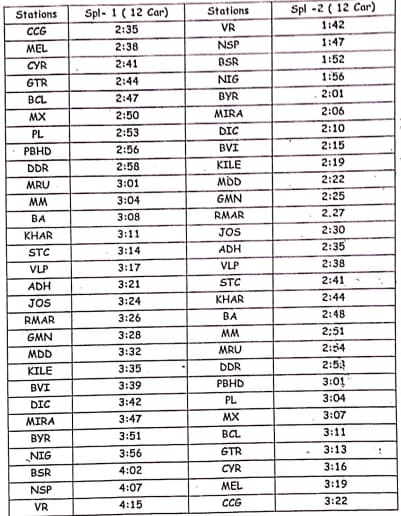
In a post on X, the WR wrote: “These special EMU services will run as per the notified schedule on the above dates. Passengers are requested to make note of this arrangement and plan their journey accordingly.”
📢 Passenger Information | Suburban Special Services 🚆
🙏 In connection with the religious function Shab-E-Barat, two Suburban EMU special services will be operated for passenger convenience.
📅 Dates: 03/04.02.2026
🚆 Route:
➡️ Churchgate ➝ Virar
⬅️ Virar ➝ Churchgate— DRM – Mumbai Central, WR (@drmbct) January 30, 2026
What is Shab-e-Barat?
Shab-e-Barat, also known as Mid-Sha’ban or the Night of Forgiveness, is a significant religious observance for many Muslims worldwide. It takes place on the night between the 14th and 15th of Sha’ban, the eighth month of the Islamic lunar calendar.
The name is derived from the Persian word Shab (night) and the Arabic word Barat (pardon, freedom, or salvation). Many believers hold that on this night, Allah determines the destiny, sustenance, life, and death of every creature for the coming year based on their past actions.
It serves as a spiritual “bridge” or checkpoint to prepare for the holy month of Ramadan, which begins approximately two weeks later. Devotees often spend the night in vigil, offering voluntary (nafl) prayers, reciting the Quran, and engaging in dhikr (remembrance of God).
It is a common tradition to visit the graves of deceased relatives to pray for their souls, following a narration that the Prophet Muhammad (PBUH) did so at the Jannat-ul-Baqi cemetery.
Why the additional services?
Thousands of people travel late at night to visit prominent religious sites like Haji Ali Dargah and Mahim Dargah, as well as various cemeteries, to offer prayers and seek forgiveness.
Additional late-night trains ensure that devotees can travel safely across the city after midnight, when regular suburban services have stopped.