


For many living outside Bengal, the Diamond Harbour model, touted by its sitting MP and former First Nephew of the state, Abhishek Banerjee, was a welcome bulwark against the onward march of the saffron horde. Such was the relief in external circles about this fortress that no one looked askance at Banerjee’s ever-increasing victory margin there, peaking at 7,10,930 in the 2024 general elections. So, the 2026 assembly poll results and the Falta by-election were shattering.
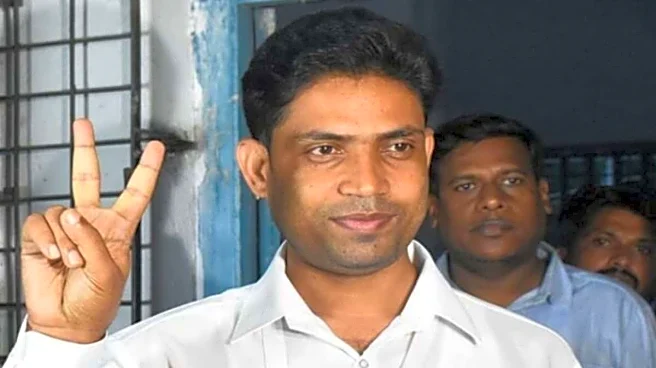
Not many know that Falta, now famous for being the stomping ground of the deceptively sweet-faced Trinamool Congress muscleman and Banerjee lieutenant Jahangir Khan, began as a Dutch fortress called Voltha. It was a key riverside outpost for trade conducted by the Dutch and Portuguese
and later the French and English. But not since the British “factors” and their families, fleeing Siraj-ud-Daulah in 1756, took refuge in the fort has Falta garnered so much attention.
For all that the Diamond Harbour model—with Falta as its cornerstone—enthused the probashi (non-resident) secular and “Bengal is Different” brigades, no one really cared to examine it closely. Which is why the model’s spectacular decimation in the 2026 assembly polls surprised the secular expatriate Bengalis but not those who had lived in Bengal under Trinamool. How could a model that delivered huge victories crumple under pressure like a plastic water bottle?
The Left Front had done the groundwork for controlled political management, creating cadre bases to deliver votes through systemic distortions. Trinamool perfected that blueprint, using a combination of cadres, surveillance, and fear. Voter ID cards are no protection against false voting if the polling staff are either in cahoots or browbeaten into acquiescence. No one will agree to be a polling agent or openly vote for the opposition if the consequence is savage retribution.
In the past two elections, the polling results from Falta were startlingly one-sided, but no one really cared to probe why. In all, 19 booths in Falta even recorded 100% voting in favour of Banerjee during the 2024 elections. Khan, a Class 12-pass, has been Banerjee’s chief enforcer, though ostensibly just an office bearer of the South 24 Parganas Zila Parishad. He was, thus, a shoo-in for the Falta seat in 2026. But the Diamond Harbour model failed, and a defanged Khan came 4th.
It is easy now to confine the 2026 result analyses of Bengal in general and Falta in particular to broad brush strokes—Hindu consolidation, Muslims moving to the CPI(M), SIR, and Election Commission measures—but the tiny pixels tell the real story. They all point to the underlying factor that has determined elections in Bengal for decades: fear. It was the cumulative result of years of vandalisation, coercion, murders, beatings, rapes, and kidnappings, with no hope of redressal.
It is hard to quantify fear in numbers unlike “communalisation”; maybe that is why so many analysts skirted around that factor for years too. But fear is what made seven out of ten people refuse to tell an exit pollster which party they had voted for. Fear is also what created monsters like Falta’s Khan and prompted him to boast about invincibility. And it gave Banerjee the gall to challenge even “the Union of India” to a battle and warn the home minister of dire consequences.
Buoyed, no doubt, by this fear factor and his 7-lakh-plus winning margin in 2024, Banerjee was even brazen enough to announce at an election meeting at Falta in 2026 that he would accede to Jahangir Khan’s “demand” for an electric crematorium to be built there. Add to that his crack about heart attacks after the results and the white sarees (generally worn by Hindu widows) stacked in local party offices; the message and the target community were chillingly clear.
No wonder then that despite the presence of unprecedented numbers of central forces in Falta, the mass transfer of officials and police, and meticulous additional security measures like webcams and CCTV cameras by the EC to prevent intimidation, Falta still saw large-scale irregularities. The hardened practitioners of the Diamond Harbour model still managed to access many EVMs and seal off the BJP buttons with tape as well as get polling booth cameras switched off.
That Khan decided to go ahead with the usual shenanigans even though tough police officials like Ajaypal Sharma had been deputed there from UP also points to extreme stupidity or extreme confidence. Falta’s voters meekly fell in with his plans initially, as they expected no reprieve either from their fate for the past few elections. That the EC took time to countermand the Falta election and order a full re-poll shows that it was also perhaps taken aback by Khan’s temerity.
What does that also indicate about Trinamool’s attitude towards democratic processes or its awareness of how serious the EC was about conducting truly free and fair elections? They had blatantly cocked a snook at all poll norms for so long without consequences that they did not even have a Plan B. It was almost as if the party went ahead with what it had done for years out of sheer habit, compounded by its inability to understand that the situation had quietly changed irrevocably.
Because someone had realised that the key to dismantling the clinically efficient “system” the Trinamool had perfected over the past 15 years was dispelling fear. It was a tall ask because civil society in the rest of India simply refused to acknowledge that fear factor, much less its crucial role in ensuring victory for Trinamool. Civil society outside Bengal went all out, instead, to decry the EC’s steps to dispel fear by dubbing those remedial measures to be undemocratic.
Luckily, Bengal did not depend on them for advice on who to vote for and why. So despite some non-resident commentators even going so far as to say Mamata Banerjee should become PM—and extend her party’s fear factor machinery to the rest of India, presumably—Bengal bravely trusted the EC instead and came out to vote fearlessly in great numbers in both phases. The impact of that collective giant leap of faith was devastating for the Trinamool and historic for Bengal.
The public discombobulation of Banerjee’s infamous Diamond Harbour model has been the single most significant step towards the re-establishment of a fear-free polling culture in Bengal and a lesson for the rest of India too. The reduction of Jahangir Khan to a mealy-mouthed apologist from a swaggering, bellicose political thug will also remain proof of the fact that fear cannot be the basis for permanent power. Falta has become the place where fear lost its deposit.
The author is a freelance writer. Views expressed in the above piece are personal and solely those of the author. They do not necessarily reflect News18’s views.











/images/ppid_59c68470-image-178022752451452141.webp)