
/images/ppid_59c68470-image-177029257050620635.webp)
/images/ppid_59c68470-image-177018010828410887.webp)
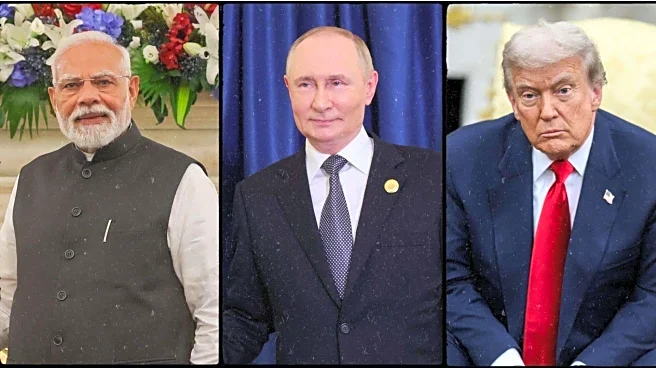
The India-US trade deal has been announced, and met with either unconditional euphoria by the government’s spokespersons, or blind condemnation by the Opposition. To my mind, both these reactions are premature and misplaced.
The reason is that both the benedictions in the deal, and the devil, lie in the details, which are not yet known. The announcement is of a framework agreement, which, as we are aware, was being negotiated for quite some time now. However, the full legal text has not been released, nor are the product-wise tariff schedules, technology agreements, and timelines known. For the moment, Commerce Minister Piyush Goyal has held a cursory press conference, and made a bland declaratory statement in the Lok Sabha.
In the light of such
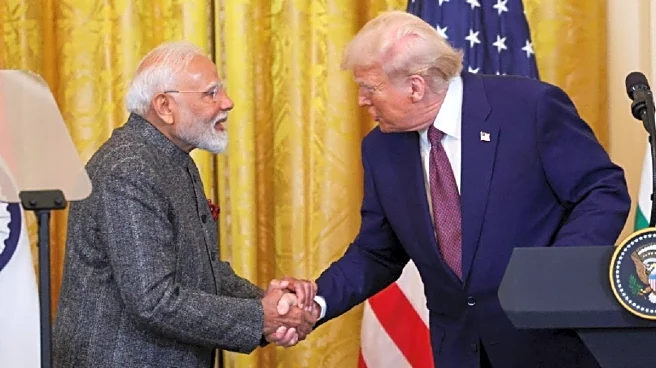
a sketchy canvas, how do we assess the deal? To my mind, there are some pros and some cons. The pluses are that the acrimonious impasse that had been created in India-US relations by Donald Trump’s aggressive and partisan tariffs has been, at least, partially broken. Under the agreement, the United States has agreed to cut its tariffs on Indian goods significantly — from punitive levels that had reached effectively 50 per cent down to around 18 per cent across many categories.
Lower US tariffs directly benefit India’s export-oriented industries. Sectors such as textiles, apparel, gems and jewellery, footwear, pharmaceuticals and chemicals, seafood (especially shrimp), and engineering goods — all of which face heavy competition from neighbours like Bangladesh and Vietnam — stand to gain improved price competitiveness in the US market. Reduction in tariffs can also revive demand and market share that Indian exporters lost due to previous tariff hikes. Some analysts note that Indian exports to the US already grew significantly in 2024, and the deal could accelerate that trend.
Second, the deal will help in boosting positive market and sentiment effects. Indian financial markets reacted positively to the announcement, with stock indices rising and credit ratings agencies highlighting the credit-positive impact on labour-intensive sectors. A more predictable trade relationship also improves investor confidence, which can spur foreign investment into India’s economy.
Third, beyond economics, this agreement solidifies the strategic partnership between India and the US, positioning India, especially against the background of China as a competitor, as a major centre of manufacturing and supply chains. This diversification helps US firms reduce reliance on China and enhances bilateral cooperation on geopolitical and security issues.
There are some cons and grey areas as well. Does this deal commit us to reduce or phase out our purchases of Russian oil? India has historically been a major buyer of Russian crude — often at discounted prices — and has built infrastructure and contracts around that supply. Reducing or halting these purchases could increase India’s energy import bill, at least initially, and complicate New Delhi’s longstanding defence and strategic relationship with Moscow, which is still of paramount importance.
In practical terms, Indian refiners cannot instantly unwind long-term contracts. A transition to US or Venezuelan oil is likely to take time and may increase costs. One can only hope also that India–Iran ties, particularly regarding energy and infrastructure cooperation, will not be affected. India’s access to Iran’s Chabahar port and energy pipelines is a strategic leverage point for us in South-West Asia.
Another major concern is that Indian agriculture, which employs a large portion of India’s population and remains politically sensitive, could be adversely affected if US farm products enter the Indian market without protective tariffs. US agricultural producers operate with high levels of subsidisation and efficiency, meaning cheaper imports could undercut Indian farmers’ livelihoods. US agricultural producers — particularly of soybean products, tree nuts, cotton, dairy and grains — could find new opportunities in India’s large population.
Even limited market opening for dairy, corn, ethanol, and other commodities could displace millions of smallholder farmers who are unable to compete directly with large US agribusiness shipments. The social media post by the US Secretary of Agriculture, lauding the new export benefits for American farmers, needs to be juxtaposed with what may be the detrimental impact on our own farmers.
Another con, that will need greater analysis, is the degree of equity in the deal. Under its terms — from what we know as yet — US imports into India will attract zero tariffs, while Indian exports to the US will face 18 per cent tariffs. Certainly, 18 per cent is a great improvement over the punitive 50 per cent tariffs that Trump had arbitrarily imposed earlier, but — just as a matter of perspective — it is useful to remember that this too is a pretty high tariff when compared to the zero per cent that US exports will bear, and the low 2 per cent or so Indian exports attracted as recently as last year.
In addition, US tariffs on certain products like steel, aluminium and automobiles are expected to remain, meaning the deal does not fully liberalise trade across the board. This inequity may prove to be glaring if — as the deal seems to suggest — India will be required to increase its US imports to up to $500 billion over the next several years.
No international agreement is a perfect one, nor should we expect the India-US trade agreement to be one. There will be some losses and some gains for both sides. We can only assess who has benefited more, and who less — and at what cost — once the full details are known of what is, obviously, still an ongoing process of negotiation.
(The writer is a former diplomat, an author, and a politician. Views expressed in the above piece are personal and solely those of the author. They do not necessarily reflect News18’s views)
/images/ppid_59c68470-image-177044505982222933.webp)

/images/ppid_59c68470-image-177044752816631003.webp)
/images/ppid_59c68470-image-177043504059081661.webp)
/images/ppid_a911dc6a-image-177035565485072664.webp)

/images/ppid_a911dc6a-image-177028287404729916.webp)
/images/ppid_59c68470-image-177028002911963469.webp)
/images/ppid_59c68470-image-177021504482551335.webp)
/images/ppid_a911dc6a-image-177028283553732627.webp)