

/images/ppid_a911dc6a-image-17751545330169346.webp)
More than five decades after astronauts first orbited the Moon during the Apollo missions, the Artemis II crew will once again circle the lunar surface—this time relying heavily on a simple yet powerful tool: their eyes.
Despite cutting-edge imaging technology, NASA continues to value direct human observation. “The human eye is basically the best camera that could ever or will ever exist,” said Kelsey Young, the mission’s lead scientist, told AFP.
“The number of receptors in the human eye far outweighs what a camera is able to do,” she added. She noted that while cameras excel in certain areas, “the human eye is really good at color, and it’s really good at context, and it’s also really good at photometric observations.”
Astronaut Victor Glover,
who pilots the Orion spacecraft, described eyesight as a “magical instrument,” capable of detecting subtle changes in lighting and surface texture that machines may miss.
Crew Underwent Two Years Of Training
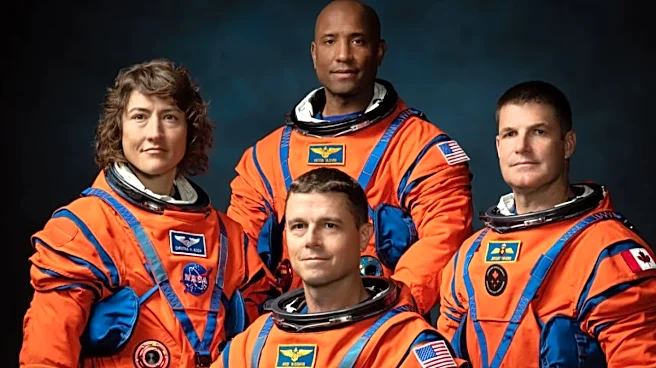
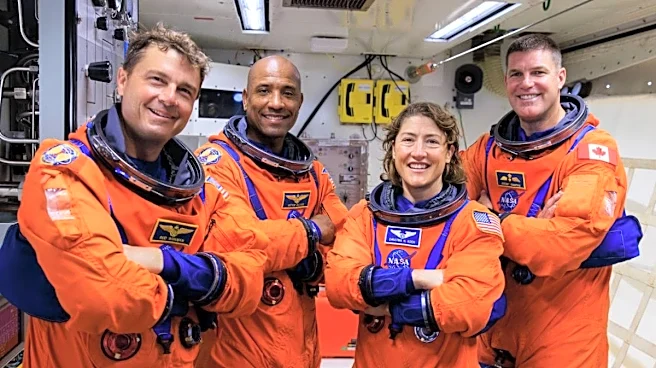
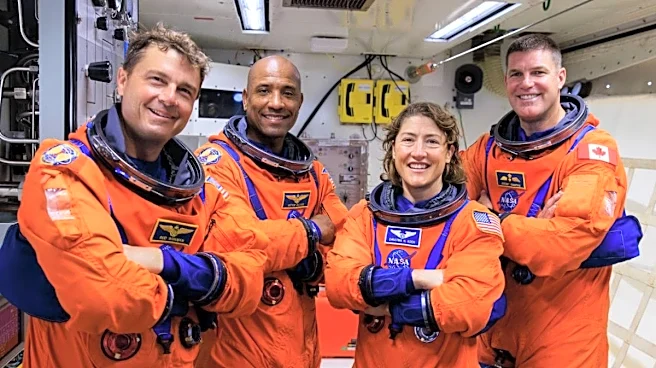
To prepare, the four-member crew—including commander Reid Wiseman, mission specialist Christina Koch, and Canadian astronaut Jeremy Hansen—underwent more than two years of training. This included geological fieldwork in Iceland and Canada, as well as simulated lunar flybys to sharpen observation skills. They also studied the Moon’s “Big 15” landmarks to aid navigation.
During the flyby, the Moon will appear “about the size of a basketball held at arm’s length,” according to NASA scientist Noah Petro, who hopes astronauts can detect subtle surface colours. While major discoveries are unlikely, experts say real-time human descriptions of the Moon will offer a rare and compelling perspective for audiences back on Earth.
What Is NASA’s Artemis-II Mission?
NASA’s Artemis-II mission successfully lifted off from Florida’s Kennedy Space Center on Thursday. Artemis II, humanity’s first crewed mission to the Moon’s neighbourhood since Apollo 17 in 1972, is a 10-day journey around the Moon and back.
With this achievement, Glover has become the first person of colour, Koch the first woman, and Hansen the first non-American to travel beyond low-Earth orbit. Koch, a 47-year-old electrical engineer from North Carolina, already holds the record for the longest single spaceflight by a woman at 328 days.
Hansen is the only first-time flyer among the four and may experience space adaptation syndrome, an extreme form of motion sickness that affects around half of all first-time astronauts.
The crew on the 10-day mission won’t land on the Moon, but will circle it, while travelling further from Earth than anyone has ever been before.
Ahead of the launch, the spacecraft suffered a minor issue with the Launch Abort System. One of its two batteries showed a temperature outside normal limits. However, the issue was addressed and resolved.
What Exactly Will Artemis II Do?
Artemis-II builds on the success of the uncrewed Artemis-I in 2022, and will demonstrate a broad range of capabilities needed for deep space missions. It will be NASA’s first mission with crew aboard the Space Launch System (SLS) rocket and the Orion spacecraft. It is structured as a crewed deep space test mission, not a landing attempt.
/images/ppid_59c68470-image-177538006554077858.webp)


/images/ppid_a911dc6a-image-177521052169594726.webp)

/images/ppid_a911dc6a-image-177529103282364523.webp)
/images/ppid_a911dc6a-image-177528052743570408.webp)
/images/ppid_a911dc6a-image-177516852919573202.webp)