




New Delhi, June 30 (PTI) The Delhi government has approved two new schemes to conserve and develop the city’s protected heritage monuments, allowing private firms, NGOs and other institutions to adopt 75 monuments for five years while also providing grants of up to Rs 2 crore for specialised conservation and restoration work.
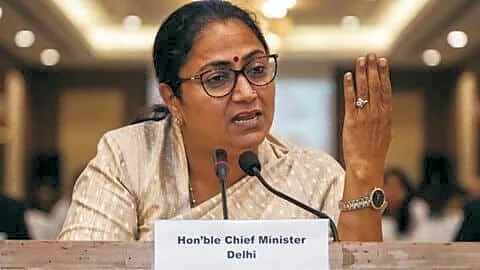
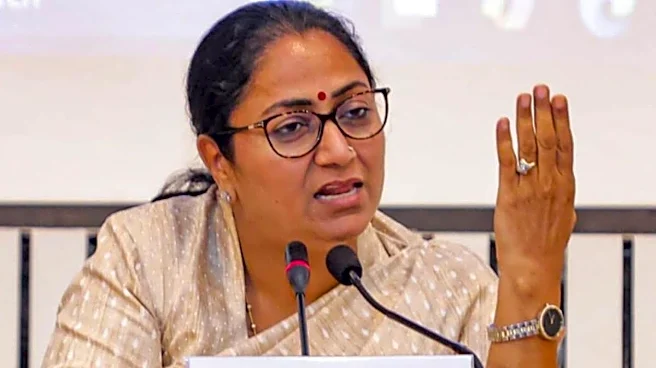
Announcing the decision on Tuesday, Chief Minister Rekha Gupta said the initiative ‘Hamare Smarak, Hamara Gaurav’ aims to preserve monuments protected by the Delhi government’s Department of Archaeology while improving visitor amenities and promoting them as cultural and tourism destinations through public participation.
The schemes include the Delhi Chief Minister Monument Adoption Scheme and a Grant-in-Aid Scheme for trusts,
NGOs, foundations and institutions undertaking conservation, restoration and development works at monuments under the Delhi government’s jurisdiction, a statement said.
The 75 monuments include Bhuli Bhatiyari ka Mahal, Malcha Mahal, Tomb of Muhammad Quli Khan, Mutiny Memorial, Ghumti of Sheikh Ali, Sarai of Azimbganj and several unknown tombs and Kos Minars.
The Department of Archaeology is responsible for protecting monuments of local importance under the Delhi Ancient and Historical Monuments and Archaeological Sites and Remains (DAHMASR) Act, 2004. These monuments do not fall under the jurisdiction of the Archaeological Survey of India (ASI), it mentioned.
Under the monument adoption scheme, public sector undertakings, private companies, registered NGOs, trusts, institutions and interested citizens can become ‘Monument Mitras’ by adopting any of the 75 protected monuments currently maintained by the department, it said.
The Monument Mitras will bear the entire cost of developing, operating and maintaining visitor facilities, including cleanliness, security, lighting, light-and-sound arrangements and other public amenities. According to the statement, this is expected to reduce its maintenance expenditure by around Rs 4.5 lakh per monument annually.
The adoption period will be five years and will be governed through a tripartite memorandum of understanding between the Delhi government, the land-owning agency and the Monument Mitra, it said and added that the implementation will be monitored through regular reviews and stakeholder feedback.
Interested organisations will have to submit an Expression of Interest along with a vision document outlining proposed development works, visitor facilities and maintenance plans for the selected monument, it read.
Any revenue generated from approved events or activities at an adopted monument will have to be reinvested in its maintenance and development and cannot be retained as private profit.
It said the grant-in-aid scheme is separate from the adoption programme and is meant for core conservation and technical restoration work. While Monument Mitras will focus on visitor amenities, eligible institutions receiving government grants will undertake specialised conservation projects.
Under the scheme, eligible organisations can receive financial assistance of up to Rs 2 crore. National and state-level registered voluntary organisations, trusts, foundations, universities, deemed universities, educational institutions and autonomous bodies of the central and state governments will be eligible to apply, it said.
Registration on the Centre’s Darpan Portal will be mandatory for voluntary organisations and other non-government entities.
The statement said 21 of the 75 protected monuments are currently undergoing core conservation work through the Delhi Tourism and Transportation Development Corporation (DTTDC), and the new scheme will allow more specialised institutions to participate in such projects.
Applications for grants will be invited through notifications issued on the Department of Archaeology’s website and in newspapers. Universities and government autonomous institutions will be able to apply through their Registrar or Head of Department.
Gupta said the schemes are expected to generate employment for skilled and semi-skilled workers, support traditional crafts, encourage participation by educational institutions and strengthen local livelihoods while helping preserve Delhi’s historical heritage. PTI SHB RT