
/images/ppid_59c68470-image-178886752915915227.webp)
/images/ppid_59c68470-image-178869502325488876.webp)

India’s push for local-currency trade and easier cross-border payments in BRICS is not just a message to US President Donald Trump. It is also a signal to Washington and the West about India’s approach.
New Delhi wants practical ways to reduce its dependence on the US dollar. BRICS wants settlements in member countries’ own currencies. At the same time, experts say India is unlikely to accept Chinese or Russian currencies in real terms.
India’s primary objective, according to experts, is pragmatic: using local currencies such as the Indian rupee for specific bilateral trade to reduce exchange costs and protect against the risk of Western sanctions on partners such as Russia.
What is India proposing?
India has repeatedly made clear that it does not support creating a common
BRICS currency or an overt “anti-dollar” project.
Instead, the focus is on expanding bilateral trade using national currencies, including the rupee, yuan, rouble, dirham and Brazilian real. India also wants cross-border payments to become cheaper and faster by linking fast-payment systems such as India’s UPI and Brazil’s Pix, while exploring central bank digital currencies.
New Delhi is also uncomfortable with creating a unified intra-BRICS payment network. It prefers targeted, country-to-country mechanisms that do not appear to be a coordinated challenge to the dollar-based financial system.
Trump on de-dollarisation
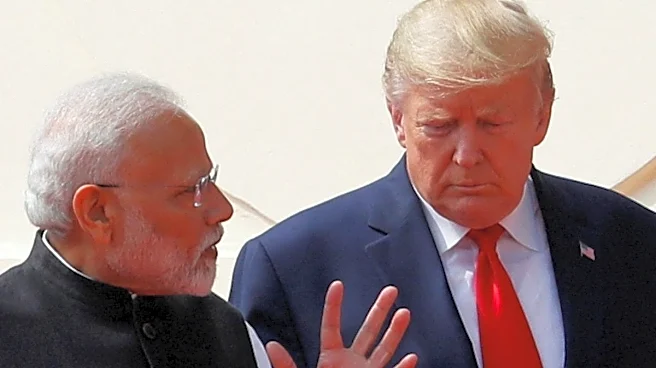
The debate nevertheless comes against the backdrop of Trump’s strong opposition to BRICS de-dollarisation efforts.
In November 2024, then Trump demanded that BRICS countries commit not to create a new currency or support any currency intended to replace the US dollar. He threatened 100 per cent tariffs on BRICS members if they did so, along with additional tariffs on countries supporting what he called “anti-American” BRICS policies.
Although those tariff threats were not implemented, they have remained part of the backdrop to BRICS discussions. Analysts say Trump has presented de-dollarisation as an attack on US economic influence that he “would not take lightly”.
Trump again repeated the threat in February 2025. In July, he said BRICS had been created to “hurt us” and to “degenerate our dollar” and remove it as the global standard.
In October 2025, Trump described BRICS as an “attack on the dollar”, saying he had warned countries seeking to join the grouping that tariffs would follow. He also claimed that countries had started “dropping out” and had stopped discussing replacing the dollar.
Why India is treading carefully
India’s position is shaped by the need to maintain strategic autonomy.
New Delhi wants strong relations with the US while also deepening trade and energy ties with Russia, China and the Middle East. A hard push for de-dollarisation could force India to choose sides, something it wants to avoid.
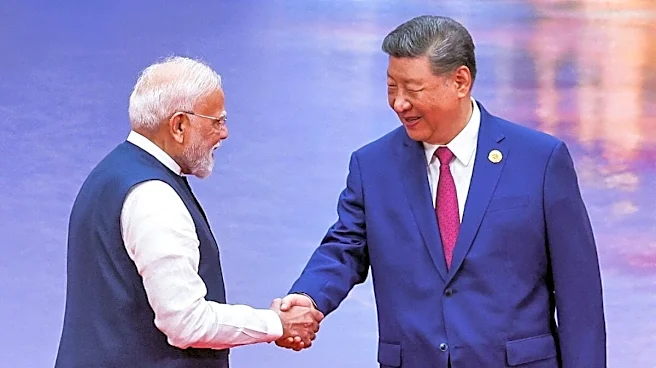
India is also wary of BRICS financial arrangements becoming renminbi-centric and giving Beijing greater influence over the bloc’s economic rules.
For Indian businesses, the emphasis is on practical economic benefits such as lower transaction costs, better payment connectivity and more resilient supply chains, rather than a symbolic currency confrontation.
India’s IT and services exports to the US are largely invoiced in dollars, while the rupee remains a minor international currency. New Delhi therefore wants to reduce exposure to sanctions risks and dollar volatility without provoking US retaliation.
Why dollar dependence matters
Alternative payment arrangements could reduce the need for BRICS countries to use the dollar for some bilateral and multilateral transactions.
A shared payment bridge could also reduce exposure to dollar funding shocks, SWIFT bottlenecks and US banking channels. Faster digital settlements could lower costs and settlement risks, particularly when dollar liquidity becomes tighter.
Such arrangements could also avoid the political and legal complications involved in creating a common BRICS currency.
Message to Trump?
India is presenting its proposal as diversification rather than confrontation. The aim is to give businesses more payment options and make trade more resilient, rather than turn BRICS into an anti-US bloc.
Trump’s tariff threats have made New Delhi even more careful about presenting its proposals as efficiency measures rather than a geopolitical challenge to the dollar. At the same time, those threats have strengthened the argument within BRICS for developing alternative payment rails as insurance against possible future US pressure.
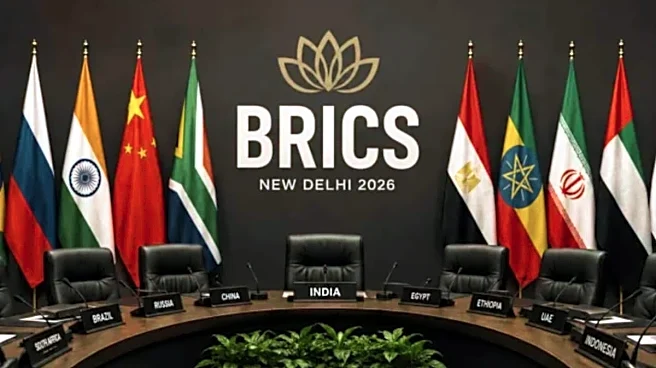
The 2026 BRICS agenda includes smoother intra-BRICS trade, AI cooperation and reforms in global governance. The grouping will mark 20 years at the New Delhi summit on September 12-13, when leaders are expected to consider next steps on digital payments, local-currency trade and other areas of economic cooperation.
Trump on BRICS
Trump’s opposition has focused on two developments: a common BRICS currency or reserve currency intended to replace the dollar, and alternative payment arrangements if they are seen as a coordinated attempt to weaken the dollar’s international role.
In a Truth Social post in late November 2024, Trump said BRICS countries should “neither create a new BRICS Currency, nor back any other Currency to replace the mighty U.S. Dollar”. He warned that failure to do so would bring 100 per cent tariffs and said they should “say goodbye” to selling into the US market.
Trump has also said there is “no chance” BRICS can replace the US dollar in international trade.
His position is that BRICS members can trade among themselves, but a collective attempt to displace the dollar as the world’s main reserve or trade currency would invite a US trade response.
For India, however, the approach is different. New Delhi is pushing local-currency trade and cheaper cross-border payments while drawing a clear line against a formal, bloc-wide challenge to the dollar. The message is less “dollar versus BRICS” and more about building options while protecting India’s strategic autonomy.

/images/ppid_59c68470-image-178886256514393115.webp)

/images/ppid_59c68470-image-17887475609955937.webp)

/images/ppid_59c68470-image-178877253322953873.webp)