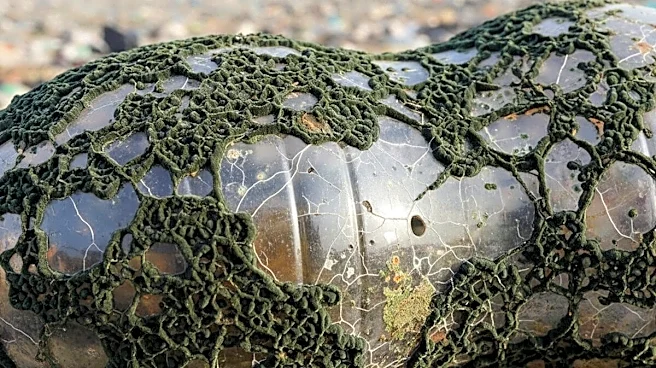




What if one of the world’s most stubborn plastics had a natural enemy and that enemy was a fungus growing in a waste dump?
Scientists have found that Aspergillus tubingensis, a fungus isolated from soil at a municipal waste disposal site in Islamabad, Pakistan, can break down polyester polyurethane (PU), a durable plastic widely used in products ranging from synthetic leather and coatings to cushions, insulation and other industrial materials.
The finding was reported in a 2017 study published in Environmental Pollution, titled “Biodegradation of polyester polyurethane by Aspergillus tubingensis.” Researchers tested the fungus against polyurethane using laboratory cultures and soil burial experiments.
How Does The Fungus Break Down Plastic?
The fungus first grows across the surface of
the polyurethane. Researchers using scanning electron microscopy found visible signs of damage, including surface scarring, cracking, erosion and pore formation.
The team also used ATR-FTIR spectroscopy to detect changes involving the chemical bonds in the polyurethane, providing evidence that the material was being chemically degraded rather than merely physically damaged. The researchers identified esterase and lipase activity during the experiments, enzymes that can play a role in breaking down components of the polymer.
The most striking result came from the liquid-culture experiment. After two months, the polyurethane film had been broken down into smaller pieces, with the researchers describing it as totally degraded under those experimental conditions.
That does not mean a discarded polyurethane mattress or shoe would simply disappear after two months in the environment. The experiments were conducted under controlled laboratory conditions, and breaking the plastic into smaller pieces is not the same as demonstrating that all of its carbon has been converted into harmless end products.
Why Polyurethane Matters
Polyurethane is particularly difficult to deal with because it is used in a huge variety of everyday and industrial products and does not readily degrade under ordinary environmental conditions.
That makes the Islamabad discovery interesting for biodegradation research. Instead of relying entirely on mechanical or chemical treatment, researchers can investigate whether fungi or more specifically the enzymes they produce could eventually be used to break down difficult plastic waste.
The 2017 study described the finding as the first reported case of A. tubingensis being capable of degrading polyurethane. The researchers said the work could provide insight into the use of the fungus in tackling polyurethane waste.
Could A Fungus Help Solve The Plastic Problem?
Not yet but it offers an intriguing possibility.
The important part of the discovery is not that a fungus can magically make plastic disappear. It is that a naturally occurring organism has demonstrated an ability to attack the structure of a plastic that is notoriously resistant to degradation.
Scientists can now look more closely at the enzymes involved, determine exactly how they break down polyurethane and investigate whether those processes can be reproduced outside the laboratory.
If such biological processes can eventually be made efficient and controllable at scale, fungi or their enzymes could potentially become part of technologies designed to treat difficult plastic waste.




/images/ppid_59c68470-image-178636252844019920.webp)


/images/ppid_59c68470-image-178627503894116180.webp)


/images/ppid_59c68470-image-178634759951580326.webp)