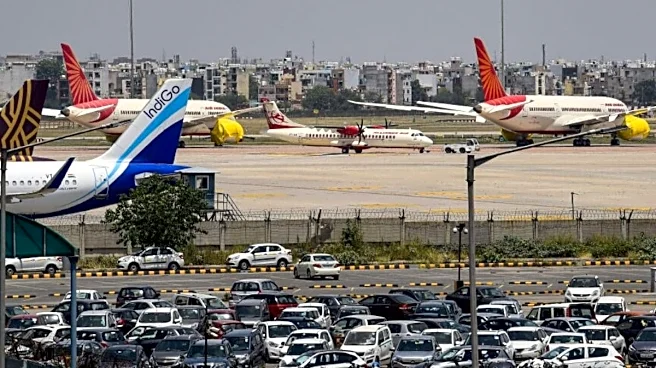




An Ebola-related health alert has been issued at Delhi’s Indira Gandhi International (IGI) Airport, with authorities releasing a fresh advisory for international passengers arriving from or travelling through affected African nations.
The advisory has been issued for travellers coming from countries including the Democratic Republic of the Congo, Uganda and South Sudan before entering India.
According to airport authorities, passengers experiencing symptoms such as fever, weakness, headache, muscle pain, vomiting, diarrhoea, sore throat or unusual bleeding have been asked to immediately report to the airport health officer or contact the health desk.
The advisory further stated that travellers who believe they may have come in contact with the blood
or bodily fluids of an Ebola-infected person should inform health authorities before completing immigration procedures.
Health officials have also urged passengers to remain alert even after arrival in India. Authorities said that if symptoms develop within 21 days of travel, individuals should seek immediate medical attention and inform doctors about their recent travel history.
Passengers have additionally been requested to cooperate with screening procedures and other precautionary measures being carried out at the airport.
What Is Ebola?
Ebola is a rare but serious viral disease that can spread between humans and has a high death rate in severe cases.
It is caused by the Ebola virus and was first identified in 1976 near the Ebola River in present-day Democratic Republic of the Congo.
How Ebola Spreads?
Ebola spreads through direct contact with:
- Blood or body fluids of an infected person-
- Contaminated objects like needles or medical equipment-
- Infected animals such as bats or primates-
- It does not usually spread through air like Covid-19.
Common Symptoms
Symptoms can appear between 2 and 21 days after infection. They include:
- Fever
- Severe weakness
- Headache
- Muscle pain
- Vomiting
- Diarrhoea
- Sore throat
- Unexplained bleeding or bruising
- Why Ebola is dangerous
The disease can cause severe internal bleeding, organ failure and shock in serious cases. Some Ebola outbreaks in Africa have had very high fatality rates.
Treatment And Prevention
There is no simple cure, but early medical care improves survival chances. Vaccines and supportive treatment are now available in some countries.
Health authorities usually use:
- Screening at airports
- Isolation of infected patients
- Contact tracing
- Protective equipment for healthcare workers to stop outbreaks from spreading.



/images/ppid_a911dc6a-image-177956483349422043.webp)