

/images/ppid_a911dc6a-image-177912102791433942.webp)
/images/ppid_a911dc6a-image-177912026768510716.webp)
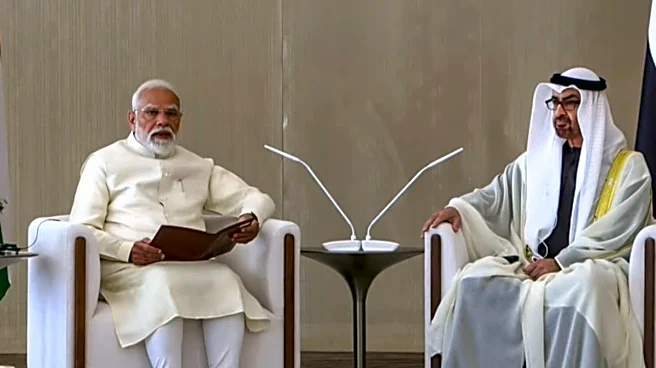
Prime Minister Narendra Modi’s visit to the United Arab Emirates (UAE) on Friday delivered major strategic and economic gains for India, with the two countries signing agreements to strengthen cooperation in energy security and petroleum storage.
As part of the understanding, the UAE could store up to 30 million barrels of ADNOC crude oil in India’s Strategic Petroleum Reserve, including participation in facilities at Visakhapatnam in Andhra Pradesh and proposed reserve projects in Chandikol, Odisha.
The agreement also includes the possibility of storing crude oil in Fujairah, UAE, as part of India’s strategic petroleum reserve system. Both countries further discussed potential collaboration in Liquid Natural Gas (LNG) and Liquid Petroleum Gas (LPG)
storage facilities in India.
Focus on energy security
India and the UAE signed a memorandum of understanding on Strategic Petroleum Reserves and also concluded an agreement for the supply of Liquefied Petroleum Gas (LPG). The move is expected to strengthen India’s long-term energy security plans and diversify fuel supplies.
The oil storage agreement comes at a time of growing geopolitical uncertainty in West Asia and rising concerns over energy supply disruptions linked to the Iran-US-Israel conflict.
UAE speeds up oil pipeline project
Alongside the agreements with India, the UAE announced that it would accelerate construction of a major oil pipeline project aimed at doubling its crude export capacity through Fujairah.
According to a Reuters report, Abu Dhabi Crown Prince Khaled bin Mohamed bin Zayed Al Nahyan directed the Abu Dhabi National Oil Company (ADNOC) to fast-track the West-East Pipeline project during an executive committee meeting on Friday.
The project is expected to significantly increase the UAE’s ability to bypass the Strait of Hormuz amid rising tensions in the region due to the Iran-US-Israel war.