


For most Indian travellers, Nepal appears on the spiritual map through a narrow lens. Pashupatinath, Janakpur, and occasionally, Muktinath are recognised names, while the rest of the country is seen primarily as a scenic extension of the Himalayas. This overlooks the fact that Nepal has historically functioned as a critical travel corridor within Hindu pilgrimage traditions, shaped as much by routes and terrain as by temples and mythological associations.
Juggnu, an Astrologer, Spiritual Traveller, and chief pilgrim at Mahadevaa Travels, shares how pilgrims used to travel through and within Nepal during their spiritual journey. He says, “Long before the idea of destination-based travel took hold, spiritual journeys across the subcontinent were
route-driven. Pilgrims moved gradually from the Gangetic plains into the Himalayan foothills, following rivers, forest paths and mountain passes that dictated both pace and purpose. Nepal was never an endpoint alone; it was part of a longer continuum of movement connecting northern India, the central Himalayas and Tibet.”
Travel through Nepal demanded adaptation – to altitude, weather, and limited access – and that physical demand was understood as integral to the spiritual journey itself. Many of Nepal’s sacred locations evolved precisely because of where they were situated along these routes.
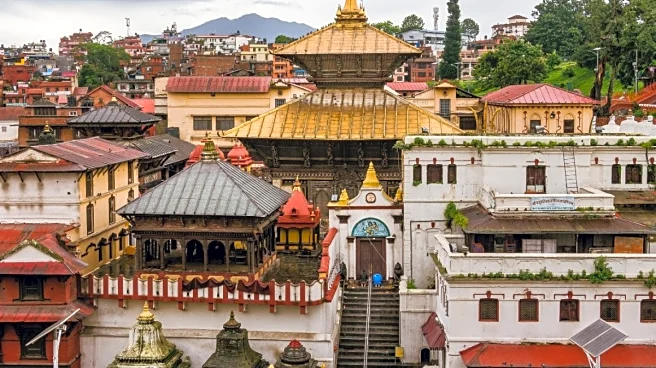
Pashupatinath, located along the Bagmati River, became a natural resting and ritual point for travellers moving through the Kathmandu Valley. Janakpur developed as both a devotional centre and a waypoint in Mithila, linking pilgrimage with regional movement. Muktinath, in contrast, sits at a high altitude in Mustang, reachable only after prolonged travel through difficult terrain. Historically, such a journey could not be rushed. The physical challenge of reaching the site was part of its meaning, reinforcing ideas of preparation, endurance and restraint.
Timing is everything
What distinguishes Nepal’s spiritual geography from many contemporary pilgrimage circuits is the continued presence of routes that resist compression. Even today, several sacred sites require long road journeys followed by walking, seasonal planning and local guidance. Lakes such as Gosaikunda, for example, are accessible only during specific months, not because of ritual prescription alone, but because weather and terrain make travel unsafe at other times. This natural regulation ensured that pilgrimage remained limited, purposeful and attuned to environmental conditions.
As travel infrastructure expanded across South Asia, pilgrimage began to change. Roads replaced footpaths, and air connectivity reduced multi-week journeys into days. While this increased access, it also altered the nature of spiritual travel. Sites that required sustained effort became less frequented, while easily accessible destinations attracted growing crowds. Nepal’s quieter sacred routes, which still require patience and planning, gradually moved to the margins of mainstream pilgrimage.
No tourism promotion
Another reason many of these routes remain unfamiliar is the absence of formal promotion. Unlike large temple towns supported by state or institutional bodies, numerous sacred paths in Nepal are maintained by local communities. Knowledge about when to travel, where to stop, and which routes to avoid is passed down orally. These journeys do not always align with fixed calendars or commercial travel seasons. As a result, they remain outside the framework of mass tourism and standard pilgrimage planning.
Mental over physical endurance
Travel through these lesser-known routes offers a distinctly different experience from packaged spiritual tourism. Without large crowds or structured rituals, travellers are forced to engage directly with the journey. Long stretches of road, unpredictable weather and limited facilities slow movement and reduce distraction. The emphasis shifts from arrival to endurance, from documentation to observation. Many travellers report that the absence of spectacle heightens awareness, creating space for reflection that is difficult to achieve in more crowded pilgrimage settings.
Timing has traditionally played a practical role in these journeys. Travel seasons were chosen based on monsoon patterns, snowfall and daylight, ensuring that routes were navigable and communities along the way could support travellers. Over time, this practical timing acquired symbolic meaning, reinforcing the idea that journeys undertaken with respect for natural cycles were more likely to be transformative. While modern travellers may not consciously frame this as astrology, the underlying principle remains one of alignment between movement and conditions.
In recent years, interest in experiential and slow travel has brought renewed attention to some of Nepal’s quieter spiritual corridors. However, there remains a risk that these routes could be absorbed into the same high-volume travel models that have reshaped other pilgrimage destinations. The challenge lies in recognising that not all sacred travel benefits from increased accessibility. Some journeys derive their value from difficulty, remoteness and limited visibility.
Nepal’s lesser-known sacred spots and routes remind us that spiritual travel was once designed to change the traveller gradually, through distance, effort and time. In revisiting these paths, the opportunity is not merely to discover new destinations, but to reconsider how travel itself shapes the meaning of pilgrimage.



/images/ppid_a911dc6a-image-177098609283733676.webp)

/images/ppid_a911dc6a-image-177098604430638966.webp)
/images/ppid_a911dc6a-image-177098617669599604.webp)
/images/ppid_a911dc6a-image-177098602618035982.webp)