


The Union Budget has quietly marked a turning point in how India thinks about rural employment. By allocating Rs 95,692 crore to the new Viksit Bharat-Guarantee for Rozgar and Ajeevika Mission Gramin (VB-G RAMG), while structurally transitioning away from the Mahatma Gandhi National Rural Employment Guarantee (MGNREGA) framework, the government has signalled that rural policy is moving from a welfare-era architecture to a productivity-era design.
This shift is not cosmetic. It reflects a deeper recognition: India in 2026 is not India in 2005. The challenge is no longer only how to provide subsistence wages, but how to build rural economies that generate durable income, productive assets, and long-term growth.
A Long-Overdue Change
For two decades,
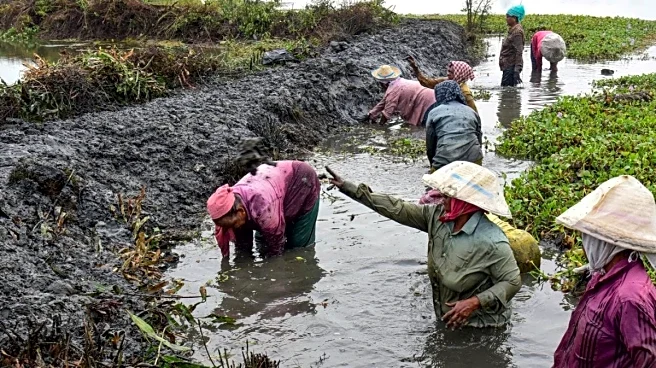
the employment guarantee model functioned as a consumption-support instrument. It injected liquidity and provided fallback wages. But the structural weaknesses of that framework became too large to ignore.
First, there was a widening gap between statutory promise and actual delivery. Very few households ever received the full 100 days of work that the law guaranteed, highlighting a persistent implementation shortfall rather than an occasional administrative lapse. Second, governance systems struggled to keep pace with scale: fake job cards, inflated muster rolls, contractor interference, and weak oversight were recurring features, not isolated aberrations. Third, asset outcomes often lacked durability or integration into broader development planning. Employment was generated, but the long-term economic multiplier remained limited.
These problems were not accidental. They stemmed from a model that prioritised wage disbursal over productivity, legal entitlement over economic efficiency, and short-term relief over structural transformation.
The Reform’s Core Idea: Outcomes, Not Just Entitlements
The new mission represents a conceptual shift: guaranteed work is now tied explicitly to the creation of durable, productivity-enhancing assets. Employment remains central, but it is embedded within a development logic.
Work is now organised across four structured domains—water security, core rural infrastructure, livelihood-support infrastructure, and extreme weather mitigation. This thematic focus ensures that labour contributes to assets that raise agricultural productivity, strengthen connectivity, expand local enterprise ecosystems, and improve resilience against climate shocks. Instead of fragmented works, rural assets are aligned with broader infrastructure planning, linking village-level projects to district and national development corridors. This is a move from “digging for wages” to “building for growth.”
Governance Modernisation: Fixing What Failed
A major strength of the reform lies in its governance architecture. Technology is no longer peripheral; it is foundational. Biometric attendance, geo-tagging of assets, GPS-enabled worksite monitoring, AI-based anomaly detection, and real-time digital dashboards create an audit trail that earlier paper-based systems could not sustain. Social audits now operate alongside digital evidence rather than in isolation.
These measures are designed to prevent leakages before they occur, not merely investigate them afterward. By making transparency systemic, the reform treats corruption as a design flaw to be engineered out, rather than a behavioural issue to be corrected post facto.
At its heart, the transition recognises a simple economic truth: sustainable employment cannot be permanently state-subsidised. Long-term job creation comes from rising productivity, industrialisation, and stronger rural value chains.
The Budget’s framing reinforces this direction. Rural employment spending is being situated within a larger capex-driven growth strategy—logistics corridors, infrastructure expansion, agricultural value-chain development, and rural enterprise support. Employment under the new mission is designed to complement these investments by building the foundational assets that make private economic activity viable in rural areas. In other words, public employment is being used to unlock future private employment.
Skin In The Game: Improving Accountability
Another critical reform is the funding architecture that encourages state-level accountability. When states share responsibility for financing and implementation, asset quality and monitoring improve because outcomes directly affect local fiscal and political stakes.
This reduces the earlier tendency for funds to be treated as externally provided entitlements rather than development investments. The approach reflects an understanding that development is most effective when financial responsibility and administrative authority are aligned.
Aligning With Agricultural Realities
Furthermore, the integration of employment scheduling with agricultural cycles addresses a long-standing tension. Earlier, public works sometimes competed with peak farm labour demand. The new framework recognises agriculture as the backbone of rural livelihoods and synchronises state-led employment with seasonal realities, ensuring that public programmes support rather than distort farm productivity.
Why This Moment Matters
The Budget did not merely fund a scheme; it endorsed a philosophy. Rural India is being positioned not as a permanent welfare recipient, but as a productive engine in India’s growth story. Employment guarantees are being reoriented toward asset creation, skill use, and infrastructure convergence. Governance systems are being digitised to protect public money. And rural policy is being linked directly to the larger ambition of building a Viksit Bharat in the truest sense.
The reform is evolutionary, not abrupt. Employment guarantees continue; days of work have expanded; protections remain. But the direction is unmistakable, from rights-only framing to outcomes-driven design, from subsistence support to productivity enhancement, from consumption smoothing to wealth creation.
That is why the Budget’s rural employment pivot matters. It signals that India is attempting something difficult but necessary—redesigning social protection so that it builds the foundations of future prosperity rather than only cushioning the present.
Kamal Madishetty is an Assistant Professor at Rishihood University and a Visiting Fellow at India Foundation, New Delhi. He tweets at @KamalMadishetty. Views expressed in the above piece are personal and solely those of the writer. They do not necessarily reflect News18’s views.






/images/ppid_a911dc6a-image-177010122433114975.webp)