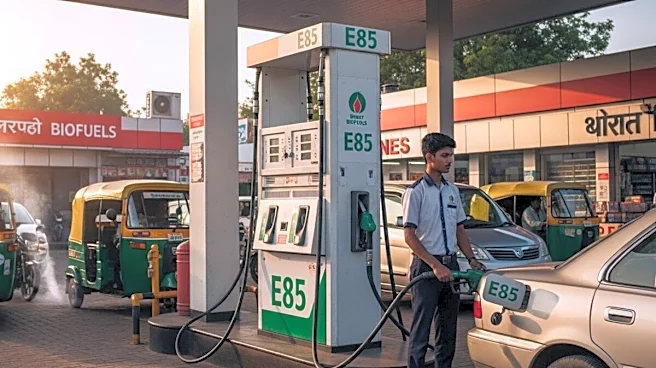



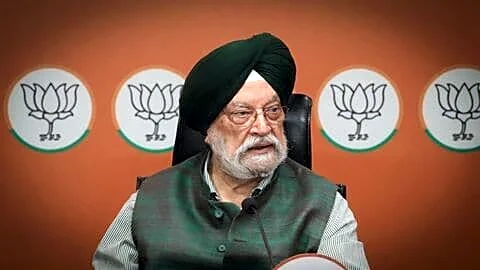
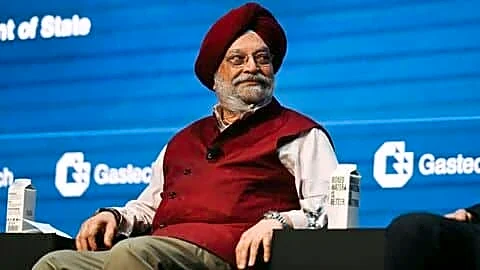
As India pushes ahead with its biofuel ambitions, E85 fuel has emerged as the latest addition to the country’s clean-energy roadmap. Launched by Union Petroleum and Natural Gas Minister Hardeep Singh Puri on World Environment Day, the high-ethanol fuel is being positioned as a greener and more economical alternative to conventional petrol for a specific category of vehicles.
The move comes after India achieved its target of 20 per cent ethanol blending in petrol ahead of schedule and seeks to further reduce the country’s dependence on imported crude oil.
While the launch has generated considerable interest among consumers, E85 is not a fuel that every vehicle owner can immediately use.
Experts and government officials have stressed that motorists
must first check whether their vehicle is designed to run on high ethanol blends.
Understanding how E85 differs from regular petrol and E20 fuel is therefore essential before pulling up to an E85 dispenser.
WHAT MAKES E85 DIFFERENT, AND CAN ALL VEHICLES USE IT?
Unlike regular petrol or E20 fuel, E85 contains a significantly higher proportion of ethanol. It is designed specifically for Flex Fuel Vehicles (FFVs), which are engineered to run on varying blends of petrol and ethanol, ranging from E20 to E100.
The government has stressed that E85 is not a replacement for regular petrol or E20 fuel.
Existing petrol and E20-compatible vehicles can continue operating normally, while E85 is meant only for specially designed FFVs.
According to Puri, fuel stations dispensing E85 will prominently display signage indicating that it is meant exclusively for E85-compatible vehicles.
WHAT SHOULD YOU CHECK BEFORE USING E85?
The first and most important check is whether your vehicle is a Flex Fuel Vehicle. Filling E85 in a conventional petrol-powered vehicle can potentially damage engine components because standard engines are not designed to handle such high ethanol content.
Vehicle owners should verify compatibility through the manufacturer’s handbook, dealership guidance, or official specifications.
Experts, as quoted in multiple reports, have repeatedly emphasised that E85 should only be used in vehicles specifically certified for the fuel.
At present, only a limited number of flex-fuel models are available in India, though automakers are gradually expanding their offerings as the government pushes for a broader flex-fuel ecosystem.
LOWER COST FOR CONSUMERS
One of E85’s biggest attractions is cost. The government has priced the fuel at nearly Rs 20 per litre less than conventional petrol, aiming to pass on the benefits of domestically produced ethanol to consumers.
For motorists who own compatible vehicles and have access to E85 dispensing stations, the lower fuel price could translate into meaningful savings over time.
Government officials have also argued that flex-fuel vehicles remain competitive with electric vehicles because they require no major charging infrastructure and generally have lower upfront costs.
ENVIRONMENTAL ADVANTAGES
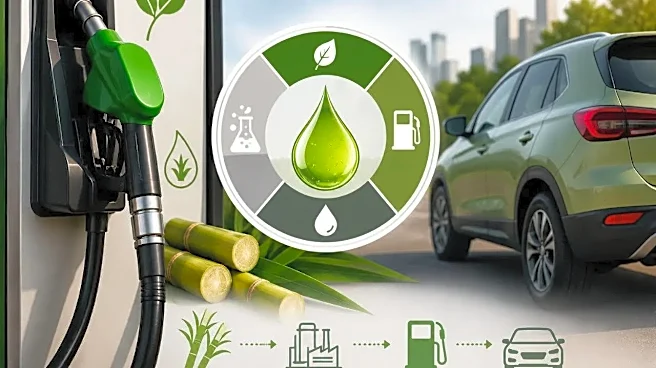
The environmental case for E85 is central to the government’s push. Ministry estimates suggest that FFVs running on E85 can reduce lifecycle greenhouse gas emissions by around 61 per cent compared with conventional petrol vehicles.
Officials have also highlighted ethanol’s cleaner combustion characteristics, which result in significantly lower particulate emissions.
NITI Aayog has previously classified ethanol-based FFVs running on high ethanol blends as zero-emission vehicles from a tailpipe emissions perspective, making them an important part of India’s strategy to tackle air pollution and reduce carbon intensity.
Beyond environmental benefits, E85 is also linked to India’s energy security goals. By replacing a portion of imported crude oil with domestically produced ethanol, the country can reduce its dependence on volatile global oil markets.
According to official projections, a major shift toward flex-fuel vehicles could generate thousands of crores in additional farm income while also reducing foreign exchange outflows on crude imports.
While the rollout of E85 has begun at selected fuel stations and is expected to expand rapidly over the next two years, the government plans to increase the network from the current outlets to around 500 stations by the end of 2026 and approximately 5,000 by the end of 2027.

/images/ppid_59c68470-image-178092008743732551.webp)







/images/ppid_a911dc6a-image-178095322872697983.webp)
