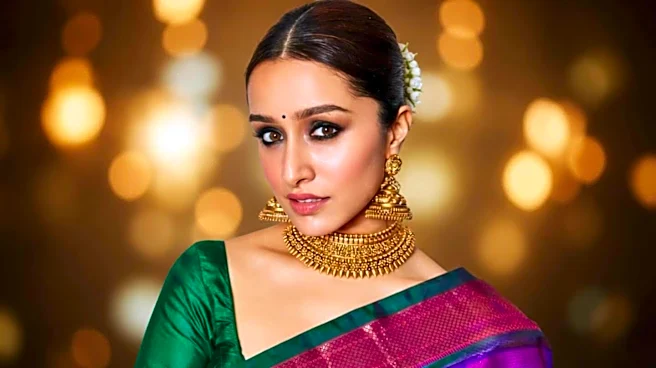




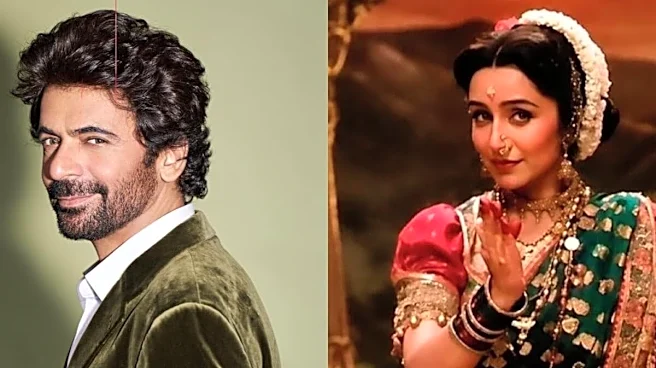
Shraddha Kapoor’s first glimpse from Eetha has done exactly what a strong biopic teaser is meant to do. It has created curiosity not only about the actor’s transformation, but also about the real woman behind the story. Attached to theatrical screenings of Cocktail 2 on June 19, the teaser introduces Shraddha as Vithabai Bhau Mang Narayangaonkar, one of Maharashtra’s most celebrated Lavani and Tamasha icons.
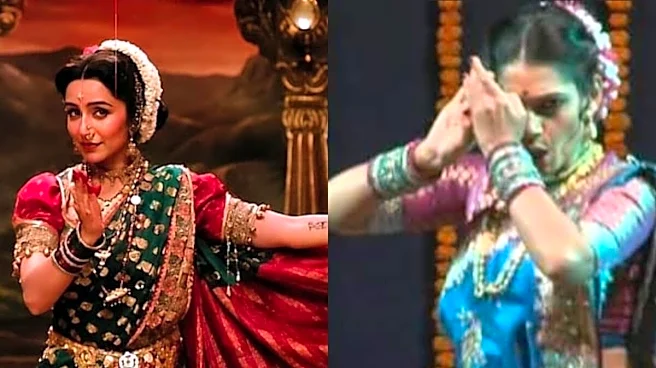
The brief glimpse has already become a major talking point. Dressed in traditional Lavani attire, Shraddha is seen channelling the energy, rhythm and emotional force of a performer who lived almost entirely on stage. One particular moment, where the character appears to perform while heavily pregnant, has especially drawn attention. It hints
that Eetha will not simply be a glamorous dance biopic, but a story about endurance, labour, gender, caste, art and survival.
But who was Vithabai Bhau Mang Narayangaonkar? And why does her story deserve a mainstream film led by one of Bollywood’s most popular stars?
Who Was Vithabai Bhau Mang Narayangaonkar?
Vithabai Bhau Mang Narayangaonkar was one of Maharashtra’s most important folk performers. Born on July 1, 1935, and remembered widely as the “Tamasha Samradini”, or Empress of Tamasha, she became a defining figure in Lavani and Tamasha performance traditions.
Her life was rooted in performance from the very beginning. She came from a family associated with the Tamasha tradition, a vibrant travelling folk theatre form that combined music, dance, drama, humour, social commentary and sharp public performance. Her grandfather Narayan Khude had established a Tamasha troupe, and the family’s artistic legacy continued through the troupe Bhau-Bapu Mang Narayangaonkar.
For Vithabai, the stage was not an escape from life. It was life itself. From a young age, she absorbed Lavani, Gavlan and other folk performance forms, gradually developing a style that made her famous across Maharashtra. Her voice, command over rhythm, expressive face and commanding stage presence turned her into a performer audiences did not merely watch, but remembered.
What Are Lavani And Tamasha?
To understand why Vithabai mattered, it is important to understand the world she came from. Lavani is one of Maharashtra’s most recognisable folk performance forms, known for its powerful rhythm, bold expression, fast footwork and emotionally charged singing. It is usually performed to the beats of the dholki and often deals with love, longing, desire, humour, social realities and everyday struggle.
Tamasha, on the other hand, is a larger folk theatre tradition. It brings together Lavani, dramatic skits, music, satire and improvisation. For generations, it entertained rural and working-class audiences, often functioning as both popular entertainment and a form of social commentary.
However, these art forms also carried stigma, especially for women performers. Lavani and Tamasha artistes were admired on stage but often judged off it. Many came from marginalised communities and had to fight not only for artistic recognition but also for social dignity.
Vithabai’s story sits at this difficult intersection. She was a beloved artiste, a cultural force and a woman who rose to extraordinary prominence in a space where female performers were frequently celebrated and looked down upon at the same time.
Why Vithabai Became A Legend
Vithabai’s fame did not come only from her talent. It came from her stamina, discipline and refusal to step away from the stage despite personal and professional hardship. She spent decades performing across Maharashtra, taking Lavani and Tamasha to audiences that saw her as a living embodiment of folk art.
She was not just a performer in a troupe. She eventually became a force who could carry a troupe, draw crowds and shape the reputation of the art form itself. Her ability to combine emotional storytelling with physical performance made her one of the most influential names in the history of Lavani.
What made her extraordinary was the way she treated performance as duty. The stage demanded her body, her voice, her time and often her personal life. Yet she continued to perform with an intensity that became part of her legend.
That is why the teaser’s image of Shraddha Kapoor performing while heavily pregnant feels so significant. It is not there only for dramatic effect. It points to the kind of physical sacrifice and emotional toughness that defined Vithabai’s artistic life.
Why The Teaser’s Pregnancy Scene Matters
The most discussed moment from the Eetha teaser appears to be the scene where Vithabai performs while pregnant. In a conventional film, pregnancy is often shown as a moment that pauses a woman’s public life. In Vithabai’s story, it becomes part of the conflict between body and duty, motherhood and performance, exhaustion and survival.
For women artistes in travelling performance traditions, the personal and professional were rarely separate. There were no luxurious support systems, no carefully managed schedules and no easy protection from economic pressure. The show often had to go on, because livelihoods depended on it.
By foregrounding this moment, Eetha seems to be positioning Vithabai not merely as a cultural icon, but as a working woman whose body bore the cost of art. That is what gives the teaser its emotional force. It suggests a film about what it means to keep performing when the world sees only applause and not the labour behind it.
Shraddha Kapoor’s Transformation In Eetha
For Shraddha Kapoor, Eetha appears to be one of her most demanding screen transformations. She is widely loved for her charm, softness and girl-next-door appeal, but playing Vithabai requires a very different kind of screen energy. Lavani is not simply about costume and choreography. It needs command, attitude, rhythm, expression and a certain earthy confidence.
The teaser shows Shraddha moving into a more rooted and performance-heavy space. The traditional saree drape, jewellery, makeup, posture and dance language suggest an attempt to inhabit a world far removed from the urban, glamorous parts she is often associated with.
If the film delivers on the promise of the teaser, Eetha could become an important turn in Shraddha’s career. It gives her the opportunity to play a woman who is not fictional, not ornamental and not defined only by romance. Vithabai’s life demands emotional grit, physicality and cultural specificity, all of which could push Shraddha into a new performance zone.
Why Eetha Is More Than A Dance Biopic
At first glance, Eetha may look like a biopic about a famous Lavani performer. But Vithabai’s life allows the film to explore much more. Her story opens up questions around caste, gender, folk performance, artistic labour and the uneasy relationship between popularity and respectability.
Lavani performers often entertained thousands, but their art was not always given the cultural prestige it deserved. Women like Vithabai stood at the centre of public performance but had to negotiate social judgment throughout their lives. Their songs carried wit, sensuality and intelligence, but their identities were frequently reduced by outsiders to stereotypes.
A film like Eetha can challenge that gaze. It can show Lavani not as an itemised spectacle, but as a disciplined and historically rich art form. It can show Tamasha not as background colour, but as a living theatre tradition shaped by communities, labour and survival.
This is where the film’s importance lies. If handled sensitively, Eetha can introduce a mainstream Hindi-speaking audience to a Marathi cultural legend whose influence deserves far wider recognition.
Why Vithabai’s Story Matters In 2026
The timing of Eetha is significant. Indian cinema is increasingly looking beyond conventional biopics of kings, cricketers, freedom fighters and politicians. Stories of artistes, especially women artistes from regional and folk traditions, are beginning to find space in mainstream storytelling.
Vithabai’s story matters because it brings attention to the women who built Indian performance culture outside elite institutions. These were not artistes with easy privilege. They performed in difficult conditions, travelled constantly, faced public scrutiny and still preserved art forms that remain central to Maharashtra’s cultural identity.
Her life also speaks directly to contemporary debates. Who gets remembered as a cultural icon? Which art forms are treated as “classical” and which are dismissed as “folk” or “popular”? Why are women performers celebrated for entertaining audiences but judged for occupying public space? What does artistic success cost when it comes without social security?
Through Vithabai, Eetha has the chance to explore all of this without turning the film into a lecture. Her life already contains the drama.
The Role Of Music In Eetha
A film about Vithabai cannot work unless its music feels authentic. Lavani is built on rhythm, breath and performance energy. The songs cannot merely sound like polished film tracks. They need the pulse of the stage, the weight of the dholki and the dramatic teasing quality that makes Lavani so alive.
That is why the film’s music will be crucial. The soundscape has to recreate the world of Tamasha while still speaking to a contemporary theatrical audience. If the music captures the emotional and performative depth of Lavani, it could become one of the film’s strongest assets.
For a story like this, songs are not interruptions. They are narrative. They reveal mood, power, desire, pain, public image and private cost.
What The Eetha Teaser Is Really Selling
The teaser is not only selling Shraddha Kapoor’s transformation. It is selling a world. It is telling audiences that this is a story about a woman who lived through her art, fought through performance and became larger than the stage that made her.
The visuals appear designed to create contrast: glamour and hardship, applause and pain, public celebration and private sacrifice. That contrast is essential to any good artiste biopic. The audience must see both the magic and the machinery behind the magic.
In Vithabai’s case, the machinery was her own body, voice, discipline and willpower.
Can Eetha Change The Way Bollywood Looks At Folk Icons?
Bollywood has often borrowed from folk traditions, including Lavani, but it has not always paused to tell the stories of the people who kept those traditions alive. Songs, costumes and dance forms have frequently been adapted for mainstream glamour, while the original performers remain in the margins.
Eetha has the chance to correct that imbalance in a small but meaningful way. By placing Vithabai at the centre, the film can shift attention from the form to the artiste, from the spectacle to the woman who made it powerful.
That is why the project carries more weight than an ordinary biopic. It can become a bridge between mainstream Hindi cinema and Maharashtra’s folk performance history.
Final Take
The Eetha teaser works because it opens a door. It gives audiences a first glimpse of Shraddha Kapoor as Vithabai Bhau Mang Narayangaonkar, but it also asks them to look beyond the image of a dancer in costume. Behind that image was a woman who carried an art form, challenged social limits and turned performance into legacy.
Vithabai was not just a Lavani performer. She was a cultural force. She represented the strength of women artistes who entertained, endured and preserved traditions despite being denied easy respectability.
With Eetha, Shraddha Kapoor is stepping into a role that could redefine her screen journey while bringing a folk legend to a much wider audience. If the film matches the intensity of its teaser, it could become more than a star-led biopic. It could become a tribute to the women who kept India’s folk stages alive, one performance at a time.
/images/ppid_a911dc6a-image-178193052175944595.webp)


/images/ppid_a911dc6a-image-178184657010370614.webp)