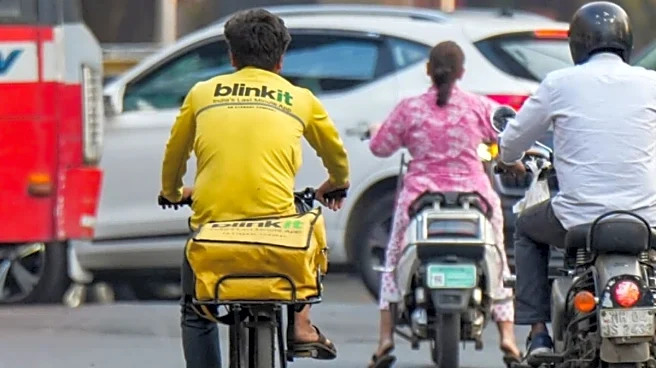

In a move aimed at protecting gig workers from excessive time pressure, the Centre recently asked quick commerce companies to do away with the mandatory “10-minute delivery” promise. The directive followed
meetings with major platforms such as Zomato, Zepto and Swiggy, where concerns were raised about rider safety and unrealistic delivery targets.
Soon after the discussions, Blinkit announced that it was ending the 10-minute delivery deadline, signalling compliance with the government’s advisory.
Despite these assurances, several quick commerce apps continue to display delivery times of less than 10 minutes. Blinkit, Zepto, Flipkart Minutes and Amazon Now still show delivery estimates ranging between seven and nine minutes for many users.
Screenshots from the apps show Amazon Now indicating a delivery time of nine minutes, Flipkart Minutes showing seven minutes, while Zepto and Blinkit display estimated delivery times of 8-9 minutes.
According to sources, the companies have clarified that they have agreed to remove the “10-minute delivery” claim from advertisements, social media campaigns and app branding. Platforms such as Blinkit and Zepto have also assured the government that their internal policies are being aligned with the new guidelines.
The key distinction, they argue, lies between a guaranteed deadline and an estimated delivery time. The short delivery times currently visible on apps are Estimated Time of Arrival (ETA). These are algorithm-based estimates that depend on factors such as the user’s proximity to a dark store, traffic conditions and rider availability.
If a customer is located close to a warehouse, the app may automatically show an ETA of 8-9 minutes. This, companies say, does not amount to a mandatory delivery target for riders. Earlier, even when “10-minute delivery” was heavily promoted, actual delivery times often exceeded that mark.
Why fast delivery still appears on apps
Industry experts say platforms continue to display fast ETAs for user engagement and competitive positioning. Quick commerce companies are reluctant to slow down visible delivery times for fear of losing customers to rivals. However, under the revised approach, there will be no penalties if an order takes longer than the ETA, and delivery partners will not be pressured to meet a rigid time promise.
The shift is being seen as a significant relief for gig workers, who have long flagged safety risks associated with racing against fixed delivery deadlines. By removing the “10-minute guarantee” from branding, companies are expected to lower customer expectations and ease operational pressure on riders.
Experts believe the move could help create a safer and more balanced delivery ecosystem over time, without significantly impacting consumer experience.
What changes for customers
While traces of the 10-minute claim may still appear in older advertisements or app store descriptions, companies are gradually updating their platforms. Going forward, most deliveries are expected to take around 15 to 30 minutes, without being marketed as a guaranteed 10-minute service.


/images/ppid_a911dc6a-image-177083556748629873.webp)

/images/ppid_a911dc6a-image-177083563836656334.webp)
/images/ppid_a911dc6a-image-177083553466311808.webp)






/images/ppid_59c68470-image-17708350320838052.webp)
