
/images/ppid_59c68470-image-177911003059488993.webp)
/images/ppid_a911dc6a-image-17791592287636658.webp)
/images/ppid_59c68470-image-177907010466091953.webp)
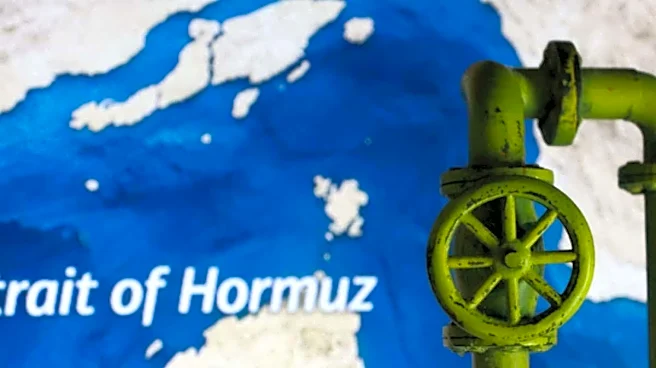
With the Strait of Hormuz blockade continuing to disrupt global crude supplies, ratings agency Moody’s Ratings has said countries heavily dependent on Middle East oil, including India, may have to negotiate directly with Iran to secure energy imports.
In a report on geopolitical risks, Moody’s said there is little prospect of a swift and durable settlement between the US and Iran, indicating that a full reopening of the strategically important Strait is unlikely anytime soon.
The Strait of Hormuz, through which nearly one-fifth of global crude oil passes, has remained blocked since the war began on February 28. Although a limited number of vessels are moving through the route, overall crude supplies remain severely disrupted, keeping global oil prices
elevated.
Moody’s said oil-importing nations are now likely to pursue bilateral arrangements with Tehran to ensure energy flows.
“We expect oil importers — particularly China, India, Japan and Korea — to negotiate passage bilaterally with Iran, potentially through coordinated transit corridors such as those reportedly emerging near Larak Island and through Omani territorial waters,” the agency said. “A return to pre-conflict traffic volumes in 2026 is unlikely,” it added.
According to Moody’s, even if partial movement resumes through the Strait over the next six months, the global oil market is expected to remain supply constrained.
“We now expect Brent crude in the USD 90-110/bbl range for much of this year, with significant volatility, including occasional fluctuations outside this range in response to new developments,” the report said.
The agency warned that higher crude prices could weigh heavily on major economies, especially oil-importing nations like India.
“India is among the most exposed, given around 46 per cent of its crude oil imports come from the Middle East, its sensitivity to currency depreciation and pressure on its current account and fiscal management,” Moody’s said.
It also cautioned that persistently high energy prices could push up both headline and core inflation globally.
The Indian government has not officially commented on any possible bilateral arrangement with Iran so far. However, the Centre has already intensified fuel conservation measures across the country amid rising energy concerns.
Meanwhile, Iranian Foreign Minister Seyyed Abbas Araghchi recently said the Strait remains open for most global shipping traffic except for countries “at war with” Tehran.
Speaking during the BRICS summit in Delhi, Araghchi said the situation in the strategic waterway had become “very complicated”, but stressed that maritime normalcy could return if military tensions ease.
“Once the aggression is ended, I am sure everything will go to normal,” he said.
/images/ppid_59c68470-image-177916251962577212.webp)

/images/ppid_59c68470-image-177925252148696610.webp)

/images/ppid_59c68470-image-177925511158120801.webp)
/images/ppid_59c68470-image-177900754363747336.webp)
/images/ppid_59c68470-image-177906764797152021.webp)
/images/ppid_59c68470-image-177911502674525655.webp)
/images/ppid_59c68470-image-177907753261912683.webp)